Skip to content

Three Musicians, an Entire World

Bass Amplifier Gnaoua

When Tradition Meets the Bass Amplifier

Gnaoua music in Morocco carries histories connected to sub-Saharan African communities, spiritual practice, movement and memory. In Essaouira, the Gnaoua and World Music Festival has been bringing maâlems, master Gnaoua musicians, together with musicians from jazz, blues, rock, reggae and electronic music since 1998. One example is Maâlem Abdelaziz Soudani, who grew up inside a Gnaoua musical family and later worked in projects combining the tradition with electronic sound.

What interests me is that this kind of fusion does not automatically mean abandoning tradition. The deeper question is what remains stable while the surrounding music changes. The guembri, percussion patterns, repertoire and role of the maâlem can provide a strong centre while completely different musical languages enter around them.

We often imagine preservation as protection from outside influence. Living music may require something more difficult: enough knowledge of its own structure to enter a new conversation without losing its voice.

A tradition can change because it is weak. It can also change because it is strong enough to absorb the encounter.

https://www.festival-gnaoua.net/en/the-festival-and-the-city-of-essaouira/
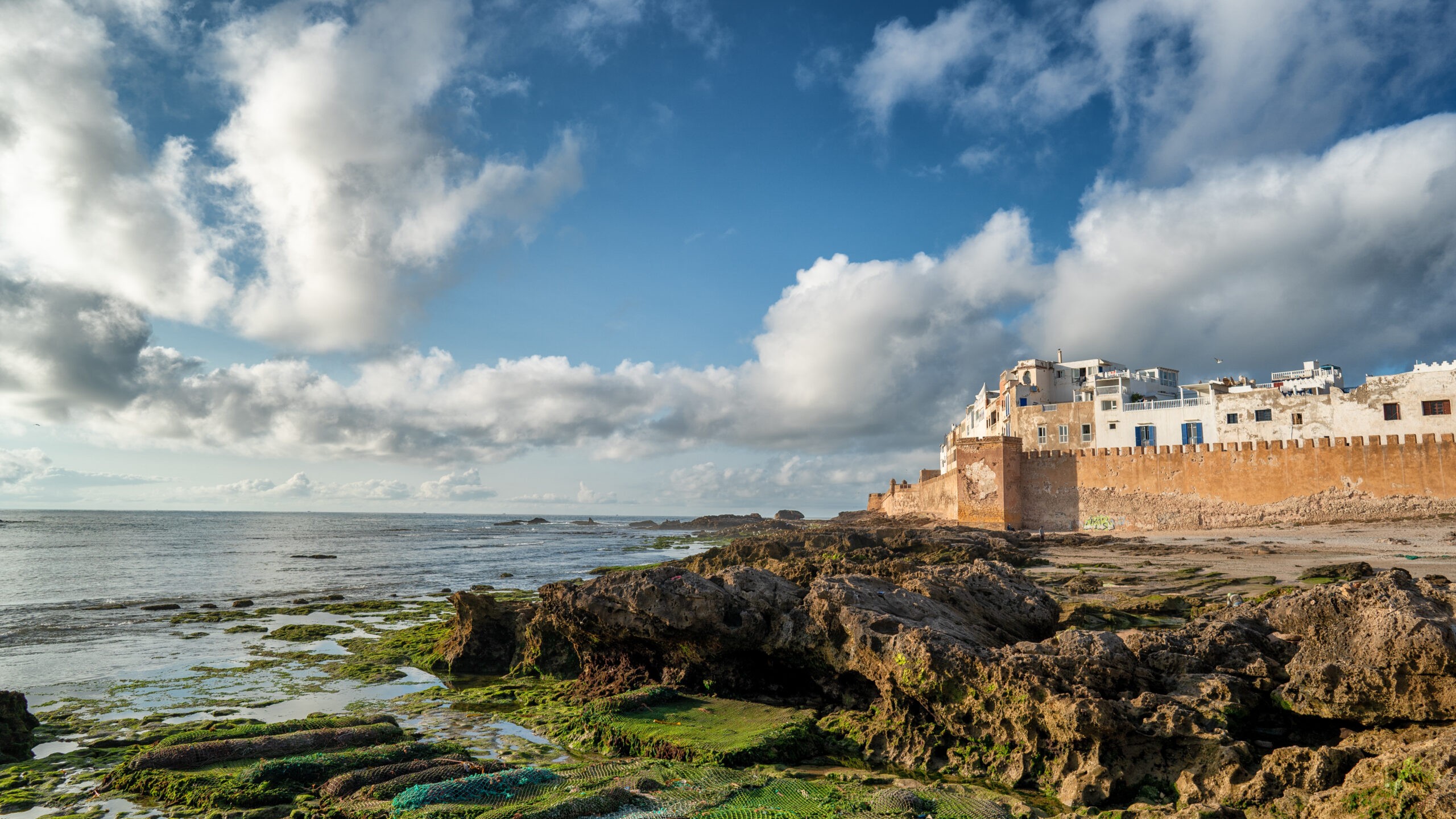
#Gnaoua #MoroccanMusic #Essaouira #WorldMusic

Festival D'essaouira Gnaoua 2026 | World Music THE FESTIVAL - Festival D'essaouira Gnaoua 2026 | World Music Gnaoua Festival: music, fusion, and dialogue. Essaouira becomes a global meeting point of culture, tradition, and human rights.
Croatian Art

Painting From the Wrong Side

The Hlebine School became one of the central traditions of Croatian naive art, associated with artists who developed distinctive rural imagery outside conventional academic routes. One characteristic technique among Hlebine painters is reverse painting on glass. Instead of building an image from background toward foreground as on canvas, the painter must work in the opposite direction. Details that should appear on top are painted first because the finished work will be viewed through the glass.

That reversal fascinates me because it changes painting into a problem of prediction. On canvas you can continually cover, correct and reconsider earlier decisions. Painting on the reverse side of glass asks the artist to imagine the final image while constructing it backwards.

The Croatian Museum of Naive Art, founded in Zagreb in 1952 under an earlier name, holds more than 1,600 works and considers naive art part of modern art rather than a curiosity outside it.

Sometimes a technique changes more than appearance. It changes the order in which the artist has to think.

https://museums.hr/en/museum/details/16813/the-croatian-museum-of-naive-art

#CroatianNaiveArt #HlebineSchool #GlassPainting #CroatianArt

museums.hr The Croatian Museum of Naive Art In 1952, the Peasant Art Gallery was founded in Zagreb; from 1956 it operated under the name of the Gallery of Primitive Art, while since 1994, in line with a decision by the Croatian Parliament, its...
Archaeology

Pottery as a Map of Migration

At Naitabale on Fiji’s Moturiki Island, archaeologists found remains of a settlement established around 900 BC, including fragments of Lapita pottery decorated with characteristic dentate patterns. Research across Fiji places Lapita communities among the earliest settlers of the islands, arriving roughly 3,000 years ago and moving through an enormous Pacific world by sea.

What interests me is that a pottery fragment can become evidence of movement. A pot seems intensely local. It is made from clay and mineral material gathered somewhere specific, shaped by hands and used in daily life. Yet similarities in decoration and differences in the geological composition of pottery can reveal connections between islands separated by open ocean.

The pattern is therefore more than ornament. Archaeologists can read ceramics alongside materials and settlement sites to reconstruct networks of travel, exchange and cultural transmission.

A broken object buried in the ground can preserve the outline of journeys that left no written map. Sometimes design survives longer than the route that carried it.

https://www.usp.ac.fj/lapitaconference/about/videos-images-credits/

#Lapita #FijiHistory #PacificArt #Archaeology

Argentine Music

The Instrument Tango Adopted

The bandoneon seems inseparable from Argentine tango, yet the instrument was developed in nineteenth-century Europe and arrived in Buenos Aires later. Early tango groups commonly used combinations of violin, guitar, flute and piano. The bandoneon gradually entered these ensembles and became increasingly central as quartets and, from around 1910, the larger orquesta típica developed. The standard tango orchestra eventually brought bandoneons together with violins, piano and double bass.

I like how completely a migrating instrument can become identified with a music that did not invent it. The bandoneon arrived with its own mechanical construction and tonal possibilities, but musicians in Buenos Aires gave it another cultural life. Its ability to sustain, swell and reshape a note suited tango so well that the imported instrument eventually sounded local.

Musical identity often works like this. Cultures do not necessarily become distinctive by avoiding outside influences. Sometimes they become distinctive through what they do with something that arrived from elsewhere.

https://buenosaires.gob.ar/gcaba_historico/tango/orquesta-tipica

#Bandoneon #Tango #ArgentineMusic #BuenosAires

Belmore’s Fountain

Projecting an Image Onto Water

Rebecca Belmore’s Fountain, created for the Canadian Pavilion at the 2005 Venice Biennale, does something deceptively simple with video: the image is projected onto falling water rather than a conventional screen. The work moves between fire, water and blood, placing elemental imagery against an industrial North American landscape.

The physical projection surface changes everything for me. A normal screen is designed to disappear so that we concentrate on the image. Falling water refuses to disappear. It moves, breaks the projected light and reminds us that the image has a body. The medium becomes visible precisely because it cannot hold the picture perfectly still.

Belmore, an Anishinaabe artist, has repeatedly worked with land, bodies, political histories and the material presence of water. In Fountain, water is simultaneously subject, projection surface and moving sculpture. The video cannot be separated cleanly from the substance carrying it.

Digital images often feel weightless. Here light needs something unstable and physical before we can see it.

Fountain

#RebeccaBelmore #VideoArt #IndigenousArt #InstallationArt

Ca Tru

Three Musicians, an Entire World

Ca trù can be performed by only three musicians: a female singer, a player of the long-necked three-stringed ?àn ?áy and a drummer whose praise drum reacts to the performance. The singer also marks rhythm with phách, small bamboo clappers struck against a wooden or bamboo surface. Vietnamese heritage sources connect the form with poetry, worship, communal ceremonies, private entertainment and intellectual culture, with reliable written evidence reaching back at least to the fifteenth century.

What fascinates me is how much musical information can exist inside such a small ensemble. The singer does not simply place melody over accompaniment. Voice, poetry, clappers, lute and drum continually define one another. Even appreciation becomes audible because the praise drum can respond at particular moments.

That is almost the opposite of the modern studio tendency to add layers until a track feels complete. Ca trù shows how three performers can create complexity through interaction rather than density. Space between sounds becomes part of the arrangement.

https://dsvh.gov.vn/ca-tru-485

#CaTru #VietnameseMusic #TraditionalMusic #VocalMusic

Ben Enwonwu

A Nation Cast in Bronze

Ben Enwonwu completed Anyanwu, also known as The Awakening, in 1956 for the new National Museum in Lagos. The elongated bronze female figure was conceived during a period when Nigeria was moving toward independence. Enwonwu described the work in terms of womanhood, growth and the emergence of a nation. His approach combined indigenous aesthetic traditions connected to his Edo-Onitsha heritage with techniques he had encountered through Western art education.

A copy was presented by the Nigerian government to the United Nations in 1966. That change of location interests me. In Lagos, the sculpture could speak to the formation of Nigerian national identity. At the UN headquarters, the same figure entered a much wider political space and could be read as part of Africa’s post-colonial emergence.

Monuments often look permanent once installed, but their meanings keep moving. Bronze remains physically stable while history repeatedly changes what we see in it. Anyanwu is therefore not only an image of awakening. Its own public life has continued to accumulate new contexts long after the sculpture was cast.

Mission and Symbol

#BenEnwonwu #NigerianArt #ModernAfricanArt #Sculpture

Fado

A Music That Became a City

Fado grew from Lisbon’s historic neighbourhoods and developed over roughly two centuries while continually absorbing cultural and technological change. The Museu do Fado treats it not as a frozen tradition but as a performing art still under construction. Its history can be followed through recordings, scores, photographs, instruments, theatre, radio, cinema and television, but none of those objects is actually the music itself.

That interests me. A museum can preserve the Portuguese guitar, a singer’s costume or an old shellac recording, yet the essential event disappears as soon as the final note ends. Fado survives because people keep singing and listening, not because the objects remain untouched. Technology has changed how the music travels, from intimate rooms to records, radio and global streaming, without completely removing its association with Lisbon.

Perhaps the most difficult art to preserve is also the most alive. You can archive evidence of a performance, but the performance itself always has to happen again.

https://museudofado.pt/en/history-en

#Fado #PortugueseMusic #LisbonMusic #MusicHistory

Museu do Fado History - Museu do Fado
Chen Chieh Jen

Returning Workers to an Empty Factory

Chen Chieh-Jen made Factory in 2003 after meeting former workers from Taiwan’s Lien Fu garment factory, which had closed in 1996 without paying workers compensation and pension claims. The women had spent years protesting. Chen invited them back into the abandoned workplace and filmed them quietly performing the labour they once carried out there.

The resulting work is deliberately slow and silent. Images of the women inside the empty factory are combined with archival propaganda footage presenting Taiwan’s earlier manufacturing prosperity. That collision interests me because nothing needs to be explained through dramatic narration. The same industrial history looks completely different depending on whether it is told through economic success or through the bodies left behind when production moves elsewhere.

Re-enacting work inside a factory that no longer employs anyone turns labour into something almost ghostlike. The machines, gestures and building still remember a system that has already abandoned them. Silence does not make the political argument weaker. It gives the workers’ presence more weight.

???

#ChenChiehJen #TaiwaneseArt #VideoArt #LabourHistory

Caribbean Music

An Orchestra Hammered From Oil Drums

The steelpan emerged in Trinidad and Tobago during the 1930s and 1940s, but its development is tied to a much longer history of Carnival, percussion and restriction. After authorities limited the use of instruments in late nineteenth-century Carnival celebrations, performers developed tamboo-bamboo ensembles using bamboo of different lengths. Metal containers gradually entered these groups, and experimentation eventually transformed discarded steel drums into pitched instruments.

A steelpan looks almost impossibly simple until you realise that different areas of one metal surface are carefully shaped and tuned to specific notes. Modern steelbands extend that principle across instruments covering different registers, making arrangements possible that range far beyond simple percussion patterns.

What I like most is the transformation of function. An industrial container designed to transport material becomes an instrument capable of carrying melody and harmony. Innovation here did not begin with access to specialised technology. It grew from restriction, available materials, Carnival culture and repeated experimentation with sound.

Steelband

#Steelpan #TrinidadAndTobago #CaribbeanMusic #InstrumentDesign

Ciurlionis

When Painting Starts Thinking Like Music

Mikalojus Konstantinas ?iurlionis is difficult to place neatly inside one discipline because he worked simultaneously as a painter and composer. During a creative period of only about seven years, he produced more than 300 paintings, hundreds of graphic works and sketches, and around 400 musical compositions. His museum in Kaunas preserves most of that legacy.

The connection between the two practices was not merely biographical. ?iurlionis explored how principles associated with music could operate visually, and some of his best-known painting cycles even use musical terms such as Sonata, Fugue and Prelude. His landscapes and imagined spaces often avoid ordinary perspective, moving instead toward layered, rhythmic and almost cosmic structures.

What interests me is that translating music into painting does not require illustrating sound waves or musical instruments. Rhythm can become repetition of shapes. A motif can return like a theme. Visual space can develop tension and release. ?iurlionis shows that the connection between sound and image may exist deepest at the level of structure.

https://ciurlionis.lt/activity/branches/m-k-ciurlionis-national-museum-of-art/expositions/m-k-ciurlionio-kuryba-en/

#Ciurlionis #LithuanianArt #PaintingAndMusic #Symbolism

ciurlionis.lt M. K. ?iurlionis’ Creation The exhibition showcases not only ?iurlionis’ paintings but also his multifaceted creative legacy – music, graphic art, and photography. The artworks are revealed in a new, modern light – the same lighting technology used to preserve masterpieces by Italy’s greatest artists. Visitors can pause and immerse themselves in the ?iurlionis atmosphere while resting in chairs upholstered with Japanese vegan leather. M. K. ?iurlionis – a composer and painter who also explored literature and photography – created over 300 paintings, more than 700 graphic works and sketches, and around 400 musical compositions during his remarkably short yet prolific 7-year creative period. Nearly all of these works are preserved in this museum. His paintings are notable for a uniquely poetic perception of space, often evoking a bird’s-eye view. They carry a cosmic perspective and a sense of deep inner contemplation. ?iurlionis was drawn to questions about the origins and structure of the universe, the spiritual forces that govern the world, nature and its cycles, the meaning of human life, psychological states, the evolution of being, and the possibility of applying musical principles to visual art. Music filled ?iurlionis’ life in countless forms. He composed distinctive original works, harmonized folk songs, led choirs, gave concerts, and published articles on music and culture. His graphic art and sketches offer valuable insight into his creative thought process and the recurring motifs that sparked his imagination. His ink compositions are particularly striking for their virtuoso, jewel-like technique, diverse strokes, and intricate ornamentation. ?iurlionis was a curious and wide-ranging thinker, deeply interested in philosophy, theosophy, cosmology, religions and myths, as well as the latest scientific and technological innovations of his time. It’s no surprise that he also picked up a camera – the photos he took during the summer of 1905 in the Caucasus capture intimate moments of that journey.