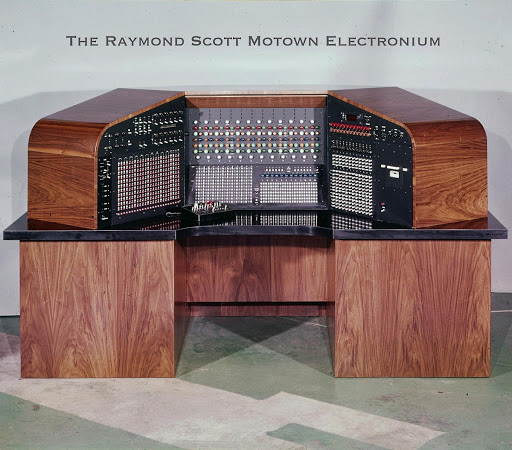
Raymond Scott’s Electronium was not simply an early synthesizer. It was conceived as a system that could generate and perform musical material automatically, using electronic circuits and algorithmic processes. Scott described the relationship as a collaboration between a person and a machine. The operator did not have to enter a finished score and press play. The machine could propose musical events while the composer adjusted, selected and redirected them.
That makes the Electronium difficult to place in the usual history of electronic instruments. A keyboard waits for instructions. A tape machine reproduces decisions already made. A sequencer repeats information placed into it. Scott was trying to build something less obedient: an instrument with enough internal behaviour to surprise its maker without removing the maker from the process.
The surviving machine was never turned into a stable commercial product, and descriptions of its capabilities changed as Scott continued developing it. That incompleteness is part of the story rather than a flaw to hide. Musical tools are often presented as finished solutions, while actual creative practice is full of unstable patches, provisional controls and systems that are never quite complete. The Electronium makes that unfinished state visible. Its most durable contribution may be the model of the studio as a place where composition can emerge through negotiation with a system, not only through commands given to it.
#RaymondScott #Electronium #ElectronicMusic #MusicTechnology