Skip to content

A Score Made From Conditions

Chris Watson

An Estuary Edited Into One Journey

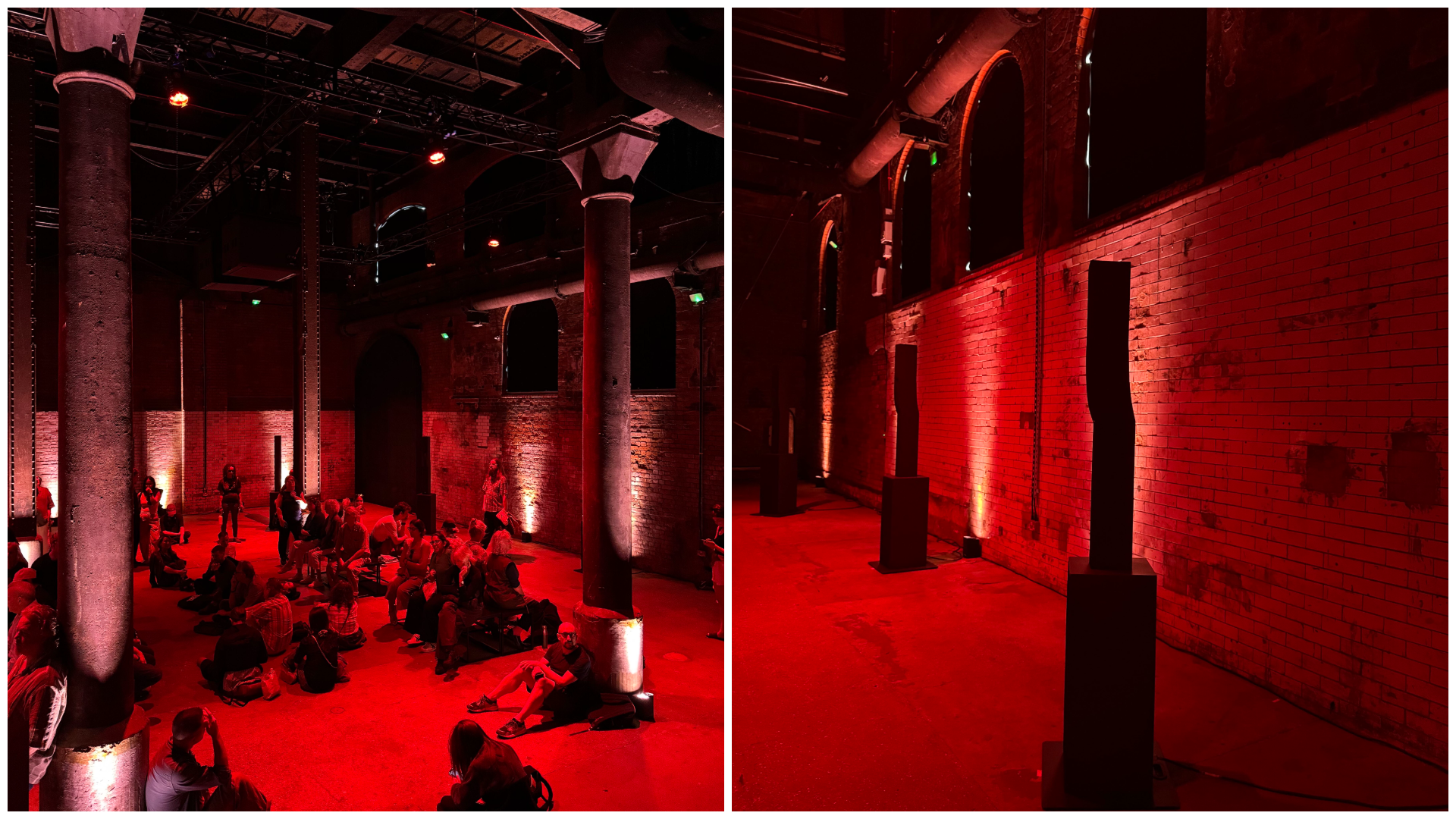
Chris Watson’s Trent Falls follows the Humber Estuary from Goole Docks toward the North Sea, but it is not a continuous recording of one trip. Watson gathered material over nearly two years, then compressed different locations, seasons and events into a single spatial passage. Reeds, birds and grey seals share the route with a freight train, bridge traffic, chemical industry, cathedral bells, a fairground and football supporters.

Originally commissioned during Hull’s year as UK City of Culture in 2017, the work was presented again for London Design Festival 2026 inside Wapping Hydraulic Power Station. That setting added another layer of infrastructure. A journey through an estuary shaped by shipping and industry was heard in a former power station through an immersive loudspeaker system.

Field recording is sometimes valued as evidence, as if the microphone simply preserves what was present. Trent Falls works more like cinema without images. Geography is edited, distant moments are placed beside one another and the tide provides a direction through material that never occurred in exactly that sequence. The recording is documentary at the level of each sound, but composed at the level of the journey.

https://www.wallpaper.com/design-interiors/design-events/chris-watson-wapping-power-station-london-design-festival-2026

#ChrisWatson #TrentFalls #FieldRecording #SpatialSound

An Estuary Edited Into One Journey An Estuary Edited Into One Journey Wallpaper* Wapping Power Station becomes London Design Festival’s centre of sound Sound artist Chris Watson draws upon the maritime heritage of Hull for a sound installation where ‘wildlife and industrial sounds constantly interrupt one another’
Facebook LinkedIn WhatsApp Threads
More sharing options
X Reddit Pinterest Telegram Email
Calling the

A Score Made From Conditions

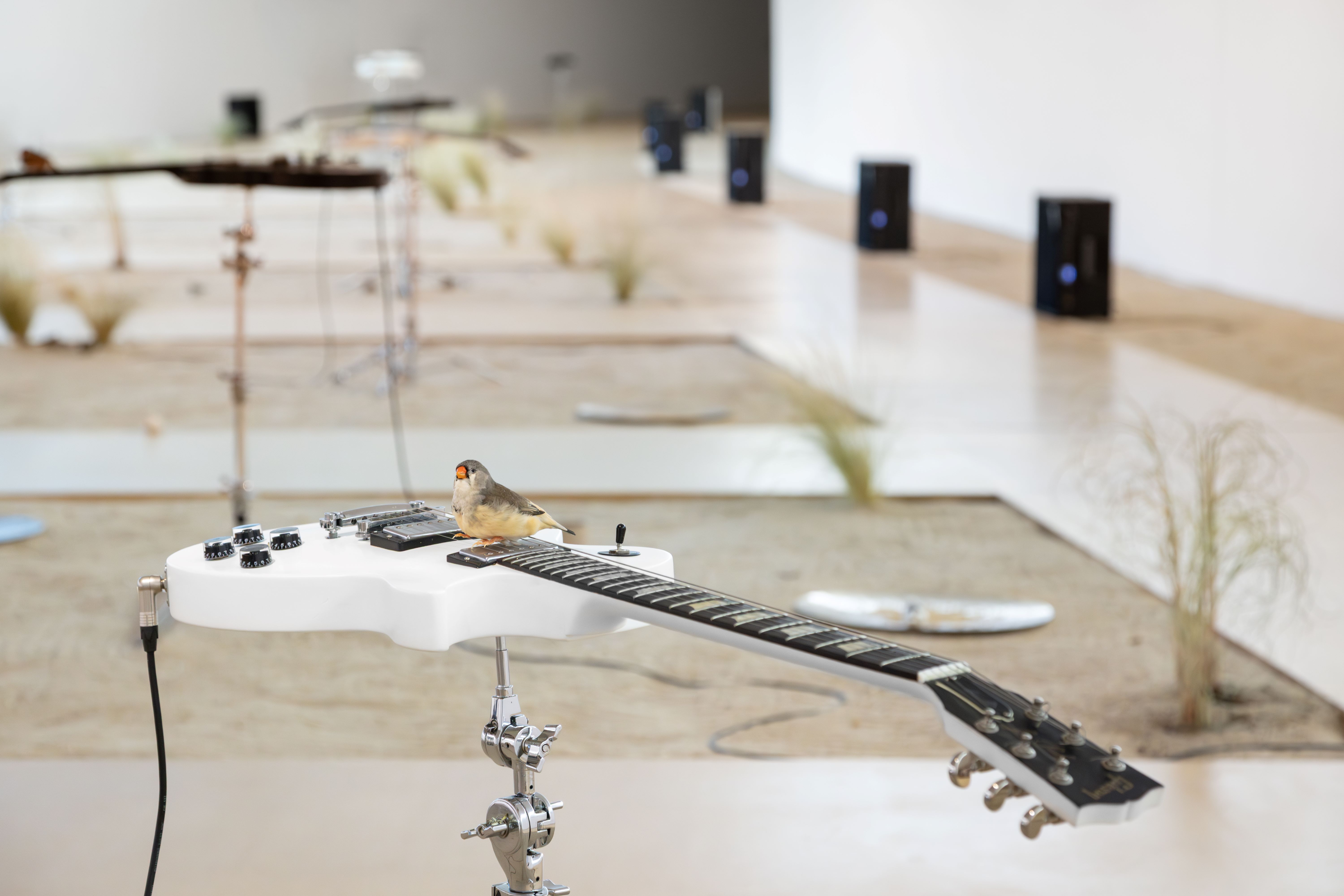
In from here to ear v.26, around one hundred zebra finches moved through a room containing roughly twenty amplified electric guitars. When a bird landed on a string, bridge or control, its weight and movement could produce a note, vibration or burst of noise. No performance repeated in a fixed form because the birds determined when contact occurred.

Calling the finches musicians is tempting, but the work is more precise when understood as a designed set of conditions. Céleste Boursier-Mougenot chose the instruments, amplification, layout and environment. The birds introduced events that the system could make audible but not schedule. Composition moved away from arranging notes in time and toward arranging possible encounters.

The 2026 presentation at MAAT in Lisbon also made the practical structure visible. The finches were bred in Portugal, acclimatised before the exhibition, monitored daily by a specialist team and returned to their breeder afterward. Those details do not sit outside the artwork. A living installation depends on care, limits and routine as much as it depends on chance.

What remains unpredictable is small: a landing, a hop, a string briefly disturbed. Amplification enlarges that action until the room notices it.

https://maat.pt/en/event/celeste-boursier-mougenot-here-ear

#CelesteBoursierMougenot #SoundInstallation #ElectricGuitar #GenerativeArt

A Score Made From Conditions A Score Made From Conditions MAAT Céleste Boursier-Mougenot : from here to ear | MAAT For his first-ever exhibition in Portugal, French artist Céleste Boursier-Mougenot presents one of his most iconic works: from here to ear v.26. As a composer, Céleste Boursier-Mougenot arranges sound structures in space like physical scores, naturally bringing his music into the realm of contemporary art. He creates the conditions for a permanent musical composition that is both random and perfectly controlled. In this piece, visitors are invited to walk through a room filled with some twenty electric guitars played by unusual performers: zebra finches – small birds that perch freely onto the instruments. More than a simple sound installation, the work is above all an invitation to align one’s perception, movements, and behavior with those of these winged performers. Two worlds within a single space are united in the resonances of music that never ceases to unfold. Céleste Boursier-Mougenot has held numerous exhibitions at prestigious institutions worldwide. These include the Pinacoteca de São Paulo (2009), the Barbican Centre in London (2010), the Palais de Tokyo in Paris and the Centre Pompidou-Metz (2015), SFMOMA in San Francisco (2017), and, more recently, the Bourse de Commerce – Pinault Collection in Paris (2025), and the Park Avenue Armory in New York (2026). He represented France at the 56th Venice Biennale in 2015, curated by Emma Lavigne. The one hundred zebra finches featured in the installation were bred in Portugal by a specialized breeder. Native to Australia, the zebra finch was selected for its highly social nature and its strong and prompt capacity to adapt to new environments. The group consists of fifty males and fifty females, which will undergo a period of acclimatization to the space and its conditions prior to the exhibition’s opening to the public. Throughout the exhibition period, the environment of the installation is carefully controlled. The birds’ welfare and hygiene conditions are ensured on a daily basis by a specialized team responsible for feeding, cleaning, and monitoring their health. The presentation fully complies with all legal and regulatory requirements applicable to this type of project, in accordance with the guidelines of the relevant authorities. At the end of the exhibition, the birds will return to their original breeder, ensuring the continuity of appropriate living conditions.
Facebook LinkedIn WhatsApp Threads
More sharing options
X Reddit Pinterest Telegram Email
Acoustic Space

Equal Power, Unequal Sound

Zimoun supplied equal power to 329 small DC motors inside a former toluene tank in Dottikon, Switzerland. Each motor moved a compressed cotton ball against the tank’s thin steel surface. Small differences in the motors, wires, balls and points of impact nevertheless caused the units to drift apart.

Some strikes produced low vibration through the steel, while others made lighter, insect-like clicks. The tank folded them into a reverberation lasting about twenty seconds. No software randomness was required. The electrical instruction could be copied exactly, but friction, weight and position interpreted every copy differently. Precision entered the system at the cable; variation returned through matter.

https://www.wired.com/2013/06/zimoun-soundscape/

#Zimoun #SoundSculpture #DCMotors #AcousticSpace

Equal Power, Unequal Sound Equal Power, Unequal Sound WIRED Video: Step Inside a Giant Silo's Magical (Or Maddening) Soundscape In less capable hands, a project entitled 329 prepared dc-motors, cotton balls, toluene tank sounds like a science experiment waiting to go really, really wrong. But in the hands of Swiss artist Zimoun, these simple objects transform an empty, old chemical tank in Dottikon, Switzerland into a mesmerizing soundscape that will leave you wondering: How the hell did he do this?
Facebook LinkedIn WhatsApp Threads
More sharing options
X Reddit Pinterest Telegram Email
Electronic Music

A Record Sold With Houseplants

Mort Garson’s Mother Earth’s Plantasia was not initially distributed like an ordinary album. Customers received it when they bought a plant from the Mother Earth shop on Melrose Avenue in Los Angeles, or a Simmons mattress from Sears. Its intended listener was described in the subtitle: “warm earth music for plants…and the people that love them.”

The claim that plants benefit from music is not what makes the record endure. More interesting is how the imagined audience affected the composition. Garson’s Moog pieces are melodic, gently animated and full of rounded attacks, small upward figures and bright changes in register. Titles such as “Symphony for a Spider Plant” and “Concerto for Philodendron and Pothos” give each piece a domestic setting before a note is heard.

A synthesizer was often introduced as a machine of the future. Garson placed it beside leaves, soil and routine household care. The record did not ask the Moog to imitate nature convincingly. It used electronic sound to address something that could not answer back. That odd premise produced music with none of the aggression or technical display often attached to early synthesizer demonstrations.

Mother Earth?s Plantasia

#MortGarson #Plantasia #MoogSynthesizer #ElectronicMusic

A Record Sold With Houseplants A Record Sold With Houseplants Sacred Bones Records Mort Garson: Mother Earth's Plantasia The first authorized reissue of Mort Garson's legendary 1976 album, 'Mother Earth's Plantasia.' Subtitled “warm earth music for plants…and the people that love them,” it was full of bucolic, charming, stoner-friendly, decidedly unscientific tunes enacted on the new-fangled device called the Moog.
Facebook LinkedIn WhatsApp Threads
More sharing options
X Reddit Pinterest Telegram Email
Detroit Techno

From Minimal Techno to Gospel House

Robert Hood’s 1994 records Minimal Nation and Internal Empire helped define a form of techno built through reduction. Their force comes from tightly controlled drums, short repeating figures and small changes that become significant because so little competes with them.

His Floorplan project later opened a different route. Hood, who became an ordained minister in 2009, brought gospel vocals, piano and disco warmth into club tracks without abandoning repetition or physical pressure. The contrast is not simply between dark techno and joyful house. Both approaches depend on concentration. A clipped sequence can hold attention through tiny rhythmic shifts; a repeated gospel phrase can gather intensity each time it returns.

In 2016, Floorplan became a father-and-daughter duo when Lyric Hood joined the project. That addition altered the social shape of the music as much as its stage presentation. A practice once associated with solitary studio reduction became something transmitted between generations, while the dance floor remained the place where the material acquired its full weight.

https://www.newyorker.com/magazine/2018/05/07/divinity-on-the-dance-floor

#RobertHood #Floorplan #DetroitTechno #GospelHouse

From Minimal Techno to Gospel House From Minimal Techno to Gospel House The New Yorker Divinity on the Dance Floor Robert Hood, the d.j. known as Floorplan, who is an ordained minister, brings his spiritual mission to clubs.
Facebook LinkedIn WhatsApp Threads
More sharing options
X Reddit Pinterest Telegram Email
Contemporary Jazz

The Arpeggio Holds the Door Open

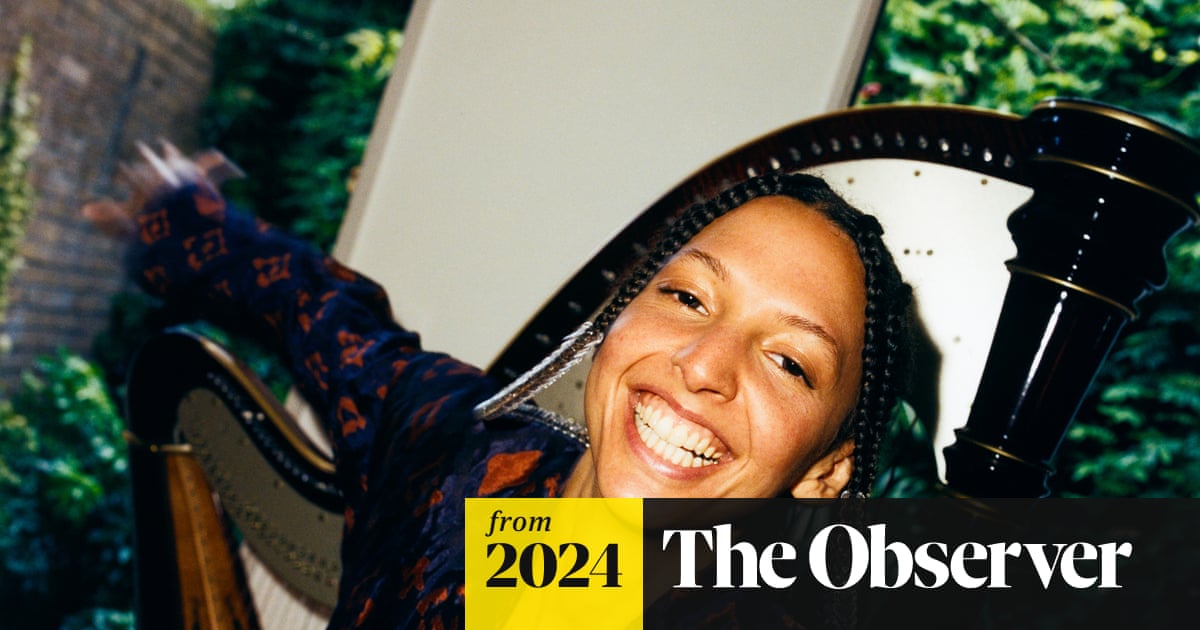
The ten pieces on Nala Sinephro’s Endlessness are all titled “Continuum.” Across the 2024 album, an electronic arpeggio acts less like a hook than a shared piece of ground. Saxophones, piano, drums, flugelhorn, harp and strings can enter, withdraw or drift across it without the music losing its direction.

A rigid sequence can close down a performance if every musician is asked to follow it literally. Sinephro uses repetition differently. The pulse stays legible, but its meaning changes with the harmony, density and instrumental colour around it. The machine supplies continuity while the ensemble supplies scale and breath. Electronic control and live improvisation are not treated as opposites. One gives the other something stable to move against.

https://www.theguardian.com/music/article/2024/sep/06/nala-sinephro-endlessness-review-cosmic-jazz-musicians-stellar-cycle-of-life-meditation-nubya-garcia-james-mollison-sheila-maurice-grey-morgan-simpson

#NalaSinephro #Endlessness #ModularSynth #ContemporaryJazz

The Arpeggio Holds the Door Open The Arpeggio Holds the Door Open the Guardian Nala Sinephro: Endlessness review – cosmic jazz musician’s cycle-of-life meditation The harpist-composer follows her remarkable debut with 10 lush, spacey electro-acoustic tracks featuring guests such as Nubya Garcia
Facebook LinkedIn WhatsApp Threads
More sharing options
X Reddit Pinterest Telegram Email
Accordion

A Band Inside One Cassette

When Hailu Mergia made Hailu Mergia & His Classical Instrument in the mid-1980s, he was no longer leading the Walias Band through the long nightclub sets that had made him well known in Ethiopia. He had remained in the United States after the band toured there and began working alone. On the cassette, accordion, electric piano, synthesizer and drum machine allow one musician to occupy the space of an ensemble.

That change in scale can be heard in the arrangements. The drum machine establishes a plain, dependable frame while Mergia moves between sustained keyboard colour, melodic ornament and the breathing pulse of the accordion. The electronics do not erase the Ethiopian modes in the music. They give Mergia a compact way to voice several musical roles without pretending that a machine is a full band.

The cassette later slipped out of circulation. After a copy was found in an Ethiopian record shop, Awesome Tapes From Africa reissued it in 2013 and Mergia returned to international performance. The rediscovery is often told as a dramatic career reversal, but the quieter detail stays with me: during his years driving a taxi in Washington, D.C., he kept a keyboard in the trunk and practised between fares. Public attention stopped for a time. His relationship with the instrument did not.

Hailu Mergia on Walias Band, Dahlak Band, and Fleeing Ethiopia

#HailuMergia #EthioJazz #Accordion #HomeRecording

A Band Inside One Cassette A Band Inside One Cassette Berklee Online Take Note Hailu Mergia on Walias Band, Dahlak Band, and Fleeing Ethiopia Hailu Mergia is an accordionist, keyboardist, and bandleader from Ethiopia, where he played with Walias Band and Dahlak Band before defecting to the US.
Facebook LinkedIn WhatsApp Threads
More sharing options
X Reddit Pinterest Telegram Email