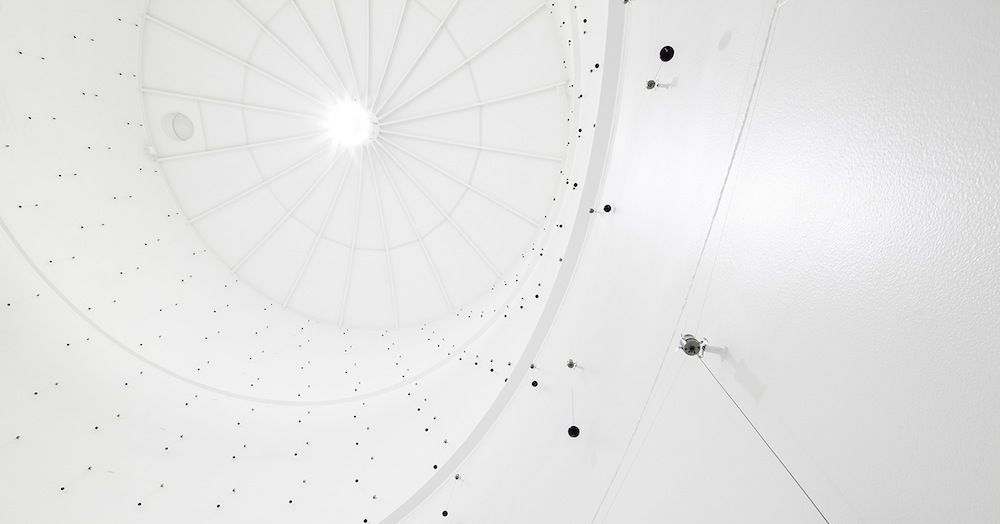
Zimoun supplied equal power to 329 small DC motors inside a former toluene tank in Dottikon, Switzerland. Each motor moved a compressed cotton ball against the tank’s thin steel surface. Small differences in the motors, wires, balls and points of impact nevertheless caused the units to drift apart.
Some strikes produced low vibration through the steel, while others made lighter, insect-like clicks. The tank folded them into a reverberation lasting about twenty seconds. No software randomness was required. The electrical instruction could be copied exactly, but friction, weight and position interpreted every copy differently. Precision entered the system at the cable; variation returned through matter.