Skip to content

Recording a City That Is Already Playing

Buchla

Playing the Space Itself

Suzanne Ciani’s relationship with the Buchla synthesizer goes beyond generating unusual electronic tones. In her quadraphonic performances, space itself becomes part of the instrument. Four-channel output allows sounds to move around the audience rather than simply sit between a left and right speaker. Ciani has described spatial placement and movement as integral parts of the composition.

That interests me because stereo production trains us to think mainly from the front. Pan something left, move something right, create depth with reverb. Quadraphonic sound changes the geometry completely.

A sequence can rotate around the room. A gesture can disappear behind the listener. Two sounds can occupy physically different territories even when their frequencies overlap.

Ciani’s work makes me think that electronic composition has an additional parameter we often ignore: location.

Pitch, rhythm, timbre and volume can all change over time.

Why not position?

Once sound can move through architecture, the room stops being the container for the music.

It becomes another part of the synthesizer.

https://www.sevwave.com/

#SuzanneCiani #Buchla #QuadraphonicSound #ElectronicMusic

Playing the Space Itself Playing the Space Itself Suzanne Ciani Suzanne Ciani | Diva of the Diode Suzanne is a five-time Grammy award nominated composer, electronic music pioneer, and neo-classical recording artist. -Suzanne Ciani -composer -Buchla -synth pioneer
Himid’s Zanzibar

Painting a Place From Memory

Lubaina Himid’s Zanzibar series is built around several journeys, some physical and some remembered. Himid was born in Zanzibar in 1954 and travelled to England with her mother when she was only four months old after her father died. Decades later she returned to Zanzibar in 1997 and realised that she had already been painting aspects of the island without consciously knowing it.

That idea stays with me.

We often think observation comes first and artwork second. You see a place, then represent it.

Memory can reverse the order.

Colour, sea, rain, shutters or fragments of architecture may appear in paintings before the artist fully understands what they belong to.

Himid describes the series as containing cloves, fishing nets, the sea, malaria and women’s tears. She also listened to a great deal of music while making it.

The paintings therefore do not behave like geographical documents.

They are closer to maps drawn after forgetting most of the roads.

Sometimes the inaccuracies of memory may tell us more about a place than accurate coordinates ever could.

Zanzibar

#LubainaHimid #Zanzibar #Painting #MemoryAndPlace

Painting a Place From Memory Painting a Place From Memory lubainahimid.com Zanzibar – Lubaina Himid Lubaina Himid’s Zanzibar series is built around several journeys, some physical and some remembered. Himid was born in Zanzibar in 1954 and...
Cecilia Vicuna

Writing With Knots Again

Cecilia Vicuña began making her own interpretations of the Andean quipu as a teenager in Chile. Historical quipus used coloured and knotted cords to encode information, but Vicuña treats the idea more freely, describing her works as poems in space. Some are made from enormous lengths of unspun wool that viewers can physically walk among.

That scale changes everything.

A knot normally fits in a hand. Enlarge the idea until threads descend through architecture and the viewer effectively enters the writing.

Vicuña has said that people walking through Quipu Austral become part of the knots themselves. Wind and sunlight can also move the fibres, meaning the work continues changing after installation.

I like the contradiction between ancient memory technology and extreme material fragility.

We tend to imagine information preservation as making something permanent.

Vicuña does something stranger. Meaning survives through an object that can move, fray and eventually disappear.

Perhaps memory does not always need a permanent container.

Sometimes it needs repetition.

https://www.ceciliavicuna.com/quipus

#CeciliaVicuna #Quipu #ChileanArt #TextileInstallation

Writing With Knots Again Writing With Knots Again Cecilia Vicuña Quipus — Cecilia Vicuña Cecilia Vicuña began making her own interpretations of the Andean quipu as a teenager in Chile. Historical quipus used coloured and knotted cords...
Expanded Cinema

When Film Invades the Room

Ho Tzu Nyen’s The Cloud of Unknowing begins as moving image but refuses to remain simply a film on a wall. Created for the Singapore Pavilion at the 2011 Venice Biennale, it was filmed inside a public housing block shortly before demolition. Eight characters encounter different manifestations of a mysterious cloud, with references ranging across Eastern and Western art history.

But the installation extends beyond the image.

Multiple screens, multichannel audio, theatrical lighting and smoke transform the viewing space itself. The cloud can effectively leave the projected world and appear to enter the room occupied by the audience.

That interests me from a VJ and expanded-cinema perspective.

Projection normally creates a clear border: reality here, image there.

Smoke destroys that certainty because projected light suddenly has volume. A beam that was invisible in the air becomes a physical-looking object.

The simplest atmospheric effect can therefore change the grammar of cinema.

The image stops being something we look at.

For a moment, we are standing inside it.

https://www.chanel.com/us/chanel-next-prize/ho-tzu-nyen/

#HoTzuNyen #ExperimentalFilm #VideoInstallation #ExpandedCinema

When Film Invades the Room When Film Invades the Room chanel.com Ho Tzu Nyen’s The Cloud of Unknowing begins as moving image but refuses to remain simply a film on a wall. Created for the Singapore Pavilion at...
Caterina Barbieri

One Sequencer, Thousands of Possibilities

Caterina Barbieri built Patterns of Consciousness from an intentionally restricted electronic system. Her liner notes describe an Indexed Quad Sequencer and harmonic oscillator generating permutations from a small collection of predetermined harmonic material. Addition, subtraction, jitter and changing gates allowed patterns to keep transforming without requiring entirely new musical material.

This interests me because complexity emerges from restriction rather than abundance.

Modern music software presents thousands of instruments, presets and effects simultaneously. Barbieri’s approach asks almost the opposite question: what happens if you decide on a small system and explore it until its internal possibilities become audible?

The gate is especially interesting. A stored sequence may contain more information than we actually hear. By altering which portions are allowed through, the same underlying pattern keeps revealing different versions of itself.

That is close to sculpture by subtraction.

The material already exists.

Composition becomes the decision about what is temporarily allowed to appear.

https://caterinabarbieri.com/Patterns-of-Consciousness-Liner-Notes

#CaterinaBarbieri #ModularSynth #Sequencing #ExperimentalElectronic

One Sequencer, Thousands of Possibilities One Sequencer, Thousands of Possibilities caterinabarbieri.com Patterns of Consciousness Liner Notes — Caterina Barbieri Sound as an agent of change A pattern creates a certain state of consciousness. Once it is created, the pattern stands as an object exactly like the sound waves...
Already Playing Ruby Solly’s

Recording a City That Is Already Playing

Ruby Solly’s P?neke treats Wellington not simply as the place where an album was recorded but as an active participant in the composition. Solly, a K?i Tahu, Waitaha and K?ti M?moe musician and taonga p?oro practitioner, connects cello, voice and traditional M?ori instruments with environmental recordings and histories embedded in specific locations.

On “Koukou,” for example, the recording includes a resident ruru, or morepork, heard from the porch of her home. The bird is not added as a decorative nature sample. Its call is tied to family names, memory and the waterways that once shaped the area.

I like the distinction.

A field recording can merely tell us, “this happened outside.”

Or it can belong structurally to why the piece exists at all.

Once place enters composition at that level, removing the environmental sound would not simply produce a cleaner mix. It would remove part of the subject.

The landscape is no longer behind the music.

It is one of the musicians.

https://rubysolly.bandcamp.com/album/p-neke

#RubySolly #TaongaPuoro #AotearoaMusic #FieldRecording

Recording a City That Is Already Playing Recording a City That Is Already Playing Ruby Solly P?neke, by Ruby Solly 11 track album
Andean Music

Folklore Inside a Digital Grid

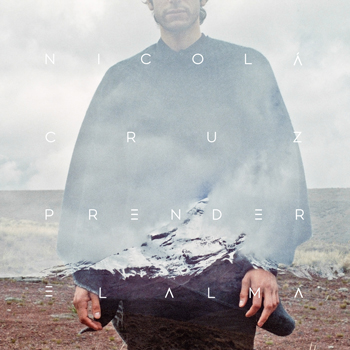
Nicola Cruz’s Prender el Alma was built through a process his label describes almost literally as layer by layer, instrument by instrument and drum by drum. The Ecuador-based producer connected electronic production with Andean and Afro-influenced musical ideas, acoustic guitar, percussion and voices. The resulting approach has sometimes been described as “Andes Step.”

The phrase matters less to me than the production question underneath it.

Electronic music software encourages everything toward a grid. Notes can be corrected, percussion quantised and loops copied perfectly. Traditional musical practices often contain timing, tuning and phrasing that resist that kind of standardisation.

The interesting part is what happens when both worlds remain audible.

Technology does not automatically modernise traditional sound, and traditional instruments do not automatically make electronic music culturally deeper. The real work is in deciding what should remain irregular.

A grid becomes much more interesting when some sounds are allowed to push against it.

https://zzkrecords.com/album/prender-el-alma

#NicolaCruz #EcuadorianMusic #ElectronicMusic #AndeanMusic

Folklore Inside a Digital Grid Folklore Inside a Digital Grid zzkrecords.com Prender el Alma | Nicola Cruz Following his collaboration with Nicolas Jaar's Clown & Sunset label, Cruz has self-produced and self-recorded this landmark album. 'Prender el Alma' is a new strain of Latin American music Cruz calls ‘Andes Step’. Influenced by new digital technology, blended with local influence, Cruz builds his tracks layer by layer, instrument by instrument, drum by drum, exploring local indigenous and Afro-cosmologies in a modern setting. From atmospheric opener ‘Sanacion’, the 10-track album journeys…
Album Made Almost Entirely

An Album Made Almost Entirely From Voice

Hatis Noit’s Aura was constructed almost completely from her own voice. She recorded the principal vocals in Berlin in only eight hours. Layers were then looped, edited and eventually re-amplified inside St John of Jerusalem Church in London so the recordings could absorb a real architectural ambience.

The exception is “Inori,” which includes a field recording of the sea made about one kilometre from the Fukushima Daiichi nuclear power plant in 2017.

What interests me is the re-amping process. Digital production makes it possible to create almost any imagined acoustic space through convolution and reverb, yet the team chose to send the recorded voice back into an actual building and record what the room did to it.

The architecture became an effect processor.

There is something beautifully circular about that. A voice enters a microphone, becomes data, leaves a loudspeaker, touches stone and air, and becomes a recording again.

Sometimes the most interesting signal chain includes a building.

https://www.hatisnoit.com/works

#HatisNoit #VoiceArt #ExperimentalMusic #SoundProduction

An Album Made Almost Entirely From Voice An Album Made Almost Entirely From Voice hatisnoit MUSIC | hatisnoit Hatis Noit’s Aura was constructed almost completely from her own voice. She recorded the principal vocals in Berlin in only eight hours. Layers...
Gambian Music

Breaking a Seven-Century Pattern

Sona Jobarteh comes from one of the West African griot families in which the kora tradition has been transmitted across generations. Her grandfather Amadu Bansang Jobarteh and cousin Toumani Diabaté belong to that lineage. What makes her position historically unusual is that she became the first woman from such a griot family to establish herself professionally as a kora virtuoso.

Yet I find the instrument itself more interesting than the milestone alone.

A kora combines 21 strings with a calabash resonator and allows melody, bass movement and repeating patterns to exist simultaneously. In the hands of one performer it can sound almost like several musicians negotiating with one another.

Jobarteh also studied Western classical composition, cello, piano and harpsichord. Her work therefore does not fit comfortably inside the idea that preserving tradition means avoiding other musical languages.

Perhaps preservation is strongest when the knowledge is deep enough that change no longer feels like a threat.

https://sonajobarteh.com/biography

#SonaJobarteh #Kora #GambianMusic #WestAfricanMusic

Breaking a Seven-Century Pattern Breaking a Seven-Century Pattern Sona Jobarteh Sona Jobarteh Sona Jobarteh comes from one of the West African griot families in which the kora tradition has been transmitted across generations. Her grandfather Amadu…
Buchla

Teaching a Synthesizer to Breathe

On EARS, Kaitlyn Aurelia Smith built much of the music around the Buchla Music Easel, but the album never feels interested in proving how electronic it is. She composed first with the Buchla, then arranged parts for woodwinds and vocals, using granular processing to further reshape the material. Before composing, she even studied slowed-down recordings of bird calls.

That detail interests me because the synthesizer and acoustic instruments are not placed in opposition. The woodwinds breathe, the voice bends, and the Buchla produces its own unstable movement until all three begin to occupy the same organic space.

Smith has described the Buchla as unusually human-sounding. I hear something slightly different: the instrument becomes convincing precisely because she does not force it to imitate a human instrument.

Electronic sound can have its own biology.

The lesson for me is not that synthesis should sound natural. It is that modulation, timing and small variations can make electronic sound behave as if something inside it is alive.

Into Your Eyes

#KaitlynAureliaSmith #Buchla #ModularSynth #ElectronicMusic

Teaching a Synthesizer to Breathe Teaching a Synthesizer to Breathe Kaitlyn Aurelia Smith Into Your Eyes On EARS, Kaitlyn Aurelia Smith built much of the music around the Buchla Music Easel, but the album never feels interested in proving how...
Artwork Behaving Like Data

An Artwork Behaving Like Data

Peruvian artist Teresa Burga created 4 Mensajes in 1974 as a multimedia environment using drawings, diagrams, 16mm video and 35mm slides. The work belongs to a practice in which information, measurement and systems became artistic material rather than simply tools used to document an artwork.

That feels unexpectedly contemporary.

We now live surrounded by dashboards, diagrams, sensors and interfaces that translate reality into data. Burga was already asking what happens when those forms of organisation become the work itself.

A diagram normally promises clarity. It says: this complicated thing can be reduced to relationships you can understand.

Art can use the same visual language while refusing that promise.

The diagram may look objective while making us more aware of whoever selected the information, chose the categories and decided what should be measured.

That is what interests me most. Data never simply appears.

Someone designs the system that makes it visible.

Once you notice that, a chart can become as subjective as a painting.

https://mali.pe/

#TeresaBurga #PeruvianArt #ConceptualArt #MultimediaArt

An Artwork Behaving Like Data An Artwork Behaving Like Data MALI - Museo de Arte de Lima MALI | Museo de Arte de Lima – Arte, Exposiciones y Cultura Descubre el MALI, el Museo de Arte de Lima. Explora exposiciones, actividades culturales, colecciones y experiencias de arte peruano.