| | |

Sounnay Trilogy – Soundscape

Only Sound

Image two coming soon!


Sonia Delaunay Tree Paintings: A Soundscape in Three Parts

Inspired by the Sonia Delaunay tree paintings, I created a soundscape that captures the essence of three of her most iconic works. Each painting carries its own visual language, and translating that into sound meant exploring the movements that shaped her art.

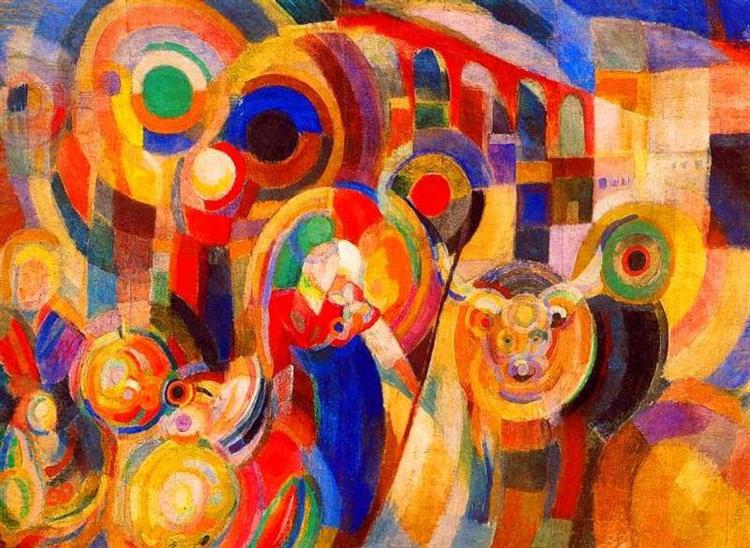
Market at Minho (1915): Where Orphism Meets Sound

The first painting, Market at Minho (1915), is a defining example of Orphism — the style that Sonia and Robert Delaunay helped pioneer. Its bold geometric shapes draw a clear link to Cubism, yet the painting radiates an unconditional dynamism that echoes the energy of the Futurists. At the same time, its vivid, unrestrained use of color reveals a strong Fauvist influence, reminding us that Simultanism was never far from the “wild” expressive palette that defined that movement.

For this soundscape, that layered visual history called for an equally layered sonic response — grounding rhythm beneath surging, colorful waves of sound.


Sonia Delaunay Soundscape: Translating Color and Motion into Sound

Creating a Sonia Delaunay soundscape meant capturing the raw dynamism that defines her work. For the first painting, I blended ambient and electronic sounds to reflect its energy. Bustling market noise, the low hum of engines, and the rhythmic thud of footsteps weave together to create a sense of movement and excitement. Each layer builds on the next, mirroring the visual rhythm of her bold compositions.

Abstract Blue: Light, Color, and Contemplation

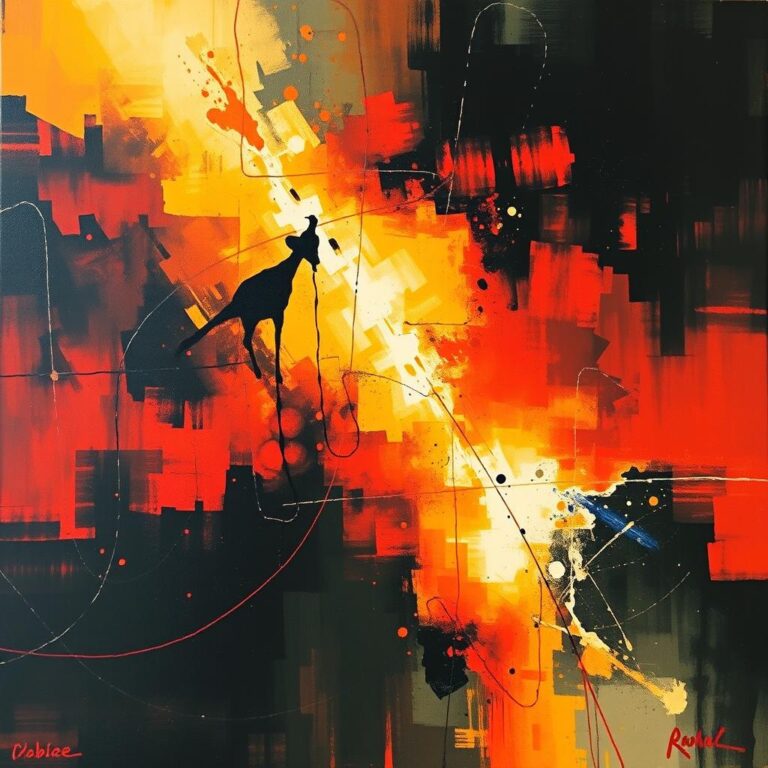
The second work presented a different challenge. This unknown abstract painting — featuring blue points and broken lines with sharp corners — offered no clear narrative. Instead, I focused on the interplay of light and color. The resulting soundscape shimmers with ethereal, glowing tones that fade in and out of focus. It invites introspection and encourages the listener to lose themselves in the painting’s intricate visual language.

Propeller (Air Pavilion): Industrial Sound Meets Futurism

For Propeller (Air Pavilion) (1937), I drew inspiration from the Delaunays’ celebration of the transportation industry — and their signature use of vivid color over cold, grey metal. To honor that contrast, I combined industrial and electronic sounds: spinning propellers, revving engines, and synthesized tones blend into a soundscape that feels both futuristic and nostalgic at once.

A Tribute to the Orphic Movement

Taken together, this Sonia Delaunay soundscape project is a tribute to the innovative spirit of Sonia and Robert Delaunay — pioneers of the Orphic movement. By pairing traditional and electronic sounds, I aimed to capture the essence of their paintings and transport the listener into a world of color, motion, and sound.


Similar Posts

  • John Stezaker

    John Stezaker is a significant contemporary artist renowned for his innovative collages that merge found photographs into thought-provoking art. His practice delves into themes such as memory, identity, and representation, challenging viewers to reconsider the nature of images. Techniques like manual cutting and pasting allow for a tactile engagement, evoking nostalgia while disrupting familiar narratives. Stezaker’s notable series, including “Film Portraits” and “Marriage,” explore the fluidity of identity through visual dissonance. His exhibitions at prestigious venues have solidified his impact on the contemporary art scene and inspired a renewed appreciation for collage as a complex art form.

  • |

    Why You’ll Want to Put

    FDR-Sound is a diverse music platform showcasing various genres, including EDM, ambient, and experimental sounds. The creator invites listeners to explore a range of works, from releases and live takes to sketches. Key tracks include “Ageless Souls,” “Give Me A Name,” and “Call Me,” all available on Spotify. The music emphasizes texture and rhythm, with a balance between energetic beats and atmospheric soundscapes. The artist encourages immersive listening experiences, highlighting the impact of sound and the freedom of creative exploration.

  • Classical Music

    Classical music, spanning from the Middle Ages to the present, showcases a rich historical evolution and diverse styles. The Medieval period’s Gregorian chants and the emergence of polyphony laid foundations for Western music. The Renaissance brought intricate polyphony and secular themes, while the Baroque period emphasized contrast and expressiveness. The Classical era favored simplicity and balance. The Romantic period sought emotional expression, and the 20th century saw unprecedented experimentation. This living tradition continues to evolve in the 21st century, reflecting the complexities of the modern world. Classical music’s enduring influence extends beyond concert halls, permeating popular culture.

  • Experimental Music

    Experimental music is a genre that has continuously challenged and expanded music’s boundaries since its early influences in Medieval and Renaissance periods. It bloomed in the 20th century through movements like Musique Concrète and Free Jazz, driven by innovators such as John Coltrane and Ornette Coleman. The integration of disparate genres led to rock and electronic music crossovers exemplified by The Velvet Underground and David Bowie. Later, ambient and industrial movements further shaped experimental music’s landscape, with artists like Brian Eno and Throbbing Gristle pushing sonic boundaries. Today, experimental music continues to evolve in diverse forms, reflecting an ongoing exploration of sound and creativity.

Leave a Reply

Your email address will not be published. Required fields are marked *