
Image two coming soon!

Sonia Delaunay Tree Paintings: A Soundscape in Three Parts
Inspired by the Sonia Delaunay tree paintings, I created a soundscape that captures the essence of three of her most iconic works. Each painting carries its own visual language, and translating that into sound meant exploring the movements that shaped her art.
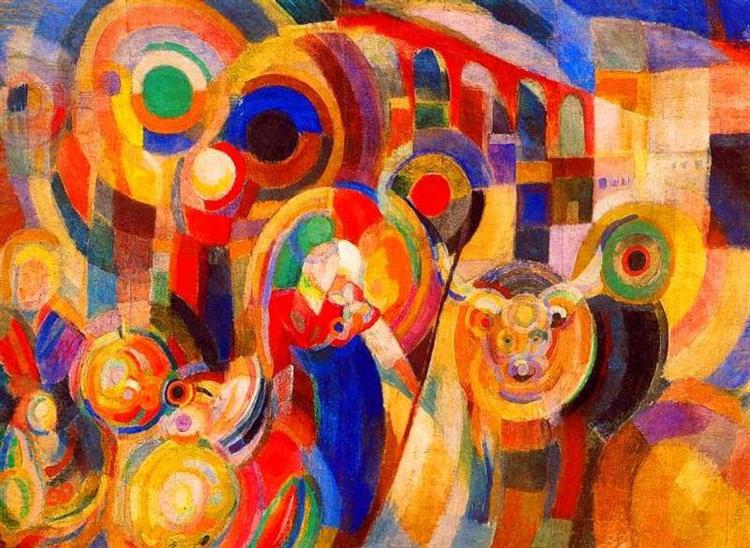
Market at Minho (1915): Where Orphism Meets Sound
The first painting, Market at Minho (1915), is a defining example of Orphism — the style that Sonia and Robert Delaunay helped pioneer. Its bold geometric shapes draw a clear link to Cubism, yet the painting radiates an unconditional dynamism that echoes the energy of the Futurists. At the same time, its vivid, unrestrained use of color reveals a strong Fauvist influence, reminding us that Simultanism was never far from the “wild” expressive palette that defined that movement.
For this soundscape, that layered visual history called for an equally layered sonic response — grounding rhythm beneath surging, colorful waves of sound.
Sonia Delaunay Soundscape: Translating Color and Motion into Sound
Creating a Sonia Delaunay soundscape meant capturing the raw dynamism that defines her work. For the first painting, I blended ambient and electronic sounds to reflect its energy. Bustling market noise, the low hum of engines, and the rhythmic thud of footsteps weave together to create a sense of movement and excitement. Each layer builds on the next, mirroring the visual rhythm of her bold compositions.
Abstract Blue: Light, Color, and Contemplation
The second work presented a different challenge. This unknown abstract painting — featuring blue points and broken lines with sharp corners — offered no clear narrative. Instead, I focused on the interplay of light and color. The resulting soundscape shimmers with ethereal, glowing tones that fade in and out of focus. It invites introspection and encourages the listener to lose themselves in the painting’s intricate visual language.
Propeller (Air Pavilion): Industrial Sound Meets Futurism
For Propeller (Air Pavilion) (1937), I drew inspiration from the Delaunays’ celebration of the transportation industry — and their signature use of vivid color over cold, grey metal. To honor that contrast, I combined industrial and electronic sounds: spinning propellers, revving engines, and synthesized tones blend into a soundscape that feels both futuristic and nostalgic at once.
A Tribute to the Orphic Movement
Taken together, this Sonia Delaunay soundscape project is a tribute to the innovative spirit of Sonia and Robert Delaunay — pioneers of the Orphic movement. By pairing traditional and electronic sounds, I aimed to capture the essence of their paintings and transport the listener into a world of color, motion, and sound.