| | |

Sounnay Trilogy – Soundscape

Only Sound

Image two coming soon!


Sonia Delaunay Tree Paintings: A Soundscape in Three Parts

Inspired by the Sonia Delaunay tree paintings, I created a soundscape that captures the essence of three of her most iconic works. Each painting carries its own visual language, and translating that into sound meant exploring the movements that shaped her art.

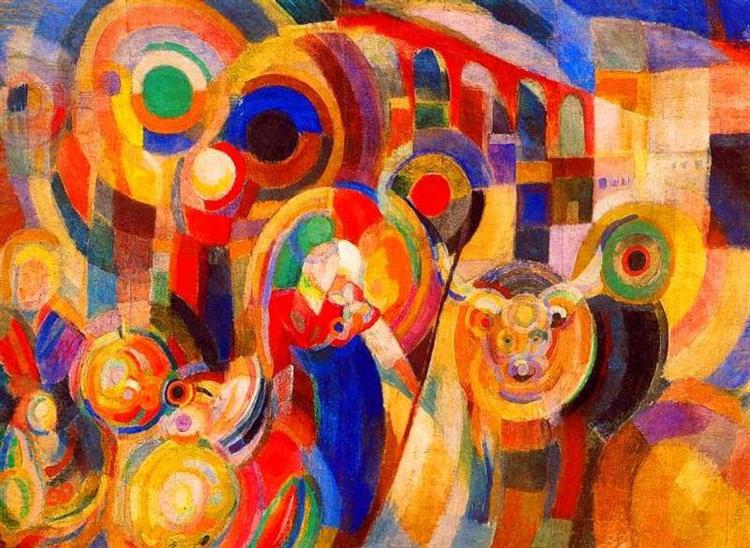
Market at Minho (1915): Where Orphism Meets Sound

The first painting, Market at Minho (1915), is a defining example of Orphism — the style that Sonia and Robert Delaunay helped pioneer. Its bold geometric shapes draw a clear link to Cubism, yet the painting radiates an unconditional dynamism that echoes the energy of the Futurists. At the same time, its vivid, unrestrained use of color reveals a strong Fauvist influence, reminding us that Simultanism was never far from the “wild” expressive palette that defined that movement.

For this soundscape, that layered visual history called for an equally layered sonic response — grounding rhythm beneath surging, colorful waves of sound.


Sonia Delaunay Soundscape: Translating Color and Motion into Sound

Creating a Sonia Delaunay soundscape meant capturing the raw dynamism that defines her work. For the first painting, I blended ambient and electronic sounds to reflect its energy. Bustling market noise, the low hum of engines, and the rhythmic thud of footsteps weave together to create a sense of movement and excitement. Each layer builds on the next, mirroring the visual rhythm of her bold compositions.

Abstract Blue: Light, Color, and Contemplation

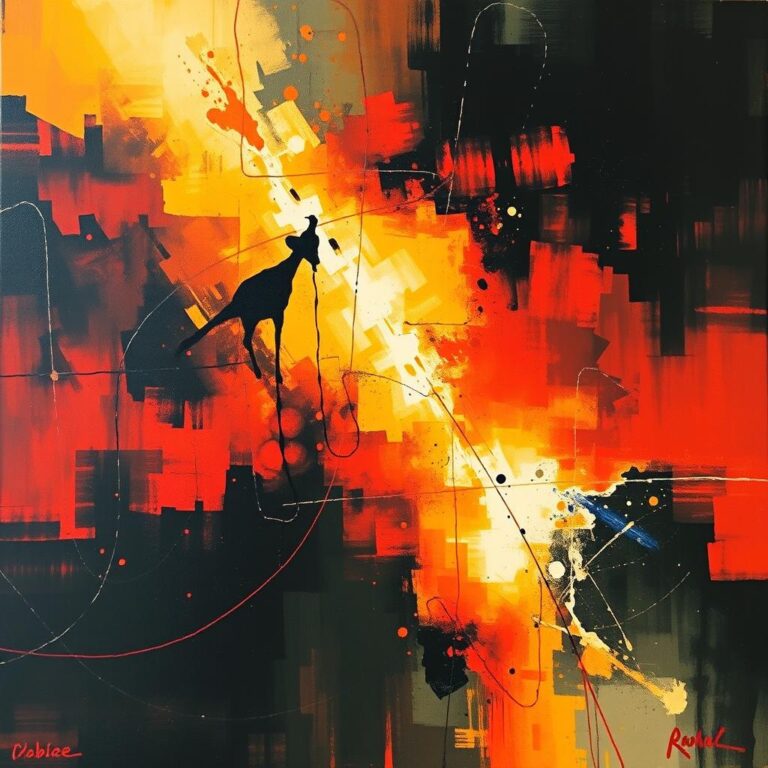
The second work presented a different challenge. This unknown abstract painting — featuring blue points and broken lines with sharp corners — offered no clear narrative. Instead, I focused on the interplay of light and color. The resulting soundscape shimmers with ethereal, glowing tones that fade in and out of focus. It invites introspection and encourages the listener to lose themselves in the painting’s intricate visual language.

Propeller (Air Pavilion): Industrial Sound Meets Futurism

For Propeller (Air Pavilion) (1937), I drew inspiration from the Delaunays’ celebration of the transportation industry — and their signature use of vivid color over cold, grey metal. To honor that contrast, I combined industrial and electronic sounds: spinning propellers, revving engines, and synthesized tones blend into a soundscape that feels both futuristic and nostalgic at once.

A Tribute to the Orphic Movement

Taken together, this Sonia Delaunay soundscape project is a tribute to the innovative spirit of Sonia and Robert Delaunay — pioneers of the Orphic movement. By pairing traditional and electronic sounds, I aimed to capture the essence of their paintings and transport the listener into a world of color, motion, and sound.


Vergelijkbare berichten

  • | |

    The Harmonic Intersection of Space and Sound: Exploring the Making of “Space – Euclidean”

    Today, we delve into the rich, ethereal landscapes of an electronic ambient sound — FDR-Sound’s composition titled “Space – Euclidean”. Composed in Ableton, this track is more than a product of digital manipulation and experimentation; it is a raw, emotive to the rhythmic pulse of the natural world around us. The brilliance of “Space –…

  • |

    The Art of Sharing

    How to Showcase Your Completed Pieces and Works in Progress, and Discover Other Artists’ Creations Introduction In the dynamic and ever-evolving world of art, sharing your work—whether it’s a polished masterpiece or a work in progress—has become an essential part of the creative process. Gone are the days when artists toiled in solitude, revealing their…

  • | | |

    Jaune Quick-to-See Smith: Memory Map – Retracing an Indigenous Visionary

    The Whitney Museum of American Art is proud to present Jaune Quick-to-See Smith: Memory Map, the first-ever New York retrospective of the acclaimed artist Jaune Quick-to-See Smith (b. 1940). A member of the Confederated Salish and Kootenai Nation, Smith has long been a trailblazer in the world of contemporary art, employing her unique artistic voice…

  • | |

    Sarah De Vos

    Palindroom 01.04—07.05.2023 Antwerp Zuid Gallery Sofie Van de Velde Sarah De Vos is a Belgian artist who has been making waves in the art world with her unique and thought-provoking works. She graduated from Sint-Lucas Antwerp in 2008, and went on to take a postgraduate course at De Ateliers in Amsterdam. Since then, she has…

  • John Stezaker

    John Stezaker is a significant contemporary artist renowned for his innovative collages that merge found photographs into thought-provoking art. His practice delves into themes such as memory, identity, and representation, challenging viewers to reconsider the nature of images. Techniques like manual cutting and pasting allow for a tactile engagement, evoking nostalgia while disrupting familiar narratives. Stezaker’s notable series, including “Film Portraits” and “Marriage,” explore the fluidity of identity through visual dissonance. His exhibitions at prestigious venues have solidified his impact on the contemporary art scene and inspired a renewed appreciation for collage as a complex art form.

  • | |

    Jef Verheyen

    Jef Verheyen (1932-1984) emerged as a vital figure in post-war European abstract art, focusing on the interplay of light and space. His artistic philosophy emphasized light as a medium for transcending materiality, creating a dialogue with viewers. Influenced by the ZERO movement, his collaborations with artists like Lucio Fontana enriched his exploration of immateriality. Verheyen’s significant works, such as “Le Vide” and “La Durée Peinte,” showcased his unique technique and contributions to abstract art. His enduring legacy inspires contemporary artists to engage with light, color, and spatial dynamics.

Geef een reactie

Je e-mailadres wordt niet gepubliceerd. Vereiste velden zijn gemarkeerd met *