Skip to content

Fifty Years Behind the Speakers

Dinastia Duende

Fifty Years Behind the Speakers

In Mexico City, Dinastía Duende. 50 años documents five decades of one family inside the city’s sonidero culture. Ricardo Mendoza García, known as Papá Duende, founded Sonido Duende with his wife Élfiga Gómez, Sonido Butterfly. Their project grew through family and community events and continued into later generations. Photographs, jackets, shirts, flyers and record sleeves now form part of an exhibition at Galería José María Velasco, open in 2026.

What interests me is that the archive of a sound system is not primarily made from musical scores.

It is made from objects that travelled with the music.

A flyer records where people gathered. A jacket remembers who carried the equipment. A record sleeve points toward what was played. The loudspeakers themselves may disappear, yet social memory accumulates around them.

Sonidero culture makes the person selecting and presenting records part DJ, part announcer and part community connector. The music matters, but so does the act of gathering people around amplified sound.

A dancefloor can produce an archive even when nobody planned to build one.
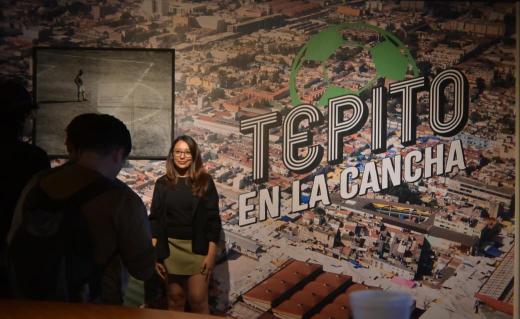
https://inba.gob.mx/prensa/23893/la-galeria-jose-maria-velasco-presenta-las-exposicionestepito-en-la-canchay-dinastia-duende-50-aos

#Sonidero #MexicoCity #DinastiaDuende #SoundCulture

INBAL - Instituto Nacional de Bellas Artes y Literatura LA GALERÍA JOSÉ MARÍA VELASCO PRESENTA LAS EXPOSICIONES TEPITO EN LA CANCHA Y DINASTÍA DUENDE. 50 AÑOS - Dos exposiciones exploran la identidad cultural de Tepito a través del futbol y la tradición sonidera - Las muestras inauguran los festejos por el 75 aniversario de la Galería José María Velasco como espacio de encuentro con las comunidades de la
Experimental Music

Trying to Hear Light

For The Gleam, South Korean composer Park Jiha started with something that cannot actually be heard: changing daylight. The album moves from “At Dawn” through pieces concerned with sunrise and daytime before reaching “Nightfall Dancer.” She performs the music herself using instruments including piri, saenghwang, yanggeum and glockenspiel.

One piece, “Temporary Inertia,” grew from a performance in a meditation space designed by Tadao Ando, where a strip of daylight moves gradually across the interior. Park wanted to translate the changing texture, intensity and warmth of that light into sound.

I like the impossibility of the task.

There is no correct sonic equivalent of sunlight. You cannot measure a certain brightness and conclude that it should become one specific note. The translation has to remain subjective.

That is where the idea becomes interesting. Instead of illustrating nature, music becomes a way of paying closer attention to something we normally experience without noticing.

The album also reminds me that silence can function like shadow. Without space around a sound, its brightness is much harder to perceive.

The Gleam by Park Jiha

#ParkJiha #KoreanMusic #ExperimentalMusic #TheGleam

Afro Cuban

Dakar Listening to Havana

Orchestra Baobab formed in Dakar in 1970 as the house band of the newly opened Club Baobab. Its musicians arrived with remarkably different musical histories. Members had roots in Senegal’s Wolof and Casamance cultures, Mali, Morocco and Togo, while Cuban records and musicians arriving through Dakar’s port had already made Afro-Cuban music an important part of the city’s listening culture.

The band called its own approach variété, almost like a musical salad.

That word makes sense when you listen to how guitar, saxophone, percussion and voices coexist. Cuban influence is clearly present, yet it never feels like musicians in Senegal trying to reproduce Havana exactly. Local phrasing, languages and musical backgrounds continually reshape it.

I find that circulation fascinating. Music travelled from Africa across the Atlantic, changed enormously in Cuba, returned through records and ports, then became raw material for something new in Dakar.

Influence is sometimes described as a straight line from one artist to another. Orchestra Baobab sounds more like a route drawn around an ocean.

https://orchestrabaobab.com/

#OrchestraBaobab #SenegaleseMusic #AfroCuban #Dakar

Orchestra Baobab Orchestra Baobab - West Africa's most iconic dance band Orchestra Baobab are West Africa's most iconic dance band. They have sold over half a million records and are now releasing their 4th album with World Circuit.
Computer Singing Its Own

A Computer Singing Its Own Farewell

Jóhann Jóhannsson’s IBM 1401, A User’s Manual began with an object that most composers would probably never think of as musical material: an old mainframe computer. His father, Jóhann Gunnarsson, had worked with the IBM 1401 in Iceland and recorded the machine on reel-to-reel tape decades earlier. Those recordings eventually became part of a composition first written for string quartet and dance, then radically expanded for the 2006 album into a score for a sixty-piece string orchestra, electronics and the original tapes.

What stays with me is that Jóhannsson did not imitate a computer. He let the actual technological past enter the music.

That changes the emotional weight of the electronic sounds. They are not futuristic effects. They are recordings of a machine already becoming obsolete. Strings surround those fragile traces with something almost elegiac, turning computing history into memory.

Electronic music often celebrates the newest machine in the room. This piece does the opposite. It asks what happens when a machine becomes old enough to be remembered.

IBM 1401, A User’s Manual

#JohannJohannsson #ElectronicMusic #IBM1401 #ContemporaryClassical

Archives

The Archive Looking Back

Brook Andrew works across photography, installation, moving image, performance and museum interventions, frequently questioning the systems through which historical images and objects are collected and interpreted. His practice is informed by Wiradjuri and Ngunnawal cultural perspectives as well as sustained engagement with archives, colonial histories and the politics of visibility.

What interests me is the idea that an archive is never simply a storage room.

Someone decided what deserved to be collected. Someone wrote the label. Someone chose which photograph represented a person, culture or event. Those decisions can survive long enough that we begin treating them as neutral facts.

Andrew’s work often turns attention back onto those structures.

That changes the position of the viewer. Instead of only asking, “What does this historical image show?”, another question appears: “Who constructed the way I am seeing it?”

Museums traditionally ask objects to explain history. Artists can reverse the relationship and ask the museum itself to explain how it has been producing history all along.

https://www.brookandrew.com/ngadhi/me

#BrookAndrew #AustralianArt #IndigenousArt #Archives

Colombian Art

A Crack the Museum Could Not Erase

Doris Salcedo’s Shibboleth appeared in Tate Modern’s Turbine Hall in 2007 as a long fracture running through the concrete floor. The Colombian artist connected the work with racism, exclusion, colonial histories and the experience of people regarded as intruders within supposedly open societies.

What fascinates me is what happened after the exhibition.

The crack was filled, but its trace remained visible in the floor.

Most exhibitions are designed to disappear cleanly. Walls are repainted, objects leave and the building prepares itself for the next event. Shibboleth resisted that reset. Removing the artwork created another version of the artwork.

The scar became evidence that something had happened there.

That feels unusually appropriate for a work concerned with histories that institutions and societies may prefer to close over. Repairing a surface does not return it to an untouched state.

Sometimes the most effective monument is not an object added to architecture, but damage the architecture is forced to remember.

https://www.guggenheim-bilbao.eus/en/the-collection/artists/doris-salcedo

#DorisSalcedo #Shibboleth #ColombianArt #InstallationArt

guggenheim-bilbao.eus Biografía y obras: Salcedo, Doris | Guggenheim Museum Bilbao Doris Salcedo’s biography and works on display at the Guggenheim Museum Bilbao