Skip to content

Experimental Music

Experimental Music challenges familiar ideas about composition, rhythm, instrumentation and listening. The field ranges from electronic processing and improvisation to unconventional recording methods, extended techniques, chance procedures and sound-based research.

Improvisation Inside a Twelve-Piece Machine

Maurice Louca’s Elephantine was recorded in Stockholm with a twelve-piece ensemble containing two percussionists, bass, vibraphone, saxophones, bass flute, tuba, clarinets, voice, oud, violin and Louca himself on guitar and piano. Released in 2019, the record moves between written composition and improvisation while drawing musicians from Egypt, Iraq and several European countries into one ensemble.…

Read more

Fifty-Two Strings Becoming Noise

Krzysztof Penderecki’s Threnody to the Victims of Hiroshima was composed in 1960 for 52 string instruments. Instead of treating those instruments primarily as carriers of melody and harmony, Penderecki pushed them toward clusters, glissandi, extreme registers and unconventional methods of producing sound. Players strike or bow unusual parts of their instruments, while blocks of sound…

Read more

Trying to Hear Light

For The Gleam, South Korean composer Park Jiha started with something that cannot actually be heard: changing daylight. The album moves from “At Dawn” through pieces concerned with sunrise and daytime before reaching “Nightfall Dancer.” She performs the music herself using instruments including piri, saenghwang, yanggeum and glockenspiel. One piece, “Temporary Inertia,” grew from a…

Read more

History Mixed Like a Sound Collage

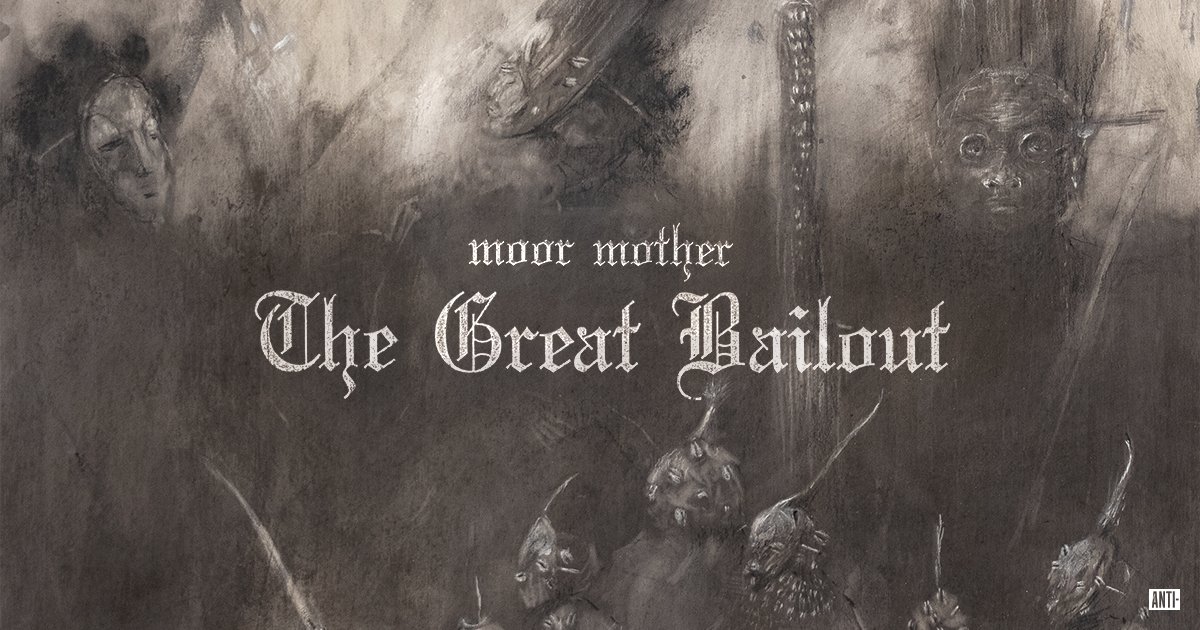
Moor Mother’s The Great Bailout approaches Britain’s relationship with colonialism, slavery and commerce through something closer to a sonic essay than a conventional album narrative. Camae Ayewa combines spoken language, electronics, jazz-derived textures, noise and contributions from musicians including Lonnie Holley and harpist Mary Lattimore. The music moves between fragility and abrasion rather than settling…

Read more

Sampling as a Memory Machine

Susumu Yokota’s Symbol is assembled from fragments of classical recordings by composers including Debussy, Ravel, Prokofiev and Tchaikovsky, alongside material connected with John Cage and Meredith Monk. Yet the 2004 album rarely feels like a demonstration of clever sampling. The fragments are transformed into an atmospheric world where the historical source can become difficult to…

Read more

Night as a Production Tool

Arooj Aftab has described night as a major source of inspiration for Night Reign. But what catches my attention is how that idea enters the arrangement rather than remaining only a lyrical concept. The album moves among jazz, South Asian musical traditions, electronics and carefully controlled space. Her voice often occupies the centre without needing…

Read more

An Album Waiting Fifty Years

Brazilian group Grupo Um formed in the mid-1970s while its members were playing with Hermeto Pascoal. Their music pushed contemporary jazz, improvisation and Afro-Brazilian rhythm into increasingly experimental territory. Their first album, Starting Point, was recorded in 1975 but remained unreleased for almost half a century. Far Out Records later recovered that material, while another…

Read more

Turning a Plough Into an Instrument

Indonesian experimental duo Senyawa have always blurred the distinction between instrument building and composition. For Vajranala, Wukir Suryadi took the form of a traditional Indonesian plough, the luku, and transformed it into a large bowed instrument. A smaller version was constructed for the recording sessions. The album connects this instrument with mythology surrounding Pawon Temple…

Read more

Apollo Reverb

Apollo Reverb is an electronic soundscape by FDR-Sound, inspired by the Apollo missions and the atmosphere of space exploration. The piece approaches the subject through sound, texture and spatial movement rather than as a literal reconstruction of a space mission. It combines electronic composition and sound design to create a sense of distance, scale and…

Experimental Music

Experimental music is a genre that has continuously challenged and expanded music’s boundaries since its early influences in Medieval and Renaissance periods. It bloomed in the 20th century through movements like Musique Concrète and Free Jazz, driven by innovators such as John Coltrane and Ornette Coleman. The integration of disparate genres led to rock and electronic music crossovers exemplified by The Velvet Underground and David Bowie. Later, ambient and industrial movements further shaped experimental music’s landscape, with artists like Brian Eno and Throbbing Gristle pushing sonic boundaries. Today, experimental music continues to evolve in diverse forms, reflecting an ongoing exploration of sound and creativity.