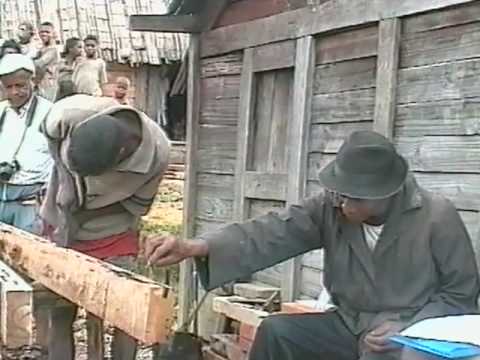
Among the Zafimaniry communities of Madagascar, woodcraft is not confined to objects placed inside a house. The house itself is part of the craft. UNESCO describes buildings assembled with traditional mortise-and-tenon joints without nails, hinges or other metal hardware. Walls, beams, posts, window frames, stools, chests and tools can carry geometric ornament, while different endemic tree species are selected for particular structural or decorative functions.
What stays with me is the absence of a clear boundary between architecture, furniture, ornament and knowledge of the forest. The carved patterns are not simply added after construction to make a useful object beautiful. They carry symbolic associations connected with community beliefs and values, while the choice of wood requires another kind of knowledge altogether. Even within a limited vocabulary of motifs, no two objects need to be identical.
It makes me think about how modern design often separates disciplines that were once inseparable. Here building, ecology, symbolism and decoration remain parts of the same visual language.
https://ich.unesco.org/en/RL/woodcrafting-knowledge-of-the-zafimaniry-00080
#Zafimaniry #MadagascarArt #Woodcraft #TraditionalArchitecture