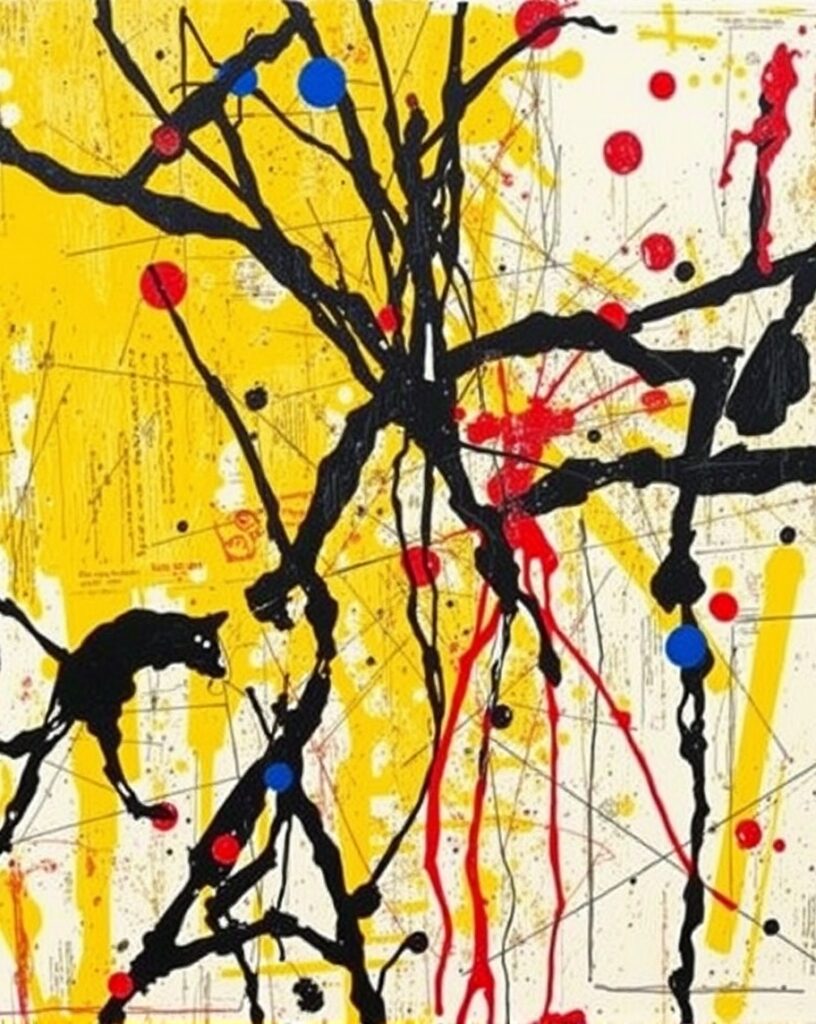
Exploring the Boundaries of Form, Color, and Emotion
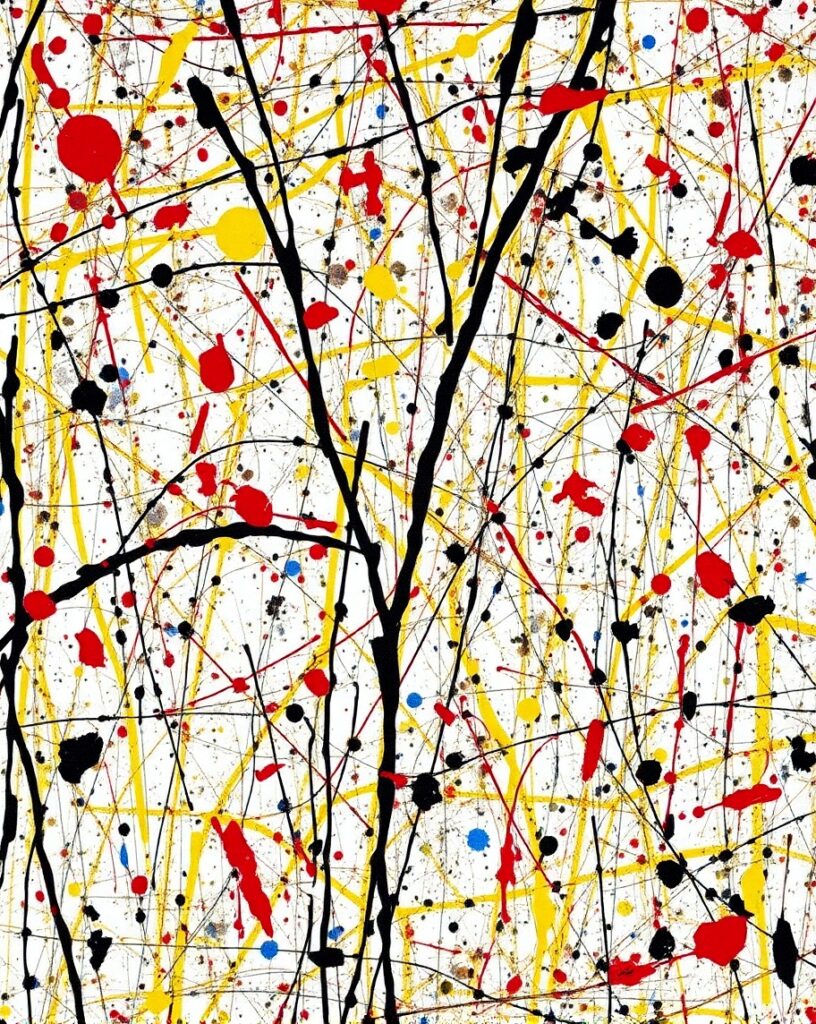
Table of contents
Introduction to Abstract Art
Abstract art represents one of the most significant shifts in the history of painting, challenging the long-standing tradition of depicting recognizable subjects and natural forms. Instead of focusing on the accurate representation of the physical world, abstract artists prioritize the use of shapes, colors, lines, and textures to convey ideas, emotions, or a sense of movement. Abstract art invites viewers to engage with a painting on a more intuitive level, where personal interpretation is key, and meaning is often derived from the formal qualities of the work itself.
The roots of abstract art can be traced back to the early 20th century, as artists began to experiment with ways to break free from the constraints of realism. Pioneers like Kazimir Malevich, Piet Mondrian, and Jackson Pollock pushed the boundaries of traditional painting, developing new methods to explore the relationships between color, form, and emotion. Over the decades, abstract art has evolved into a wide-ranging and diverse field, influencing numerous styles and movements, from geometric abstraction to abstract expressionism.
The Origins and Development of Abstract Art
Abstract art emerged during a period of great cultural and intellectual change, driven by new developments in science, psychology, and philosophy. The early 20th century saw a growing interest in exploring ideas beyond the material world, and artists sought new ways to express the intangible aspects of human experience—emotion, spirituality, and the subconscious.
The development of abstract art was influenced by several key factors:
- Scientific Discoveries: Advances in science, particularly in physics and the understanding of light, space, and time, led artists to reconsider their approach to depicting the world. Albert Einstein’s theory of relativity and the growing understanding of atomic structure suggested that reality was not as fixed or stable as it once seemed, opening up new possibilities for abstraction.
- Psychological Theories: The rise of psychology, particularly the work of Sigmund Freud and Carl Jung, encouraged artists to explore the subconscious mind and the symbolic meanings of shapes and colors. Abstract art became a way to express these inner realities, delving into the realm of dreams, memories, and emotions.
- Non-Western Art Influences: Many abstract artists were inspired by the aesthetics and philosophies of non-Western art, including African, Islamic, and Asian traditions. These influences introduced new approaches to form and composition, particularly the use of geometric patterns, calligraphy, and symbolic abstraction.
- Break with Tradition: In the early 20th century, artists sought to break free from the conventions of academic art, which emphasized naturalistic representation and traditional subject matter. Movements like Cubism, Fauvism, and Futurism played a significant role in the development of abstraction by deconstructing form and emphasizing the importance of color and movement.
Key Artists and Works in Abstract Art
Kazimir Malevich
Kazimir Malevich, a Russian avant-garde artist, was a pioneering figure in the development of abstract art. He is best known for his role in founding the Suprematism movement, which emphasized pure abstraction and the supremacy of geometric forms over representational content.
Malevich’s most famous work, Black Square (1915), is a seminal piece in the history of abstract art. The painting consists of a simple black square set against a white background, devoid of any recognizable subject matter. For Malevich, this work represented the “zero point” of painting—the moment when art moved beyond the depiction of the physical world and into the realm of pure feeling and thought. Black Square symbolizes the reduction of art to its most basic elements: form and color, stripped of all extraneous meaning.
Another significant work by Malevich is White on White (1918), which further explores the concept of abstraction through the use of minimalism and subtle tonal variation. The painting consists of a slightly tilted white square on a white background, pushing the boundaries of abstraction to the point where form becomes almost indistinguishable from its surroundings. This work highlights Malevich’s interest in the spiritual and metaphysical aspects of art, as he sought to create a new visual language that transcended the material world.
Piet Mondrian
Piet Mondrian, a Dutch painter and one of the leading figures of the De Stijl movement, is renowned for his development of geometric abstraction. Mondrian’s mature style, often referred to as “neoplasticism,” focused on the use of horizontal and vertical lines and primary colors to create harmonious, balanced compositions.
One of Mondrian’s most famous works, Composition with Red, Blue, and Yellow (1930), exemplifies his approach to abstraction. The painting consists of a grid of black lines dividing the canvas into rectangular sections, some of which are filled with red, blue, or yellow. Mondrian believed that by reducing his compositions to their simplest elements—line, color, and shape—he could express a universal harmony that transcended individual experience. His work is often seen as a visual manifestation of his spiritual and philosophical beliefs, particularly his interest in Theosophy, which emphasized the interconnectedness of all things.
Another key work by Mondrian is Broadway Boogie Woogie (1942-1943), which was inspired by the energy and rhythm of New York City. In this painting, Mondrian uses a grid of yellow, red, blue, and white rectangles to evoke the dynamic movement of the city’s streets and the syncopated rhythm of jazz music. Broadway Boogie Woogie represents a more playful and dynamic use of abstraction, showing how Mondrian adapted his geometric style to capture the pulse of modern urban life.

Jackson Pollock
Jackson Pollock, an American painter and a key figure in the Abstract Expressionist movement, is best known for his innovative “drip” technique, which involved dripping or pouring paint onto a canvas laid flat on the ground. This method allowed Pollock to break free from traditional brushwork and create large, dynamic compositions that emphasized movement, spontaneity, and the physical act of painting.
One of Pollock’s most famous works, No. 5, 1948 (1948), is a dense, chaotic web of dripped and splattered paint in various shades of brown, yellow, white, and black. The painting has no recognizable subject matter, yet it conveys a sense of energy, emotion, and movement through its complex, layered composition. Pollock’s work embodies the idea of “action painting,” where the process of creation becomes as important as the finished product, reflecting the artist’s emotional state and subconscious mind.
Another iconic work by Pollock is Autumn Rhythm (Number 30) (1950), a large-scale canvas covered in swirling, overlapping lines of black, white, and tan paint. The painting’s rhythmic composition evokes a sense of movement and flow, as if the viewer is witnessing the process of creation itself. Pollock’s method of painting was deeply influenced by his interest in Jungian psychology, which emphasized the importance of accessing the unconscious mind to achieve personal and artistic expression.
The Principles and Techniques of Abstract Art
Abstract art encompasses a wide range of styles and approaches, but there are several core principles and techniques that unite these diverse practices:
- Non-Representational Composition: Abstract artists move away from depicting recognizable subjects, focusing instead on the formal qualities of painting—such as color, shape, texture, and line. The goal is to create a visual language that communicates ideas or emotions without relying on literal representation.
- Emphasis on Form and Color: Abstract art often emphasizes the formal elements of composition, such as geometric shapes, bold colors, and dynamic lines. These elements are used not just for their aesthetic value but to evoke specific feelings, moods, or concepts. For example, bright, saturated colors might convey joy or intensity, while soft, muted tones might evoke calm or melancholy.
- Exploration of Spatial Relationships: Abstract artists frequently experiment with the spatial relationships between shapes, colors, and lines, exploring how these elements interact with each other on the canvas. This exploration of space is often non-linear and non-traditional, with compositions that defy conventional notions of depth, perspective, or proportion.
- Expression of Inner Experience: While abstract art may lack a literal subject, it often serves as a vehicle for the expression of inner emotions, thoughts, or spiritual ideas. Abstract artists use color, form, and texture to convey their personal experiences or to evoke a specific emotional response in the viewer.
- Process-Oriented Techniques: Many abstract artists emphasize the process of creation as an integral part of their work. Techniques such as dripping, pouring, or splattering paint (as seen in Pollock’s work) highlight the physical act of painting and the artist’s interaction with the medium. In some cases, the spontaneity and immediacy of the process are more important than the final composition.
- Geometric and Organic Abstraction: Abstract art can be divided into two broad categories: geometric abstraction and organic abstraction. Geometric abstraction, as seen in the works of Mondrian and Malevich, focuses on the use of clean lines, shapes, and mathematical precision to create harmonious compositions. Organic abstraction, on the other hand, uses flowing, natural forms and textures to evoke the rhythms of nature or the subconscious, as exemplified by artists like Pollock and Joan Miró.
The Impact and Legacy of Abstract Art
Abstract art has had a profound impact on the development of modern and contemporary art, influencing countless artists and movements across the globe. Its emphasis on experimentation, emotion, and the exploration of new visual languages opened up new possibilities for creative expression and continues to inspire artists today.
Influence on Modern Art Movements
Abstract art laid the groundwork for many of the key movements in modern art, including Abstract Expressionism, Minimalism, and Color Field Painting.
Artists like:
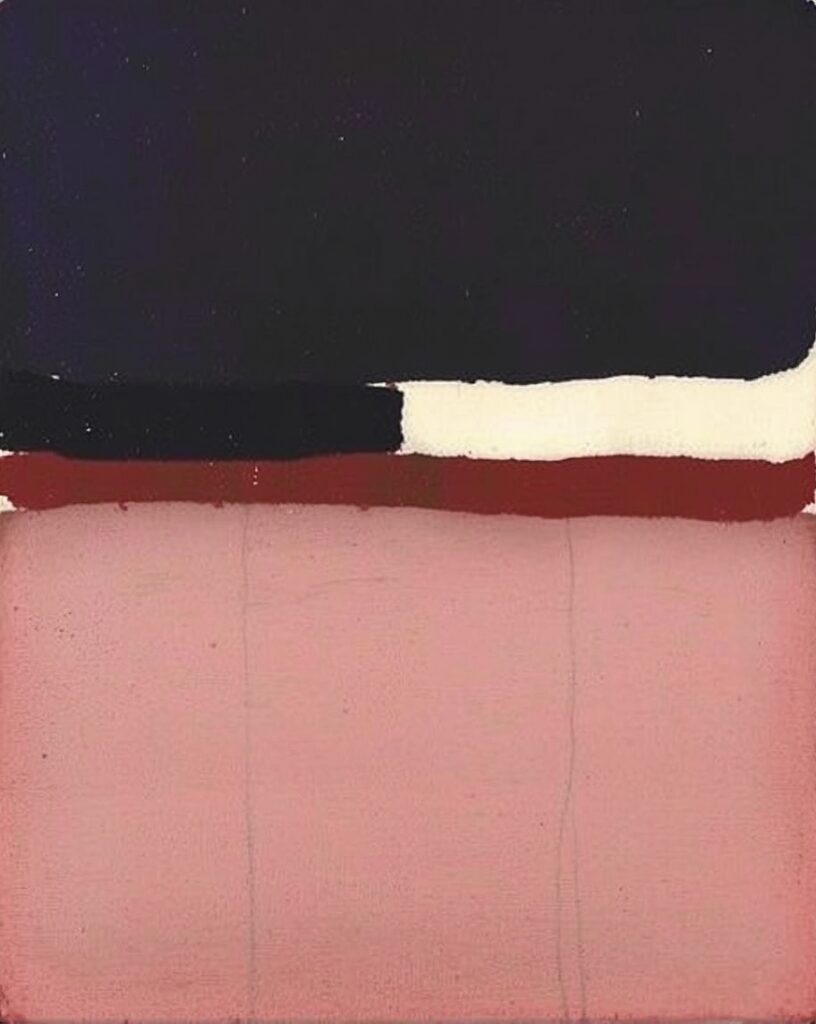
Mark Rothko, Barnett Newman, and Helen Frankenthaler continued to build on the foundation of abstract art by focusing on color, form, and the exploration of emotional and spiritual depth. Rothko’s large-scale, color field paintings, for example, with their luminous, softly defined rectangles of color, evoke profound emotional and spiritual responses in the viewer. Rothko’s work represents a departure from earlier, more geometric forms of abstraction, emphasizing instead the emotional resonance of color itself.
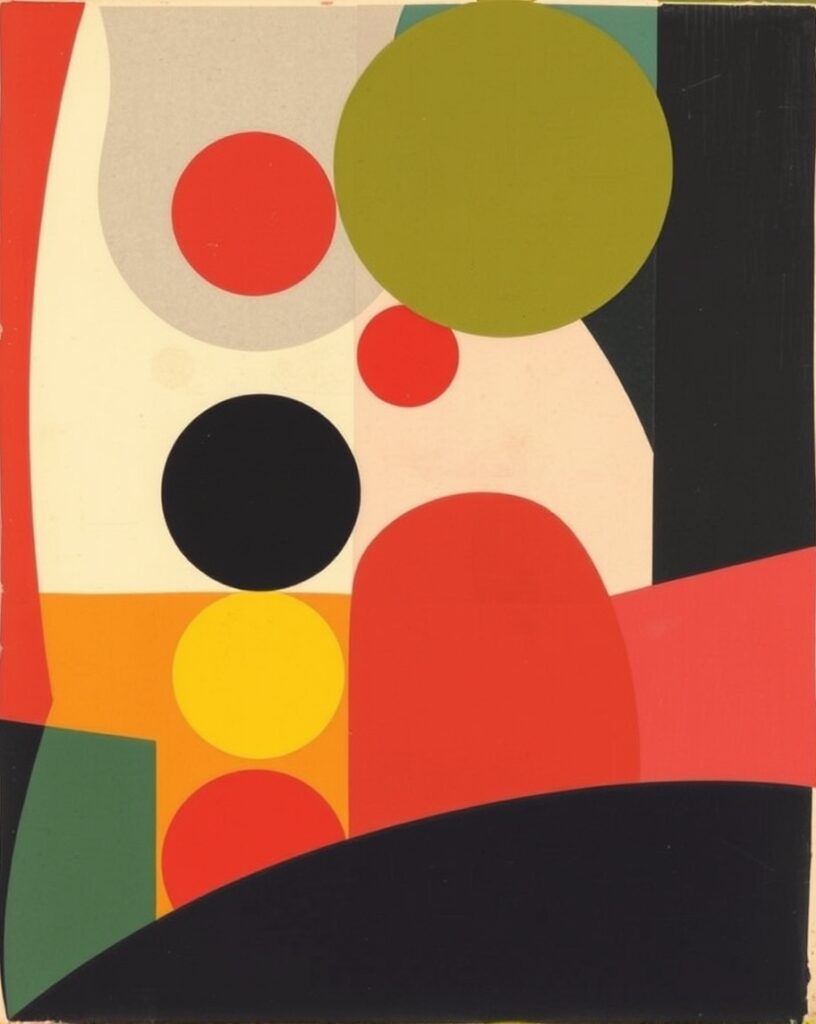
Minimalism also owes much to abstract art, particularly geometric abstraction. Artists like Sonia Delaunay, Donald Judd, Frank Stella, and Ellsworth Kelly embraced simplicity, using basic shapes, clean lines, and monochromatic or limited color schemes to strip art down to its most fundamental elements. Sonia Delaunay, a pioneer of Orphism (a form of abstract art rooted in geometric shapes and vibrant colors), significantly influenced the development of geometric abstraction. Her bold use of color and rhythmic, circular forms helped pave the way for later abstract movements. Delaunay’s work, characterized by a focus on color theory and movement, laid the groundwork for future explorations in abstract and minimalist art.
Minimalism, which followed, was a reaction against the emotional and gestural intensity of Abstract Expressionism, favoring a more detached, intellectual approach to abstraction. This movement reduced art to its essential components, often removing any emotional or narrative content to emphasize pure form and structure. Delaunay’s use of geometry and bold color contrasts can be seen as an early influence on the minimalist focus on form and the interplay of shapes, demonstrating how abstract art continuously evolved toward simplicity and intellectual rigor.
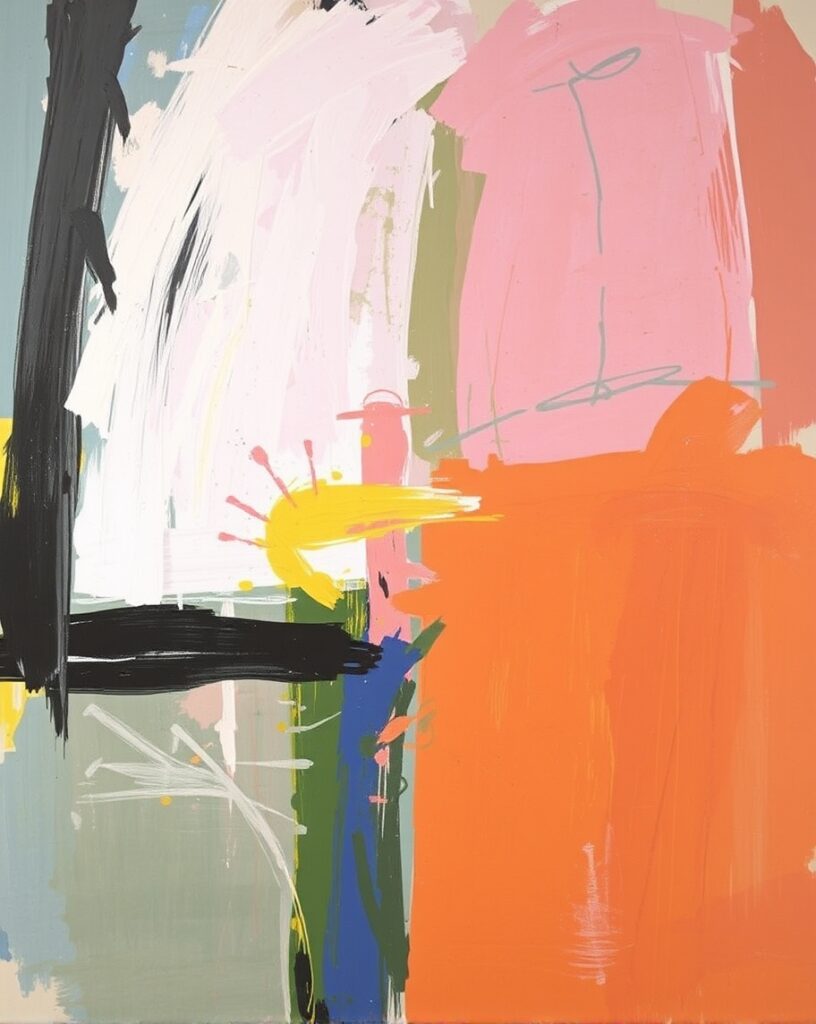
Abstract Expressionism, the movement that followed in the footsteps of early abstraction pioneers like Kandinsky and Malevich, emphasized the spontaneous, improvisational process of creating art. Artists like Jackson Pollock, Willem de Kooning, and Franz Kline were interested in expressing raw emotion and the subconscious mind through large, dynamic canvases filled with energetic brushstrokes, drips, and splashes of paint.
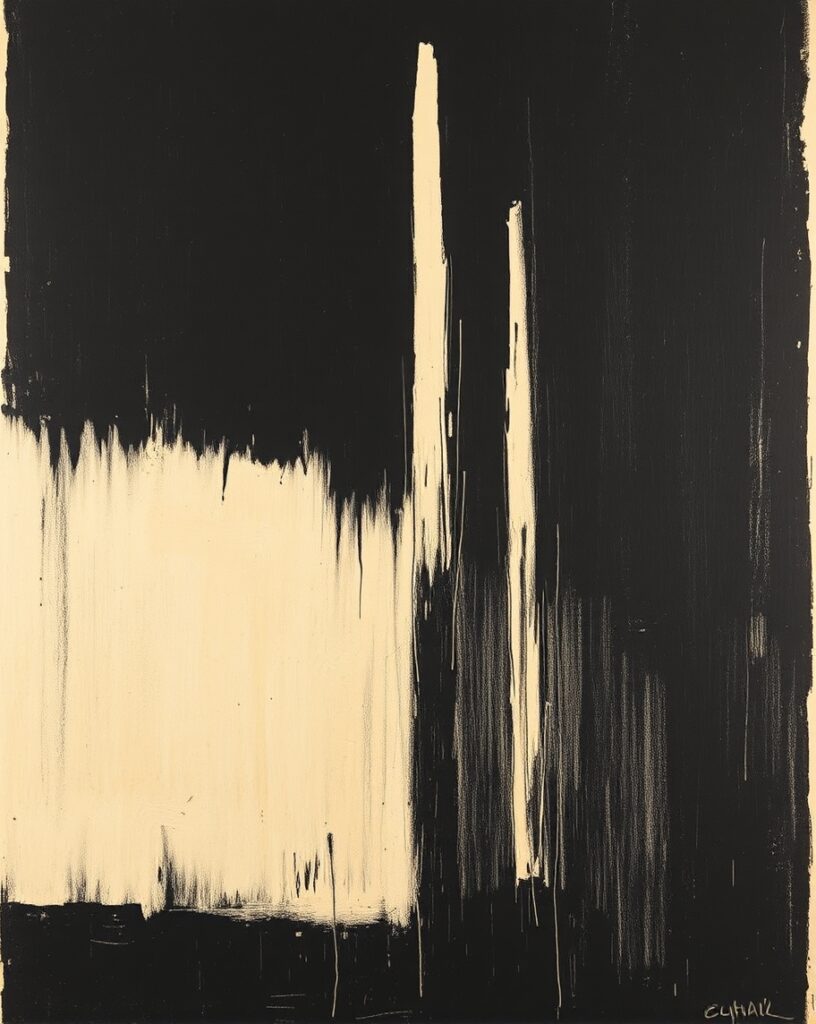
Color Field Painting, led by artists such as Mark Rothko and Clyfford Still, further explored the use of vast expanses of color to evoke emotional and spiritual responses. These artists sought to create immersive experiences for the viewer, using subtle color variations and large, abstract forms to transcend the material world and explore themes of existence, mortality, and the infinite.
Continued Influence in Contemporary Art
Abstract art continues to inspire contemporary artists who explore new ways to use form, color, and material. Today, abstract artists work across various mediums—painting, sculpture, installation, and digital art—using the language of abstraction to address a wide range of issues, from personal identity to social and political concerns.
Artists like Gerhard Richter, Julie Mehretu, and Carmen Herrera have reinterpreted abstraction in their work, often merging it with other forms of expression or using it as a tool for exploring broader societal and cultural questions. For instance, Richter’s works fluctuate between pure abstraction and photorealism, using blurred lines and textured surfaces to challenge the boundaries between reality and perception.
Digital abstraction is also an emerging field, where artists use digital tools and algorithms to create abstract compositions that explore the intersection of technology and human creativity. As technology advances, abstract art continues to evolve, remaining at the forefront of innovation in visual expression.
The Personal Experience of Viewing Abstract Art
One of the most compelling aspects of abstract art is its ability to evoke a wide range of personal interpretations and emotional responses. Since abstract works often lack clear subject matter, viewers are encouraged to engage with the formal qualities of the painting—color, shape, texture, and composition—in a more direct and subjective way. This open-ended nature invites personal reflection, allowing each viewer to bring their own experiences, emotions, and imagination into the process of interpreting the work.
In abstract art, there is no single “right” way to view or understand a piece. Instead, the viewer is asked to connect with the work on an intuitive level, finding meaning in the interactions between colors, lines, and forms. This ability to speak to the viewer on a non-verbal, emotional level is one of the defining characteristics of abstract art and a key reason for its lasting appeal.
§
Abstract art represents one of the most significant shifts in the history of visual expression, moving away from the depiction of the physical world and exploring the possibilities of form, color, and emotion. Pioneered by artists like Kazimir Malevich, Piet Mondrian, and Jackson Pollock, abstraction has opened up new ways of thinking about art and its role in society, emphasizing the importance of personal experience, emotional depth, and spiritual exploration.
From the early geometric abstractions of Mondrian to the raw, gestural intensity of Pollock’s action paintings, abstract art has remained a dynamic and evolving field. It has influenced countless movements and continues to inspire contemporary artists today, proving that the language of abstraction, with its emphasis on the intangible and the universal, still has the power to resonate deeply with viewers.
Ultimately, abstract art challenges us to look beyond the surface of things and to engage with the deeper emotional and psychological layers of our experience. By inviting viewers to interpret, imagine, and feel, abstract art fosters a deeper connection with the creative process and the world around us.