Skip to content

Visual Music

Visual music is an artistic practice that organises colour, shape, light and movement according to principles associated with musical structure. It includes abstract film, animation, projection and live audiovisual performance.

A Film Screening Became a Light Show

In the late 1950s, Jordan Belson worked with composer Henry Jacobs on the Vortex Concerts at San Francisco’s Morrison Planetarium. Rather than projecting a conventional film onto one rectangular screen, they used the planetarium environment for combinations of abstract imagery, electronic music and spatial projection. The Center for Visual Music considers the Vortex events important…

Read more

Drawing the Soundtrack With a Pen

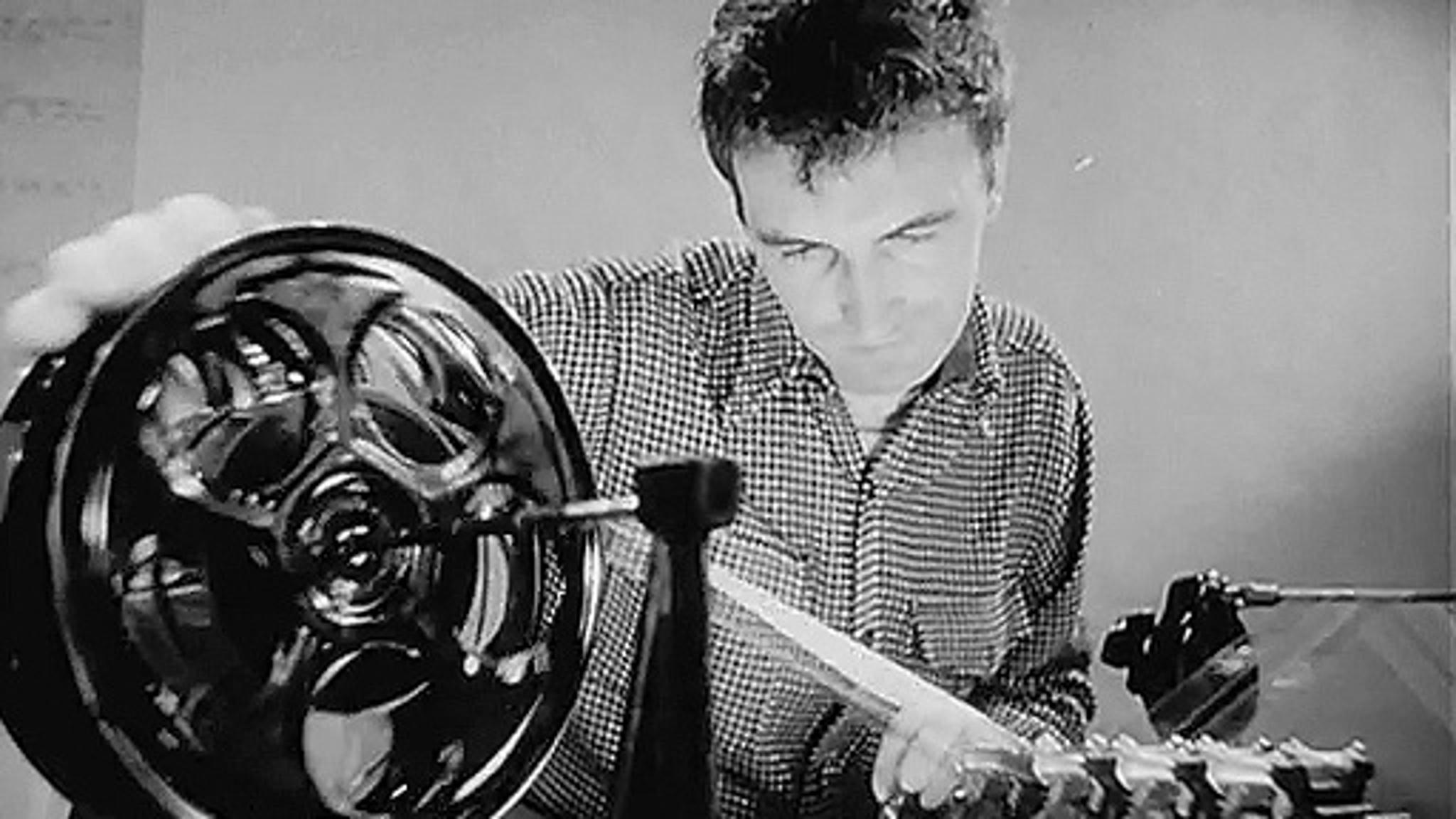
Norman McLaren discovered that sound on film did not necessarily have to be recorded with a microphone. Optical film sound converts visual information on the soundtrack area of a film strip into audio. McLaren realised that if the system was reading shapes, he could create those shapes himself. He drew and scratched patterns directly into…

Read more

Visual Music Before Computers

Mary Ellen Bute wanted abstract images to possess something painting could not give her: actual duration. She turned to film and, between the 1930s and 1950s, created abstract animations in which shapes, light and movement were organised in close relationship with music. Her work also included technological experiments involving oscilloscopes and electronic imagery. Several of…

Read more

VJ Culture Before Video

Oskar Fischinger was experimenting with multiple projected images before electronic video existed. During the 1920s, his Raumlichtmusik performances used several film and slide projectors simultaneously to create abstract moving environments. Elsewhere he explored single-frame animation, scratching directly onto film and even experiments in drawn optical sound. This is where experimental-film history begins to overlap surprisingly…

Read more

Sound Without Sound

Sound Without Sound is a generative p5.js study built around rhythm without audio. The visual composition uses internal pulses, repeating patterns, syncopation and silence to create the impression of music without listening to a microphone or playing a soundtrack. The work treats rhythm as a visual structure rather than a response to sound. Different layers…