Skip to content

Music Technology

Music technology covers the tools and systems used to create, record, process, perform and distribute sound. It ranges from acoustic instrument design and microphones to synthesizers, digital audio workstations, software, spatial audio and networked platforms.

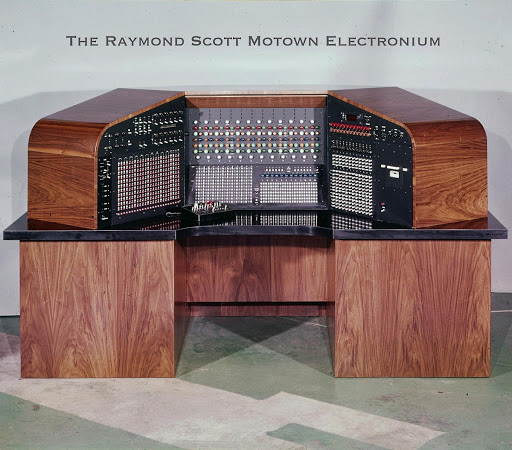
A Machine That Suggested Music

Raymond Scott’s Electronium was not simply an early synthesizer. It was conceived as a system that could generate and perform musical material automatically, using electronic circuits and algorithmic processes. Scott described the relationship as a collaboration between a person and a machine. The operator did not have to enter a finished score and press play.…

Read more

Bruce Haack Wired People Into Synthesizers

Bruce Haack spent much of his career building electronic instruments rather than waiting for manufacturers to invent the ones he wanted. One of the strangest was the Dermatron, an instrument that used the electrical conductivity of human skin as part of its control system. Haack demonstrated versions of it on American television during the 1960s,…

Read more

When 0.8 Seconds Felt Enormous

The Fairlight CMI helped change recorded sound from something musicians played back into something they could play. Developed in Australia by Peter Vogel and Kim Ryrie and released at the end of the 1970s, the system became one of the first commercially influential digital sampling instruments. The National Film and Sound Archive of Australia describes…

Read more

An Album Stored as DNA

For the twentieth anniversary of Massive Attack’s Mezzanine, researchers at ETH Zurich translated the album’s digital audio into DNA. The process sounds almost absurdly futuristic. The music was first compressed using the Opus codec. Its binary information was then converted into sequences based on the four DNA building blocks A, C, G and T. Around…

Read more

When an Album Becomes an Instrument

With Biophilia, Björk treated an album as something that could be entered, touched and changed. Released in 2011, the project connected ten songs to interactive apps exploring relationships between musical structures and natural phenomena. The live version pushed that idea into physical space with custom instruments: pendulum harps used gravity to pluck strings, Tesla coils…

Read more