Skip to content

Expanded Cinema

Expanded cinema moves beyond the conventional single-screen film experience by using multiple projections, live performance, installation, light, sound and spatial intervention. It treats cinema as an event or environment rather than only a fixed sequence of images.

Cinema Escaping Into the Museum

Isaac Julien rarely asks us to watch a film on one screen. His installations distribute moving images across several screens so that editing begins to happen spatially as well as temporally. A character may disappear from one image and appear somewhere else in the room. Two events can run simultaneously. The viewer has to decide…
Read more

A Film Screening Became a Light Show

In the late 1950s, Jordan Belson worked with composer Henry Jacobs on the Vortex Concerts at San Francisco’s Morrison Planetarium. Rather than projecting a conventional film onto one rectangular screen, they used the planetarium environment for combinations of abstract imagery, electronic music and spatial projection. The Center for Visual Music considers the Vortex events important…

Read more

VJ Culture Before Video

Oskar Fischinger was experimenting with multiple projected images before electronic video existed. During the 1920s, his Raumlichtmusik performances used several film and slide projectors simultaneously to create abstract moving environments. Elsewhere he explored single-frame animation, scratching directly onto film and even experiments in drawn optical sound. This is where experimental-film history begins to overlap surprisingly…

Read more

When Film Invades the Room

Ho Tzu Nyen’s The Cloud of Unknowing begins as moving image but refuses to remain simply a film on a wall. Created for the Singapore Pavilion at the 2011 Venice Biennale, it was filmed inside a public housing block shortly before demolition. Eight characters encounter different manifestations of a mysterious cloud, with references ranging across…

Read more

Cinema Escaping the Rectangle

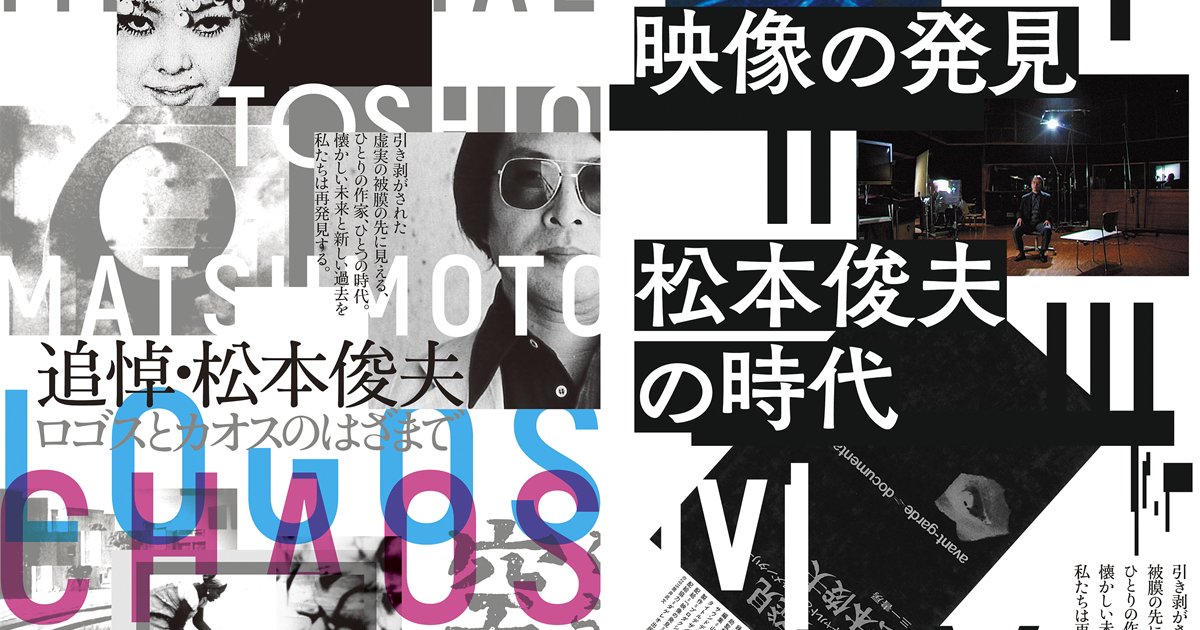
Toshio Matsumoto did not limit experimental film to unusual images inside a conventional cinema screen. During the late 1960s and early 1970s he worked with expanded cinema, questioning what his retrospective material describes as the standard “one projector, one screen” relationship between film and audience. For My Crushed Right Eye from 1968 could be presented…

Read more