Skip to content

Electronic Music

A genre characterized by the use of electronic instruments, synthesizers, and digital production techniques to create innovative sounds and rhythms, spanning styles like techno, house, dubstep, and ambient.

A Record Sold With Houseplants

Mort Garson’s Mother Earth’s Plantasia was not initially distributed like an ordinary album. Customers received it when they bought a plant from the Mother Earth shop on Melrose Avenue in Los Angeles, or a Simmons mattress from Sears. Its intended listener was described in the subtitle: “warm earth music for plants…and the people that love…

Read more

One Drop Became an Orchestra

Hugh Le Caine’s Dripsody begins with one recorded drop of water. Made in 1955, the piece was also a practical study of his Special Purpose Tape Recorder, a machine that allowed several tape tracks to be played at different speeds. Le Caine changed the pitch of the drop by changing playback speed, repeated it in…

Read more

A Machine That Suggested Music

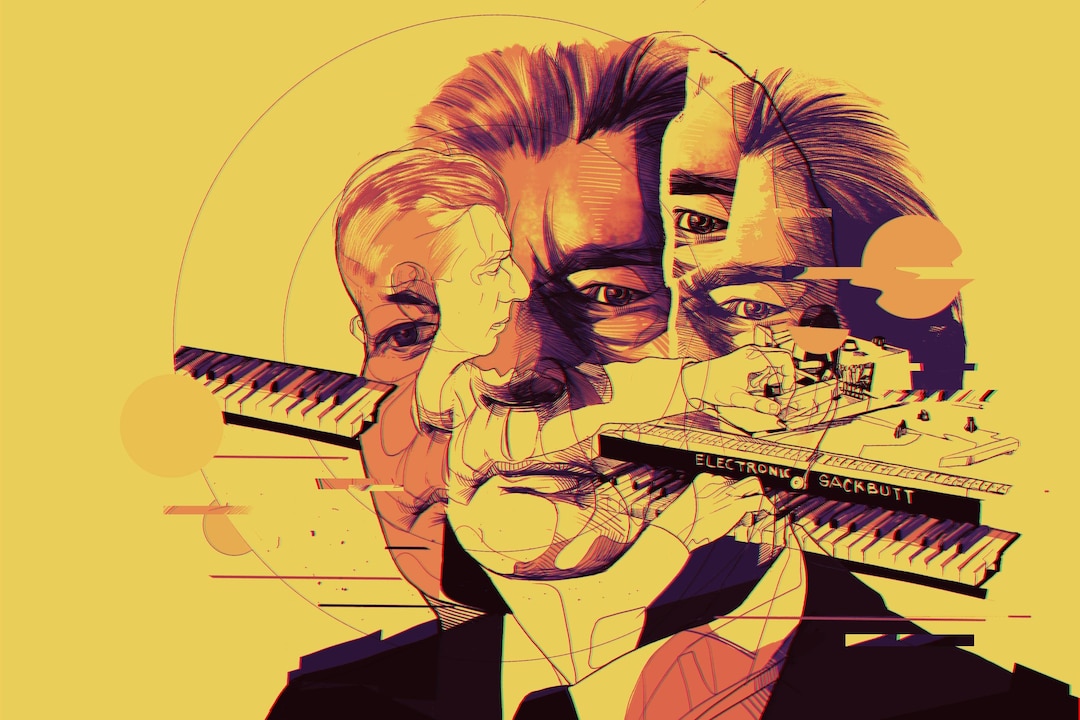
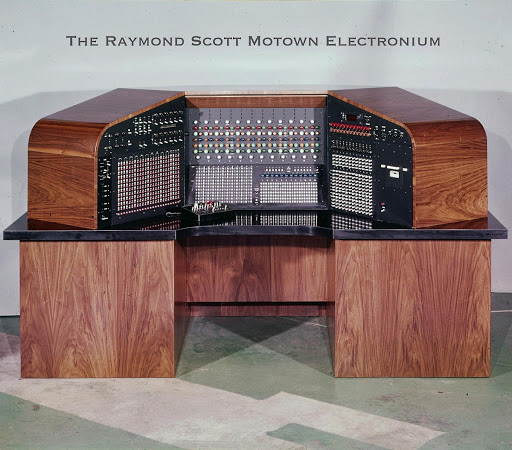
Raymond Scott’s Electronium was not simply an early synthesizer. It was conceived as a system that could generate and perform musical material automatically, using electronic circuits and algorithmic processes. Scott described the relationship as a collaboration between a person and a machine. The operator did not have to enter a finished score and press play.…

Read more

Rhythm as a Problem to Solve

Jlin has described composition as something close to a mathematical proof: the answers seem to be present, but the question still has to be discovered. It is an unusual way to explain music that feels so physical. Her percussion can arrive in hard clusters, sudden gaps and patterns that appear to turn away from a…

Read more

Drawing the Synthesizer

In Daphne Oram’s Oramics system, electronic sound began as marks on transparent film. Waveforms and control shapes were drawn across 35mm strips, then read by photoelectric cells inside a machine that occupied much of a room. Ten strips could run at once, turning lines into instructions for pitch, rhythm, timbre and volume. The fascinating part…

Read more

The Album Belongs to a Video Artist Too

Solari, arriving on 25 September 2026, is the first release under the Courant Zéro name by Montréal sound and video artist Maxime Corbeil-Perron. His background in electroacoustic composition remains audible, but the album moves between ambient passages, rhythmic electronic music and dense digital structures rather than presenting itself as academic electroacoustics. It was recorded and…

Read more

Bruce Haack Wired People Into Synthesizers

Bruce Haack spent much of his career building electronic instruments rather than waiting for manufacturers to invent the ones he wanted. One of the strangest was the Dermatron, an instrument that used the electrical conductivity of human skin as part of its control system. Haack demonstrated versions of it on American television during the 1960s,…

Read more

The 909 Under Born Slippy

“Born Slippy .NUXX” became enormous through Trainspotting, but the track’s rhythmic foundation is surprisingly straightforward. Rick Smith has explained that the kick is a Roland TR-909 pushed hard through a mixing console. The familiar chords came from a Juno-106. Karl Hyde’s vocal was based on fragments he had written after nights spent drinking in London,…

Read more

The Woman Between Oram and Derbyshire

The history of the BBC Radiophonic Workshop tends to settle quickly around a few famous names. Maddalena Fagandini is one of the people who can disappear between them. She joined the Workshop in 1959, after beginning her BBC career in the Italian Section of the World Service, and worked there until 1963. Her electronic output…

Read more

The Tapes Almost Disappeared

Else Marie Pade became one of Denmark’s earliest major electronic composers during the 1950s and 1960s. Yet parts of her electronic catalogue came surprisingly close to disappearing. Dacapo Records’ recent reconstruction of her Complete Electronic Works 1955–2012 includes newly digitised pieces, previously unavailable material and works that remained overlooked for decades. The archive survived partly…

Read more