| | |

Sounnay Trilogy – Soundscape

Only Sound

Image two coming soon!


Sonia Delaunay Tree Paintings: A Soundscape in Three Parts

Inspired by the Sonia Delaunay tree paintings, I created a soundscape that captures the essence of three of her most iconic works. Each painting carries its own visual language, and translating that into sound meant exploring the movements that shaped her art.

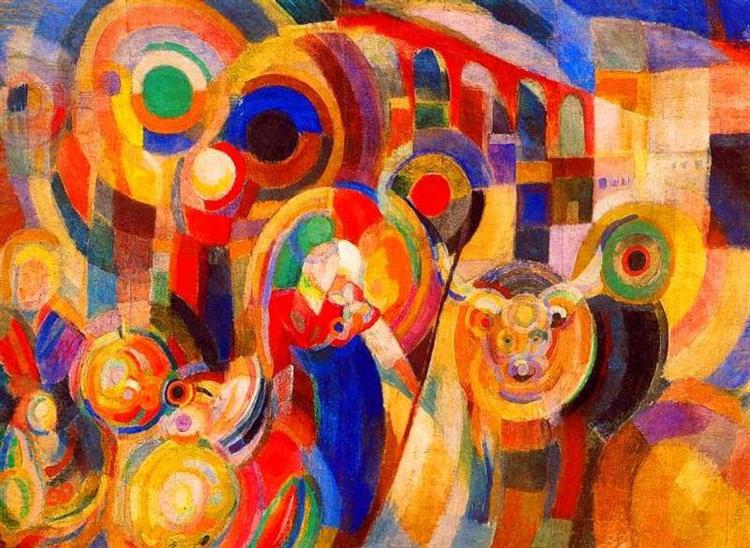
Market at Minho (1915): Where Orphism Meets Sound

The first painting, Market at Minho (1915), is a defining example of Orphism — the style that Sonia and Robert Delaunay helped pioneer. Its bold geometric shapes draw a clear link to Cubism, yet the painting radiates an unconditional dynamism that echoes the energy of the Futurists. At the same time, its vivid, unrestrained use of color reveals a strong Fauvist influence, reminding us that Simultanism was never far from the “wild” expressive palette that defined that movement.

For this soundscape, that layered visual history called for an equally layered sonic response — grounding rhythm beneath surging, colorful waves of sound.


Sonia Delaunay Soundscape: Translating Color and Motion into Sound

Creating a Sonia Delaunay soundscape meant capturing the raw dynamism that defines her work. For the first painting, I blended ambient and electronic sounds to reflect its energy. Bustling market noise, the low hum of engines, and the rhythmic thud of footsteps weave together to create a sense of movement and excitement. Each layer builds on the next, mirroring the visual rhythm of her bold compositions.

Abstract Blue: Light, Color, and Contemplation

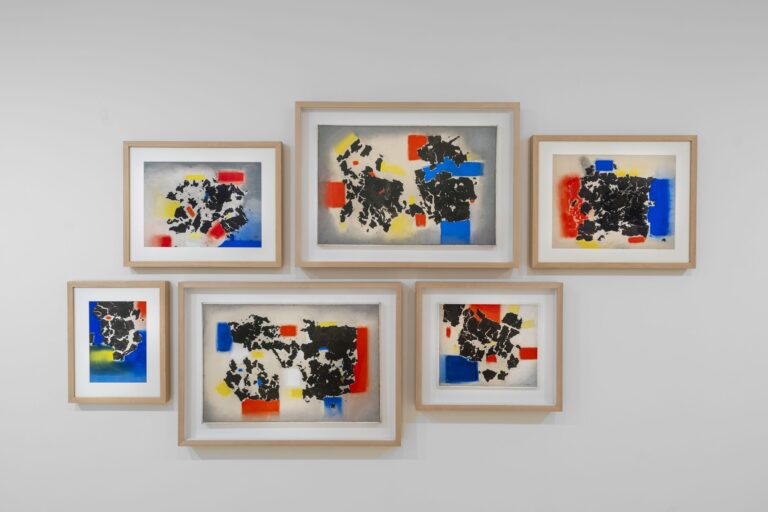
The second work presented a different challenge. This unknown abstract painting — featuring blue points and broken lines with sharp corners — offered no clear narrative. Instead, I focused on the interplay of light and color. The resulting soundscape shimmers with ethereal, glowing tones that fade in and out of focus. It invites introspection and encourages the listener to lose themselves in the painting’s intricate visual language.

Propeller (Air Pavilion): Industrial Sound Meets Futurism

For Propeller (Air Pavilion) (1937), I drew inspiration from the Delaunays’ celebration of the transportation industry — and their signature use of vivid color over cold, grey metal. To honor that contrast, I combined industrial and electronic sounds: spinning propellers, revving engines, and synthesized tones blend into a soundscape that feels both futuristic and nostalgic at once.

A Tribute to the Orphic Movement

Taken together, this Sonia Delaunay soundscape project is a tribute to the innovative spirit of Sonia and Robert Delaunay — pioneers of the Orphic movement. By pairing traditional and electronic sounds, I aimed to capture the essence of their paintings and transport the listener into a world of color, motion, and sound.


Similar Posts

  • |

    Arne Quinze

    Arne Quinze, a Belgian artist, is renowned for his vibrant large-scale installations that serve as catalysts for social interaction in urban spaces. His artistic journey emphasizes the transformative power of public art, encouraging communities to engage with their environments. Notable works such as “The Sequence,” “Uchronia,” and “Rock Strangers” exemplify his philosophy that art can bridge cultural gaps and stimulate dialogue. Through innovative materials and configurations, Quinze challenges traditional perceptions of art, advocating for its integral role in urban renewal and community discourse, thereby shaping contemporary public art’s future.

  • | | |

    Tim Van Laere Gallery

    The Tim Van Laere Gallery, located in the heart of Antwerp, Belgium, has been a pivotal institution in the contemporary art scene since its establishment in 1997 by Tim Van Laere. Its mission is to showcase a mix of emerging talent and established artists from around the globe, spanning various mediums such as painting, sculpture,…

  • | |

    “Edmondo Bacci: Energy and Light” – A Luminous Journey Through the Venetian Master’s Universe

    From April 1 through September 18, 2023, the radiant heart of Venice will beat to a particularly vibrant rhythm, as it plays host to the much-anticipated exhibition, “Edmondo Bacci: Energy and Light” at the Peggy Guggenheim Collection. Curated by Chiara Bertola of the Fondazione Querini Stampalia, this vibrant display encapsulates the artistic fervor of the…

  • | |

    The Creative Journey Behind “Space – Equations”: A Sonic Gateway Into Uncharted Realms

    “Space – Equations” is an innovative electronic composition that uses everyday tools, like chisels and hammers, to create unique sounds, highlighting the acoustic potential of ordinary spaces we inhabit. Created in Ableton, the track transforms raw sounds from these tools into an immersive soundscape, representing different environments and their unique acoustic characteristics. It aims to immerse listeners in a journey through sound, encouraging a deeper appreciation of everyday spaces. The piece exemplifies the exploration of unconventional instruments and challenges traditional music boundaries, inviting listeners to engage with the richness of their surroundings.

  • Classical Music

    Classical music, spanning from the Middle Ages to the present, showcases a rich historical evolution and diverse styles. The Medieval period’s Gregorian chants and the emergence of polyphony laid foundations for Western music. The Renaissance brought intricate polyphony and secular themes, while the Baroque period emphasized contrast and expressiveness. The Classical era favored simplicity and balance. The Romantic period sought emotional expression, and the 20th century saw unprecedented experimentation. This living tradition continues to evolve in the 21st century, reflecting the complexities of the modern world. Classical music’s enduring influence extends beyond concert halls, permeating popular culture.

  • Charlotte Posenenske

    Charlotte Posenenske (1930-1985) was a pivotal German artist whose innovative approach in the 1960s transformed minimalism and conceptual art through the use of industrial materials and participatory practices. Her key works, notably the “Series D” square tubes, emphasized accessibility and the collective experience of art, challenging traditional boundaries between artist and audience. In 1968, she ceased art production, disillusioned with the market, shifting focus to sociology. Posenenske’s legacy endures in contemporary discussions of art’s social role, urging a democratized and socially engaged artistic practice that resonates with current societal issues.

Leave a Reply

Your email address will not be published. Required fields are marked *