Conclusion
1. Recap of the Journey Through Art History
This comprehensive journey through art history has taken us from the earliest expressions of human creativity to the cutting-edge developments of the 21st century.
We began with prehistoric art, observing cave paintings, petroglyphs, and megalithic structures like Stonehenge, which revealed our ancestors’ desire to understand and express their relationship with the natural world and the divine.
We then delved into the art of the early civilizations, from the rigid and formal depictions of the divine in Ancient Egypt to the elaborate narratives of Mesopotamian art, the intricate city planning of the Indus Valley, and the balance of form and function in Chinese art.
We explored the classical art of Greece and Rome, whose ideas of proportion, perspective, and ideal beauty have heavily influenced Western art. Their depictions of gods, mortals, and the democratic values laid the foundations for much of our visual language today.
In the medieval period, we saw art dominated by Christian symbolism, with Byzantine icons, Romanesque church art, and Gothic cathedrals reflecting a society steeped in faith, and the divine’s central place in people’s lives.
The Renaissance brought a renewed interest in humanism, individualism, and classical antiquity. Artists like Leonardo da Vinci and Michelangelo introduced a level of realism and perspective to art that had been lost in the Middle Ages.
Baroque and Rococo styles emerged as a response to the restrained classicism of the Renaissance, introducing drama, grandeur, and ornate detail, while the Neoclassicism and Romanticism periods presented a dichotomy of reason versus emotion in the art world.
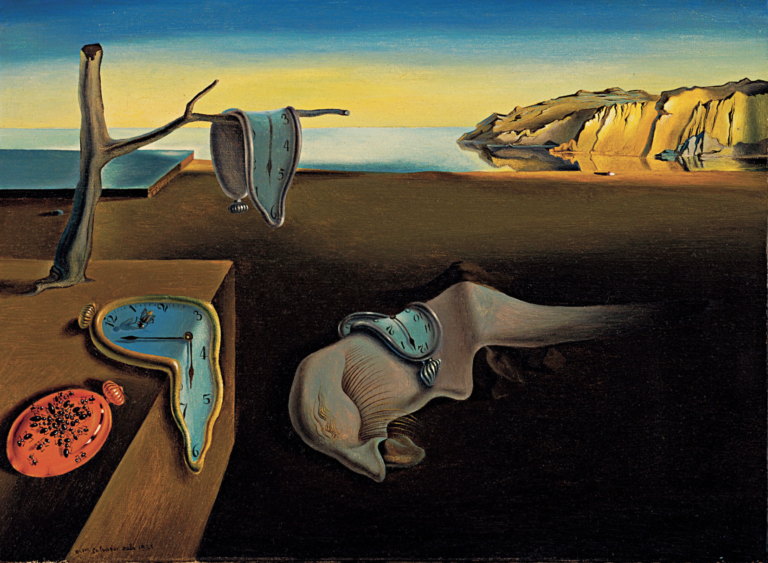
Impressionism and Post-Impressionism opened the doors for artists to experiment with color and form, prioritizing the artist’s perception over realistic depictions. This set the stage for the 20th century’s groundbreaking art movements like Expressionism, Cubism, and Surrealism, which further challenged traditional art norms.
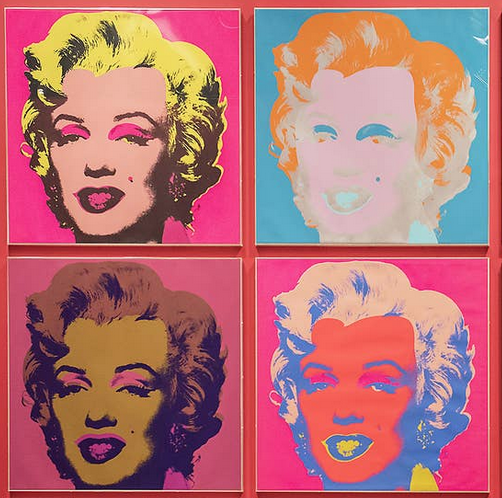
The late 20th century brought us Postmodernism, Conceptual Art, and Pop Art, all questioning the status quo of the art world, as well as societal values. Finally, the advent of digital technology has given rise to Digital Art, Installation Art, and Street Art, reflecting our current age of global interconnectedness and rapid technological advancement.
In essence, art history is a reflection of our collective human journey, capturing our evolving understanding of the world, our place in it, and our shared and individual experiences. It serves as a mirror to our societies, reflecting how we’ve changed over time, and a window into different cultures and epochs, helping us empathize with and understand others.
As we look to the future, one thing is clear: art will continue to evolve, experiment, and engage, mirroring the developments, issues, and values of our ever-changing world. And we, as viewers and creators, will continue to find resonance and meaning in its myriad forms.
2. Personal Reflections on Art
Art is often described as a reflection of the soul, a means through which humans can express their deepest emotions, hopes, fears, and dreams. It can serve as a mirror, reflecting personal experiences and emotions, and as a window, offering insights into different cultures, historical periods, and human experiences.
The cathartic power of creating art, and the therapeutic impact it can have, is an extraordinary aspect of human creativity. Whether it’s through painting, music, literature, or dance, art provides an emotional outlet and a tool for self-expression. It’s remarkable how a piece of art can capture a moment or feeling so profoundly that it resonates with individuals across different cultures and times.
Moreover, the role of art in education and cognitive development is a fascinating intersection of creativity and cognitive science. It underlines the fact that human intelligence is not one-dimensional but rather a complex interplay of logical reasoning, emotional intelligence, creativity, and problem-solving.
Finally, the importance of art in driving social and political change underscores the power of creativity in challenging the status quo and inspiring action. From street art graffiti protesting social injustices to powerful photographs capturing historical events, art has the ability to stir public consciousness and fuel societal change.
It’s a powerful form of expression and communication, a tool for learning and development, and a catalyst for social change.
3. Closing Thoughts
As we close this extensive exploration of art, we are left with a sense of awe at the power and versatility of artistic expression. The journey through art’s multifaceted history underscores its crucial role in reflecting and shaping the human experience across time and cultures.
Art is more than mere decoration or leisurely pursuit. It’s a testament to our history, our emotions, our individual and collective identities. It provides a voice to the voiceless, lends color and form to our abstract thoughts, stirs our emotions, and provokes critical thought. It can bind communities, inspire movements, and serve as a tool for education and personal therapy.
We’ve journeyed from the ancient caves of Lascaux to the grandeur of the Renaissance, and from the rebellion of modern art to the boundary-pushing innovations of contemporary digital and installation art. Throughout this journey, art’s power to adapt, respond, and envision has been consistently clear. It mirrors our evolving societies, technologies, and philosophies, constantly redefining itself in the face of a changing world.
Despite the myriad forms and styles it takes, art, at its core, remains a universal language—a vital means of human expression. In our rapidly evolving world, art will continue to play a crucial role, providing a mirror to reflect our complex realities and a window to envision a better future.
As we move forward, let’s remember to appreciate art in all its forms and understand its profound influence on our lives. Whether it’s in a gallery, a classroom, a book, on a street wall, or in the digital sphere, art surrounds us and contributes to our understanding of the world and ourselves. As the renowned artist Thomas Merton once said, “Art enables us to find ourselves and lose ourselves at the same time.” Let’s continue to lose and find ourselves in the rich tapestry of art, and in doing so, understand the world a little better.
§
Related topics:
§
Support Lumlux Art by sharing our posts on your social media. We appreciate your help. Thank you!