| | |

Orphic

Orphic

Orphic unfolds as a field of nine images, brought together within a strict square composition. Inside that frame appear scenes that mark our time: people in constant transit, war, a cemetery, polluted air, crumbling ice caps, the emptiness of public space during the Covid period, and a rubbish dump. Each image stands on its own, yet none remains innocent in isolation. Together they form a constellation of unrest, loss and human urgency, as if the world were not being narrated here, but revealed in fragments.

At the centre stands my own sculptural form, modelled with the intention of making a mould from it. Yet in that very process of fixing and preserving, the figure was partly damaged again. At the back, especially around the head, the wires and small blocks that once held the clay together became visible once more. What should have remained hidden returns to the surface. What once served as support now appears as a scar. This gives the figure a particular presence: not as a finished object, but as something that carries its own vulnerability within itself.

This is where, for me, the core of the work resides. Human beings strive for form, order, progress and control, yet in that same gesture they leave traces of fracture everywhere. The world around us bears the marks of this: in war and waste, in ecological decline, in emptiness, and in a way of living that seems always to be moving without ever truly arriving. The central figure offers no answer to that condition, but rather an echo of it. The body, or more precisely the head, appears here as the bearer of a civilisation that builds and unsettles at the same time.

Orphic thus becomes a reflection on the human condition. On what becomes visible when the surface of things is torn open. On the fragile boundary between making and damaging, between preserving and losing, between presence and decay. The work does not seek to explain. Instead, it holds the gaze on what we usually try to cover over: the traces of our actions, the remains of our time, and the question of what, in the end, humanity leaves behind of itself.

SPOTIFY

BANDCAMP
Similar Posts

  • What If Music No Longer Needed Words?

    This essay explores the profound impact of wordless music on our emotional experiences and communication. It highlights how music historically didn’t require words, using rhythm and tone to convey feelings. Instrumental compositions can evoke strong emotions without lyrics, as seen in classical scores and modern genres like lo-fi and EDM. While lyrics offer clarity and identity, instrumental music invites personal interpretation, creating a universal emotional language. As we evolve in our listening habits, wordless music takes a central role, emphasizing connection over narrative.

  • |

    VCV Kick

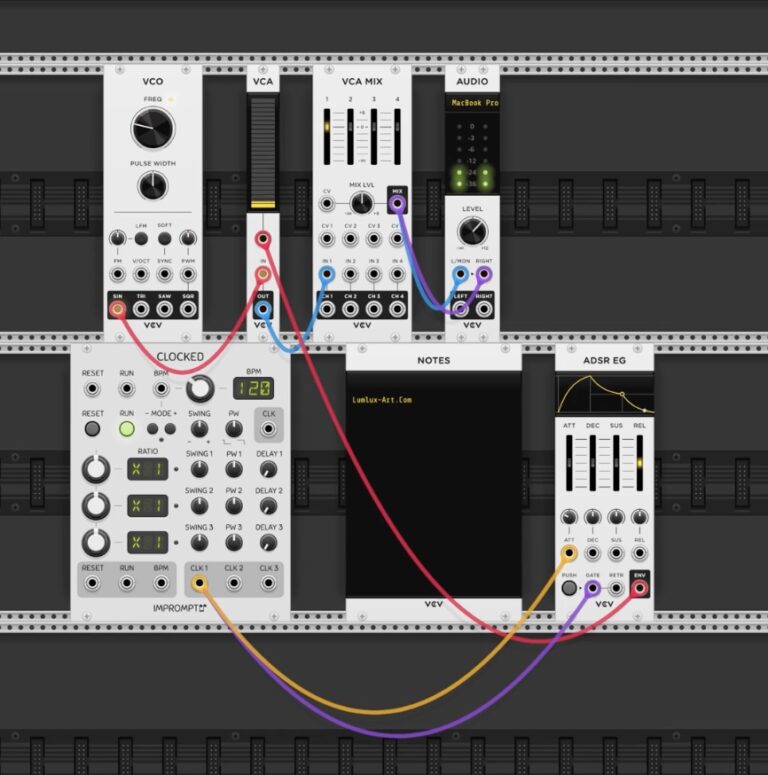
    A Dark Kick in VCV Rack (Free Modules, 120 BPM) A powerful, controlled kick is the backbone of many electronic styles. In this short piece, I share the sound I chase for my own tracks: a deep sine-based body, a tight envelope for punch, and a subtle pitch dip that adds weight without turning cartoony….

  • | |

    EDM

    Electronic Dance Music (EDM) has evolved from the late 1960s and 1970s experimental music, significantly influenced by disco, into a global phenomenon. Key subgenres like house, techno, trance, dubstep, and drum and bass emerged, becoming culturally significant through underground raves, mainstream success, and massive festivals like Ultra Music Festival. The genre’s commercial success impacts diverse facets of popular culture, including fashion and media, while technological advancements in production revolutionize how music is created and performed. Despite criticisms, EDM’s future remains bright as it continues to connect and inspire audiences worldwide.

  • |

    Why You’ll Want to Put

    FDR-Sound is a diverse music platform showcasing various genres, including EDM, ambient, and experimental sounds. The creator invites listeners to explore a range of works, from releases and live takes to sketches. Key tracks include “Ageless Souls,” “Give Me A Name,” and “Call Me,” all available on Spotify. The music emphasizes texture and rhythm, with a balance between energetic beats and atmospheric soundscapes. The artist encourages immersive listening experiences, highlighting the impact of sound and the freedom of creative exploration.

  • What Are Generative Visuals and Why Are They Everywhere Right Now?

    If you have ever watched a stage backdrop that seemed to breathe with the music, or wandered through an exhibition where the walls changed as people moved, you have met generative visuals. These are not hand animated frame by frame. They are built as systems. You design rules, add a few controls, connect them to…

  • | |

    About The Difference Between Ambient Music And Soundscape

    Ambient music and soundscapes are distinct yet interrelated auditory experiences. Ambient music, popularized by Brian Eno, creates mood without demanding attention, evolving slowly and integrating various sounds. In contrast, soundscapes, coined by R. Murray Schafer, comprise the total sounds in an environment and lack artistic intent. Both influence human perception and behavior, reflecting cultural significance. As technology evolves, their boundaries blur, leading to innovative forms like immersive sound experiences, highlighting the art and science of listening.

Leave a Reply

Your email address will not be published. Required fields are marked *