| |

3D Cubes x Orphic Overlay — Creative Coding in p5.js

This post covers a creative coding study in p5.js, where I combine two visual languages in one frame: a strict 3D structure of nested wireframe cubes and a flat 2D layer inspired by Sonia Delaunay and Orphism. I designed the result specifically for VJ projection and ambient music performance.


Two Systems in One Image

I built the foundation from four wireframe cubes, nested inside each other. First, I set each cube to rotate at a slightly different pace, creating a calm mechanical rhythm. In addition, I placed small dots that orbit and slide along the edges — they stay loyal to the geometry, but add a living pulse, like energy moving through the structure.

On top of that, I added an Orphic overlay: concentric rings and arcs that overlap, cut through each other, and create a collage of movement. I kept this layer intentionally flat and graphic — a counterpoint to the depth of the cubes. Together, these two systems create a quiet visual tension that holds up well in long projection.


Color as Motion

I chose a palette aligned with Delaunay’s simultaneous contrasts: red, yellow, blue, orange, green, white, and black. Color is not decoration here — it drives perceived motion. As a result, the image keeps shifting even when the animation stays subtle, because the slow rotations and strong contrasts constantly create new combinations.

One key detail: I treat white as space rather than paint. I leave segments that would normally be white transparent, so the black background shows through. Therefore the rings feel cut out of darkness — lighter and more architectural.


Why It Fits Ambient Music

Ambient music doesn’t need fast editing. Instead, it needs visuals that can breathe. That is why I kept the animation slow and layered. The cubes provide structure. The circles and arcs bring rhythm and color movement. Furthermore, the orbiting dots form a steady pulse. Because of this, together they build a quiet tension that works well in projection — you can watch it for minutes and still discover new combinations.

I connect this creative coding study directly to my live VJ projection work in Resolume.


Technical Notes — p5.js WEBGL

I built the visual in p5.js in WEBGL mode at 1920×1080. I constructed everything from simple shapes and repeated patterns: rings as segmented geometry, arcs as slicing layers, cubes as wireframes. I wrote the full code from scratch, without shaders or external dependencies — just composition and motion.

Finally, if you want to explore more of this work, visit the Creative Coding overview or the FDR-Sound music page.
Vergelijkbare berichten

  • Surrealism

    Surrealism is an influential art movement from the early 20th century, aiming to explore the unconscious mind through dreamlike, illogical imagery. Heavily inspired by Freud, it emerged post-World War I and called for artistic freedom beyond rationality. Prominent artists like Salvador Dalí, René Magritte, and Max Ernst challenged reality’s perceptions using techniques such as juxtaposition and automatism, leaving a lasting impact on modern art, literature, and film.

  • | |

    Dana Schutz

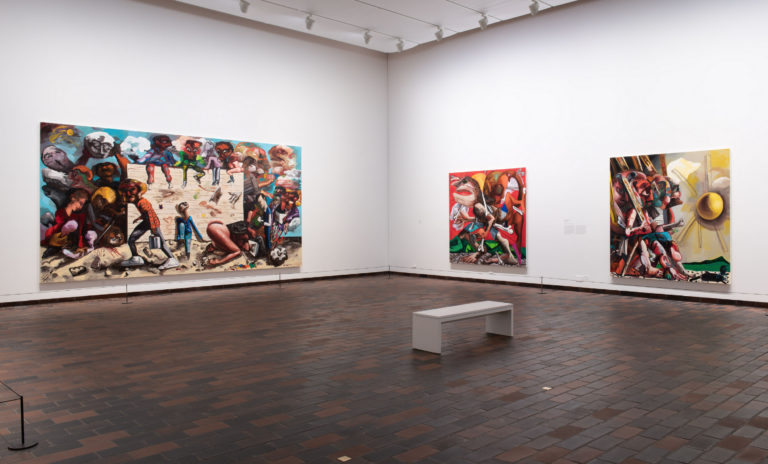
    Embracing the Human Experience Through the Absurd and the Grotesque Louisiana Museum of Modern Art in Humlebæk, Denmark, from February 9 to June 11, 2023 Dana Schutz, born in 1976 in Michigan, is an acclaimed American artist who has been captivating audiences with her powerful and thought-provoking paintings for over two decades. Through her unique…

  • | | |

    V&A South Kensington – Donatello

    Sculpting the Renaissance – A Groundbreaking Exhibition in the UK Closes Sunday, 11 June 2023 The United Kingdom is set to host the first major exhibition dedicated to the Renaissance master, Donatello, titled “Sculpting the Renaissance.” This groundbreaking event will offer a fresh perspective on the artist’s exceptional talents and his influence on the cultural…

  • Henri Matisse – Embracing the Wild Rhythm of Color

    Henri Matisse, a pivotal figure in 20th-century art, revolutionized color and form throughout his six-decade career. His journey began unexpectedly during recovery from an illness, leading to his involvement in the Fauvist movement, known for bold, non-naturalistic colors. Key works like ‘Woman with a Hat’, ‘The Dance’, and later, the innovative cut-outs, showcased his belief in color’s emotional power. Matisse’s legacy as an artist lies in redefined art boundaries, inspiring generations and exemplifying art as a profound emotional language.

  • Picasso – Unraveling the Enigma of a Pioneering Genius

    Pablo Picasso, born in 1881 in Málaga, Spain, was one of the most revolutionary and influential artists of the 20th century. His prodigious talents and relentless drive to innovate transformed the world of art and left a lasting impression on subsequent generations. This essay delves into the life and work of Picasso, exploring his artistic…

  • Art Deco – An Elegant Fusion of Style and Functionality

    Art Deco, a design movement from the 1920s and 1930s, is known for its bold geometric patterns, rich colors, and luxurious materials. Originating in Paris, it spread rapidly, influencing architecture, furniture, fashion, and graphic design. Key characteristics include geometric shapes and vibrant hues, drawing inspiration from ancient civilizations. Despite its decline during the Great Depression and WWII, Art Deco saw a resurgence, remaining a significant and iconic style in design history.

Geef een reactie

Je e-mailadres wordt niet gepubliceerd. Vereiste velden zijn gemarkeerd met *