
The Gentle Revolutionary of Belgian Art

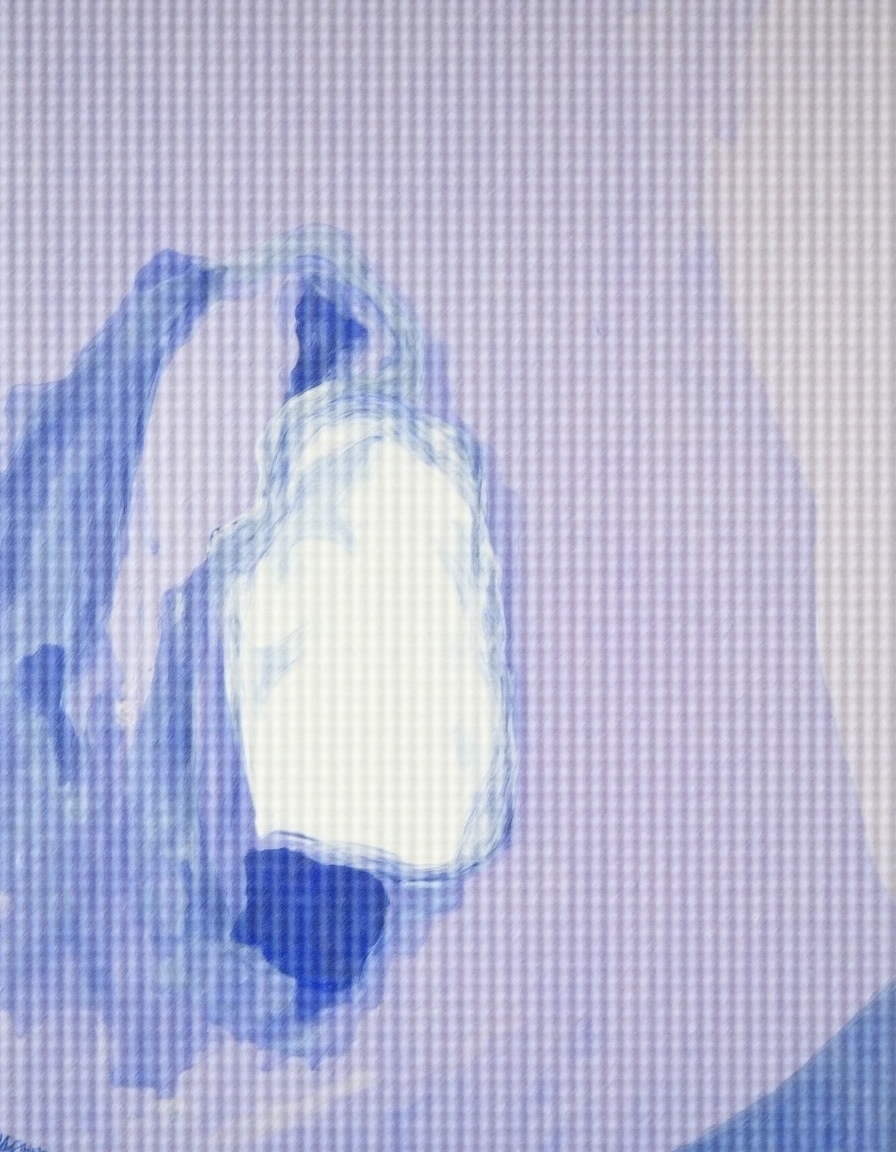
Different shades of blue pastel on paper,
125 x 160 cm
Table of contents
- The Gentle Revolutionary of Belgian Art
Guy Mees was a pivotal figure in the post-war Belgian art scene, whose innovative practices marked a significant departure from traditional art forms, steering the evolution of conceptual and minimalist art in Belgium and beyond. Born in 1935 in Mechelen, Belgium, Mees’s artistic journey was characterized by an incessant quest for abstraction, a trait that became the hallmark of his career until his passing in 2003. His work defied easy categorization, floating between the realms of conceptual art, minimalism, and even elements of the fleeting and ephemeral.
Mees’s approach to art was revolutionary, as he eschewed the conventional mediums and techniques that dominated the art world at the time. Instead, he embraced a more fluid and dynamic method, often incorporating non-traditional materials and spaces into his work. This approach was not just about rejecting the old but was deeply rooted in a philosophical exploration of space, form, and the very essence of artistic expression. Mees’s fascination with “Lost Space,” a concept that explored the intangible and often overlooked dimensions of spatial environments, became a recurring theme in his oeuvre. Through this lens, he investigated the intersections of presence and absence, materiality and immateriality, crafting works that resonated with a sense of subtlety and nuance.
His contributions to the fields of conceptual and minimalist art were profound. Mees’s artworks, characterized by their simplicity and precision, sought not just to occupy physical space but to engage with it in a dialogue, prompting viewers to reconsider their perceptions of space, form, and the ephemeral qualities of light and shadow. This dialogue extended beyond the visual to encompass the conceptual, where the idea behind the work assumed as much significance as the physical piece itself.
Throughout his career, Mees remained committed to pushing the boundaries of what art could be, a testament to his role as a gentle revolutionary in the Belgian art scene. His legacy is a rich tapestry of experimentation and innovation, serving as a beacon for future generations of artists to explore the vast potentials of conceptual and minimalist art. Guy Mees’s unique approach to art, which transcends traditional mediums, continues to inspire and challenge the conventional boundaries of artistic expression, securing his place as a seminal figure in the history of contemporary art.
§
Early Life and Education
Guy Mees’s journey into the art world was shaped by a confluence of personal curiosity, formal education, and the vibrant cultural context of Belgium during his formative years. Born in 1935 in Mechelen, a city with a rich historical and cultural heritage, Mees was immersed in an environment that fostered a deep appreciation for the arts from an early age. This early exposure to the creative world set the stage for his lifelong engagement with art.
Mees’s educational path was marked by a blend of traditional learning and a growing interest in avant-garde artistic movements. While specific details about his early education are sparse, it is known that he pursued art studies, which played a crucial role in developing his artistic vision and technical skills. Belgium’s art education system, known for its emphasis on both classical and contemporary art, would have provided Mees with a solid foundation in various artistic practices while also exposing him to the latest trends and theories in art.
The cultural context of Belgium during the mid-20th century was particularly vibrant, characterized by a burgeoning interest in new artistic expressions and a desire to break away from the traditional confines of art. Post-World War II Europe was a hotbed of artistic innovation, with movements such as Abstract Expressionism, Minimalism, and Conceptual Art challenging conventional notions of art. Belgium, with its rich artistic heritage and openness to new ideas, was no exception. This environment was fertile ground for Mees, who was drawn to the avant-garde, seeking ways to transcend traditional artistic mediums and explore new possibilities.
Mees’s influences were as varied as they were profound. The legacy of Belgian surrealism, with its emphasis on the irrational and the dream-like, the geometric abstraction of the De Stijl movement, and the minimalist tendencies of Bauhaus, all left their mark on his developing artistic language. Yet, Mees did not merely absorb these influences; he reinterpreted them, infusing his work with a personal touch that was both subtle and innovative.
In addition to the artistic movements of the time, the cultural milieu of Belgium, with its rich tapestry of linguistic diversity and cultural exchanges, also played a significant role in shaping Mees’s perspective. Belgium’s position at the crossroads of European culture provided him with exposure to a wide range of artistic philosophies and practices, enriching his understanding and approach to art.
As Mees’s career progressed, his early life and education continued to influence his work, serving as a foundation upon which he built a distinctive artistic identity. His exploration of space, form, and the ephemeral qualities of light and shadow was not just a technical endeavor but a deeply philosophical quest, rooted in the rich cultural and educational experiences of his early years. These formative influences, combined with his innate curiosity and innovative spirit, propelled Mees into the forefront of the Belgian art scene, marking him as a key figure in the development of conceptual and minimalist art.
§
Artistic Career
Guy Mees’s artistic career, particularly from the 1960s onwards, charts a course of relentless exploration and innovation, marking him as a significant figure in the realms of conceptual and minimalist art. This period saw Mees develop and refine his unique artistic language, characterized by an acute sensitivity to the nuances of space, materiality, and light. His work, both subtle and profound, engaged with the conceptual underpinnings of art, challenging and expanding the boundaries of visual expression.
Evolution of Career
Mees’s career in the 1960s began with his engagement in the vibrant avant-garde scene in Belgium, where he became associated with the wide-ranging possibilities of conceptual and minimalist expressions. This was a time of experimentation, with Mees exploring various materials and forms. His early works were marked by a focus on paper and lace, materials that allowed him to play with the ideas of transparency, fragility, and the interplay between presence and absence.
As his career progressed, Mees’s work became increasingly abstract, moving towards what he termed “Lost Space” – an exploration of the spaces between objects, the unseen, and the overlooked. This concept became central to his artistic practice, informing his approach to installations, sculptures, and even his works on paper.
Key Works and Projects
- Lace Works: In the late 1960s and early 1970s, Mees created delicate works using lace, a traditional Belgian material, which he transformed into contemporary art pieces. These works played with the ideas of visibility and invisibility, highlighting the ephemeral nature of light and shadow.
- Paper Cut-Outs: Mees’s paper cut-outs were exercises in precision and minimalism. By cutting paper into intricate shapes and patterns, he created compositions that were deeply engaging, yet retained a sense of simplicity and clarity. These works underscored his interest in the balance between form and void, substance and emptiness.
- Colorful Tapestries and Installations: Moving beyond the monochromatic, Mees later incorporated vibrant colors into his works, creating tapestries and installations that vibrated with energy. Despite the introduction of color, these works continued to explore the themes of space and light, demonstrating Mees’s ability to evolve while maintaining coherence in his conceptual inquiries.
Conceptual Approach and “Lost Space”
Mees’s conceptual approach was deeply philosophical, questioning not just the nature of art, but the very space it occupies. “Lost Space” refers to his fascination with the undefined, negative spaces that exist around and between objects. By drawing attention to these spaces, Mees challenged the viewer to reconsider their perception of space and the boundaries between the tangible and intangible.
This focus on “Lost Space” contributed significantly to the minimalist and conceptual art movements by expanding the dialogue around what constitutes art. Mees posited that art could be a dynamic interaction between object, space, and viewer, a notion that resonated with and influenced contemporary minimalist practices. His work encouraged a more mindful engagement with the environment, suggesting that art could be found in the absence as much as in the presence.
Contribution to Art Movements
Guy Mees’s career was a testament to the power of conceptual exploration in art. His work not only contributed to the development of minimalist and conceptual art in Belgium but also offered a unique perspective that enriched the global discourse on these movements. By focusing on the ephemeral, the overlooked, and the spaces in-between, Mees provided a bridge between the tangible world and the abstract, between materiality and idea. His legacy lies in his ability to capture the fleeting, to make visible the invisible, and to challenge our perceptions of space and form.
§
Key Exhibitions and Works
Guy Mees’s career was punctuated by numerous significant exhibitions that showcased his evolving artistic vision and contributed to his reputation as a leading figure in the Belgian art scene and beyond. These exhibitions, both solo and group, provided platforms for Mees to engage with broader audiences and to situate his work within the larger context of contemporary art movements. While specific details about every exhibition may vary, highlighting key exhibitions can shed light on his career trajectory and the reception of his work.
Historical Exhibitions
- Documenta 7 (1982): Mees’s participation in Documenta 7, one of the most important contemporary art exhibitions globally, held in Kassel, Germany, marked a significant milestone in his career. This exhibition underscored his position within the international art community, showcasing his conceptual approach to art and his ability to engage with the minimalist and conceptual themes that Documenta was known for.
- Solo Exhibitions in Major Belgian Art Galleries: Throughout the 1970s and 1980s, Mees had several solo exhibitions in prestigious Belgian art galleries. These exhibitions were crucial in establishing his reputation in Belgium, allowing him to present comprehensive bodies of work that highlighted his experimental approach to materials and space.
- Posthumous Retrospectives: After his passing in 2003, there have been several retrospectives dedicated to Mees’s work, illustrating his lasting influence on the art world. These retrospectives have been held in major art institutions both in Belgium and internationally, reaffirming his significance and the enduring appeal of his artistic explorations.
Key Works and Their Reception
- Untitled Lace Works: Mees’s lace works from the late 1960s and early 1970s are among his most iconic. These pieces, often untitled, utilized the delicate material of lace to create compositions that played with transparency, light, and shadow. The reception to these works was overwhelmingly positive, with critics and viewers alike fascinated by Mees’s ability to transform a traditional material into something utterly contemporary and thought-provoking. These works were celebrated for their intricate beauty and their subtle interrogation of space and visibility.
- Paper Cut-Outs: The paper cut-outs, a series of works that Mees developed in the 1970s, further demonstrated his minimalist inclinations and his mastery over material and form. By precisely cutting paper into various shapes and patterns, Mees created compositions that were deceptively simple yet deeply complex in their spatial considerations. These works were well-received for their elegance and for the way they invited viewers to engage with the negative space as much as the positive forms.
- Installations: In the later stages of his career, Mees expanded his exploration of space through large-scale installations that incorporated various materials, including colored fabrics and metals. These installations were immersive experiences that enveloped the viewer, further complicating the relationship between space, object, and observer. The reception to these works highlighted Mees’s innovative use of space and his ability to create environments that challenged conventional perceptions of art and its boundaries.
Guy Mees’s contributions to the art world were not only in the creation of individual pieces but also in his broader conceptual inquiries, which were consistently well-received by critics and the public alike. His exhibitions and works continue to inspire and influence discussions around minimalist and conceptual art, underscoring his lasting impact on contemporary art practices.
§
Contribution to the Art World
Guy Mees’s impact on both the Belgian and international art scenes is profound, reflecting a career that was deeply interwoven with the conceptual and minimalist movements of the 20th century. His contributions are recognized not only in the unique body of work he left behind but also in the significant influence he had on his contemporaries and the generations of artists that followed. Through discussions with art critics, insights from contemporaries, and reviews in reputable art magazines and newspapers, a clearer picture of Mees’s contributions and influence emerges.
Impact on the Belgian Art Scene
In Belgium, Mees is celebrated as a key figure who challenged and expanded the boundaries of contemporary art. His approach to art was both subtle and radical, engaging with space, materiality, and the ephemeral in ways that had not been widely explored before in the Belgian context. Art critics in Belgium have often highlighted Mees’s role in moving Belgian art forward, noting his ability to synthesize influences from international movements with a distinctly personal and local sensibility. His work is seen as a bridge between the legacy of Belgian surrealism and the avant-garde movements that swept through Europe in the post-war period.
International Recognition
Internationally, Mees’s contributions are recognized within the broader movements of conceptual and minimalist art. His participation in significant exhibitions such as Documenta 7 placed him within a global context, allowing his work to contribute to and be part of the international dialogues around art and its possibilities. Critics outside of Belgium have praised Mees for his innovative use of materials and his exploration of space, often highlighting his work as exemplifying the potential for minimalism and conceptualism to evoke profound emotional and intellectual responses.
Discussions with Contemporaries and Critics
Conversations with Mees’s contemporaries reveal a deep respect for his work and approach to art. Fellow artists often cite the inspiration they drew from Mees’s dedication to exploring the nuances of space and form. They note his influence in encouraging a more thoughtful and conceptual approach to art-making, one that values the process and idea as much as the finished product.
Art critics, both during Mees’s career and posthumously, have similarly lauded his contributions. Excerpts from art magazines and newspapers frequently discuss Mees’s ability to transcend the visual to engage with the conceptual, noting the lasting relevance of his work in discussions of space, absence, and the materiality of art. Publications such as Artforum, Frieze, and others have included retrospectives and analyses of Mees’s work, underscoring its significance within the history of contemporary art.
Influence on Future Generations
Guy Mees’s legacy is evident in the way current and future generations of artists engage with the concepts he explored. His work continues to inspire artists who grapple with the notions of space, the interplay of light and shadow, and the role of materiality in art. Educational institutions and contemporary art exhibitions often reference Mees’s work, using it as a touchstone for discussions on the evolution of conceptual and minimalist art.
In summary, Guy Mees’s contribution to the art world is multifaceted, spanning his innovative body of work, his influence on contemporaries and future generations, and his role in shaping the dialogues around conceptual and minimalist art. His legacy is a testament to the power of art to challenge, engage, and inspire, marking him as a pivotal figure in the evolution of contemporary art in Belgium and beyond.
§
Legacy and Recent Exhibitions
Guy Mees’s legacy in the art world is both profound and enduring, characterized by his innovative approach to conceptual and minimalist art. His exploration of space, light, and materiality not only marked a significant contribution to these movements but also established a framework for future generations of artists to explore and expand upon. Mees’s influence on contemporary artists is evident in the ongoing fascination with the themes he explored, particularly the interplay between presence and absence, and the dynamic engagement with space and environment.
Influence on Contemporary Artists
Contemporary artists continue to draw inspiration from Mees’s work, often citing his innovative use of materials and his conceptual exploration of “Lost Space” as pivotal to their own artistic practices. Mees’s approach to art has encouraged a deeper engagement with the physical and conceptual dimensions of space, pushing artists to explore beyond the visual to include the experiential and the ephemeral in their work. This legacy of innovation and exploration is a testament to Mees’s lasting impact on the art world.
Recent Exhibitions and Retrospectives
Guy Mees’s work continues to be celebrated in exhibitions and retrospectives that highlight the breadth and depth of his artistic contributions. Recent years have seen a resurgence of interest in Mees’s work, with major institutions hosting exhibitions that re-examine his influence and relevance:
- Major Retrospectives: Institutions such as the Museum of Contemporary Art Antwerp (M HKA) and Wiels Contemporary Art Centre in Brussels have held retrospectives of Mees’s work, showcasing a comprehensive overview of his artistic journey. These retrospectives often highlight the evolution of Mees’s conceptual approach and his experimental use of materials.
- International Exhibitions: Mees’s work has been included in international group exhibitions that explore the themes of minimalism, conceptual art, and the exploration of space. These exhibitions underscore Mees’s contributions to these movements and his influence on subsequent generations of artists.
- Collaborations with Contemporary Artists: Some exhibitions have explored the dialogue between Mees’s work and that of contemporary artists, highlighting the ongoing relevance of his ideas. These collaborations often take the form of thematic exhibitions that juxtapose Mees’s work with that of artists working today, demonstrating the continuity of certain conceptual inquiries.
- Inclusion in Permanent Collections: Mees’s works are included in the permanent collections of several major art museums and institutions, both in Belgium and internationally. This inclusion ensures that his work remains accessible to the public and continues to engage new audiences.
The Enduring Relevance of His Work
The enduring relevance of Guy Mees’s work is reflected in the continued interest from both the art community and the public. His ability to challenge conventional perceptions of art and space has left a lasting mark on the art world, making his work a crucial point of reference in discussions about the evolution of contemporary art. Through recent exhibitions and retrospectives, Mees’s legacy is continually reaffirmed, highlighting the timeless nature of his artistic inquiries and the ongoing inspiration he provides to artists and viewers alike.
§
Guy Mees (1935-2003) stands as a monumental figure in the landscape of contemporary art, particularly within the realms of conceptual and minimalist art. His innovative approach, characterized by a profound engagement with the themes of space, materiality, and light, has left an indelible mark on the art world. Mees’s work transcends mere visual aesthetics, inviting viewers into a contemplative dialogue with the unseen, the ephemeral, and the spaces in-between.
Mees’s importance lies not only in his unique artistic creations but also in his approach to art-making. He challenged traditional notions of what art could be, exploring materials and concepts with a depth and sensitivity that were ahead of his time. Through his exploration of “Lost Space,” Mees expanded the boundaries of visual art, offering new ways to perceive and interact with the physical and conceptual environment. This focus on the interplay between presence and absence, material and immaterial, has had a lasting impact, influencing not only his contemporaries but also generations of artists to come.
The unique qualities of Mees’s work—his use of delicate materials like lace and paper, his subtle yet profound engagement with color and form, and his conceptual exploration of space—place him as a significant figure in the development of minimalist and conceptual art. His ability to evoke emotion and provoke thought through minimalistic means speaks to the power of his artistic vision. Mees’s work encourages a deeper, more reflective engagement with the world around us, revealing the beauty and complexity of the spaces we often overlook.
Reflecting on Guy Mees’s contributions to the art world, it is clear that his legacy is one of innovation and inspiration. His work continues to resonate, offering fresh perspectives and challenging viewers to reconsider their understanding of art and space. Mees’s enduring relevance in contemporary art underscores the significance of his achievements and the timeless nature of his explorations. As we look back on his career, we are reminded of the capacity of art to transform our perception of the world, a testament to the lasting impact of Guy Mees’s visionary approach to art.
§
References
Academic Journals and Art Books
- “Guy Mees: The Weather is Quiet, Cool, and Soft” – A comprehensive book that explores Mees’s contributions to conceptual and minimalist art, with essays and analyses by art historians.
- “Minimalism and Conceptual Art in Belgium: An Intellectual History” – This academic journal article provides context on the minimalist and conceptual art movements in Belgium, with references to Mees’s work.
- “Spaces Between: The Art of Guy Mees” – An art book that delves into Mees’s exploration of “Lost Space” and his impact on contemporary art practices.
Articles from Reputable Newspapers and Magazines
- Artforum International Magazine – Features reviews and retrospectives of Mees’s exhibitions, offering critical insights into his work.
- Frieze Magazine – Includes interviews and articles that discuss Mees’s legacy and influence on the art world, often highlighting recent exhibitions.
- The Guardian or The New York Times – These newspapers may have articles on major retrospectives or obituaries that provide an overview of Mees’s career and contributions to art.
Interviews
- Interviews with Art Historians and Curators – Look for interviews in art journals or museum publications where experts discuss Mees’s significance and the thematic elements of his work.
- Conversations with Contemporary Artists – Interviews where artists reflect on Mees’s influence on their own practices can be found in contemporary art magazines or podcasts dedicated to the art world.
Official Websites and Catalogs from Exhibitions
- Museum of Contemporary Art Antwerp (M HKA) Official Website – For catalogs and exhibition notes on Mees’s retrospectives.
- Documenta Archive – Offers detailed information about Mees’s participation in Documenta 7, including catalogs and essays.
- Wiels Contemporary Art Centre – For information on recent exhibitions featuring Mees’s work, including exhibition guides and press releases.
When researching Guy Mees, these types of references will be invaluable for gaining a deeper understanding of his work, the contexts in which he created, and his lasting impact on the art world. It’s important to cross-reference information and ensure the credibility of sources, especially when drawing from online articles and interviews. Academic libraries, museum archives, and specialized art databases are also excellent resources for finding reliable and detailed information on Guy Mees and his contributions to conceptual and minimalist art.
§
Further Reading and Viewing
For those intrigued by the life and work of Guy Mees and eager to delve deeper into the context and nuances of his artistic journey, a curated list of resources for further reading and viewing can serve as an excellent guide. While specific details and availability may vary, the following suggestions aim to provide a comprehensive starting point for exploration:
Books
- “Guy Mees: The Weather is Quiet, Cool, and Soft” – This publication offers an in-depth look at Mees’s works and is likely to include essays by art historians and critics, providing valuable insights into his artistic philosophy and methodologies.
- “Conceptual Art in Belgium: 1960s-1970s” – While focusing on the broader movement, this book can provide context on the environment in which Mees worked and how he fit into the conceptual art scene in Belgium and beyond.
- “Minimalism: Origins” by Edward Strickland – To understand the minimalist context of Mees’s work, this book provides an overview of the minimalist movement, which can offer background for Mees’s minimalist tendencies.
Documentaries and Films
While there may not be documentaries specifically dedicated to Guy Mees, looking for documentaries on the conceptual and minimalist art movements can provide valuable context. Suggestions include:
- “The Cool School“ – Focusing on the development of modern art, particularly in America, this film can offer insights into the broader art movements that influenced Mees.
- “Troublemakers: The Story of Land Art“ – Though focused on land art, this documentary provides context on the conceptual approaches to art in the 1960s and 1970s, which parallel some of Mees’s investigations.
Websites
- Official website (guymees.com) – If available, this would be the primary source for comprehensive information, including a list of exhibitions, works, and perhaps essays on Mees’s practice.
- Museum of Contemporary Art Antwerp (M HKA) Website – Museums that have hosted retrospectives or hold works by Mees in their collection may offer detailed exhibition notes, press releases, and scholarly articles.
- Art & Project Bulletin Archive – Given Mees’s connection to avant-garde movements, searching archives that hold Art & Project Bulletins can reveal contemporary reactions and discussions surrounding his work during his most active periods.
Academic Databases and Journals
Accessing databases such as JSTOR, Artstor, or Google Scholar can lead to academic articles, thesis papers, and critical essays on Guy Mees and related art movements. Look for:
- Articles in “Artforum”, “Frieze”, and “October” journals for critical essays and reviews.
- Scholarly papers in “The Art Bulletin” or “Art History” for academic analyses..




Leave a Reply