Art that Conveys Emotion and Inner Experience

Table of contents

Introduction to Expressionism
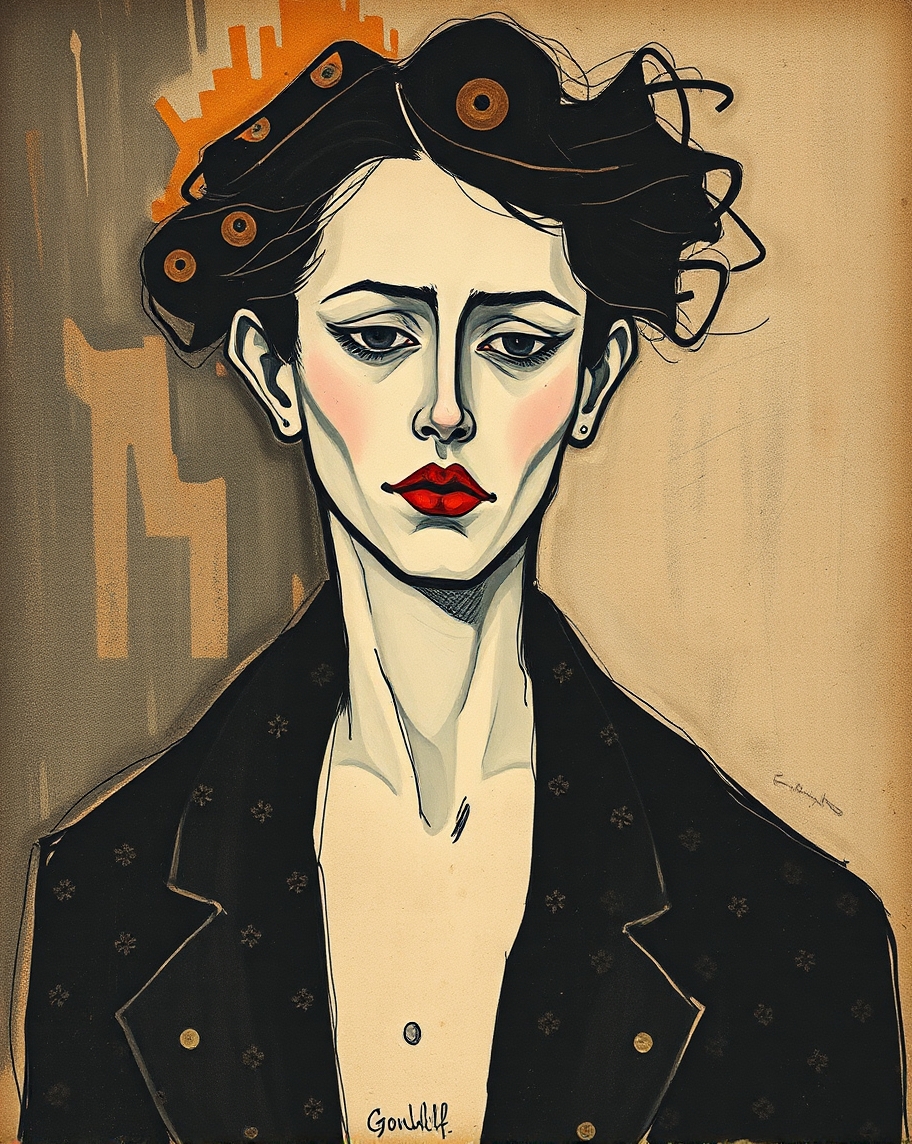
Expressionism is a painting style that prioritizes the expression of emotional and psychological depth over realistic or naturalistic representation. Emerging in the early 20th century, Expressionism arose in response to the anxieties of the modern age, driven by rapid industrialization, urbanization, and the growing alienation felt by individuals in a changing world. Unlike movements that emphasized the accurate depiction of reality, such as Realism or Impressionism, Expressionism seeks to convey intense, often subjective feelings through bold colors, distorted forms, and exaggerated compositions.
Expressionist painters focus on the inner life of their subjects, using distortion and abstraction as tools to communicate the emotions or experiences that might be invisible to the naked eye. This focus on the inner world, rather than outward appearances, allows the artist to explore complex emotions like fear, anger, despair, and ecstasy. Through Expressionism, artists invite viewers to look beyond the surface of their subjects and engage with the psychological and emotional core of the human experience.
The Origins and Development of Expressionism
Expressionism emerged primarily in Germany at the beginning of the 20th century, as part of a broader cultural movement that encompassed literature, theater, architecture, and film. The movement arose during a time of political instability, social upheaval, and growing dissatisfaction with the dehumanizing effects of industrialization and modern life.
The artists associated with Expressionism rejected the prevailing academic standards of beauty, harmony, and proportion, seeking instead to create art that expressed the emotional state of the artist or subject. The movement was heavily influenced by earlier artistic developments, including Romanticism’s focus on emotion, Post-Impressionism’s use of color for expressive purposes, and Symbolism’s interest in the metaphysical and spiritual.
Expressionism can be divided into two main branches: Die Brücke (The Bridge) and Der Blaue Reiter (The Blue Rider), both of which were formed in Germany and became the driving forces of the movement.
- Die Brücke (The Bridge): Founded in Dresden in 1905 by a group of young artists including Ernst Ludwig Kirchner, Fritz Bleyl, Erich Heckel, and Karl Schmidt-Rottluff, Die Brücke sought to bridge the gap between the past and the future by creating art that was raw, direct, and emotionally charged. Their work often depicted urban life, the human figure, and the tension between civilization and nature. Die Brücke artists used exaggerated forms, bold outlines, and vibrant colors to express the inner turmoil of modern existence.
- Der Blaue Reiter (The Blue Rider): Der Blaue Reiter was founded in Munich in 1911 by Wassily Kandinsky and Franz Marc, with other members including August Macke and Paul Klee. This group focused on spiritual and symbolic content, believing that art should transcend the material world and communicate a deeper, metaphysical reality. While still emphasizing emotional expression, Der Blaue Reiter artists often used abstract forms and non-naturalistic colors to convey their inner vision. Kandinsky, in particular, moved toward pure abstraction in his work, exploring the relationship between color, form, and emotion.

Key Artists and Works in Expressionism
Edvard Munch
Edvard Munch, a Norwegian painter and printmaker, is often considered a precursor to the Expressionist movement, despite being active before it formally began. His work is characterized by its exploration of existential themes such as anxiety, alienation, and mortality. Munch’s use of intense colors, dramatic compositions, and distorted forms served as a direct influence on later Expressionist artists.
Munch’s most famous work, The Scream (1893), is an iconic example of early Expressionism. The painting depicts a figure standing on a bridge, clutching their face in a moment of intense terror, with a swirling, blood-red sky and distorted landscape behind them. The figure’s open-mouthed scream and the wavy lines of the background convey an overwhelming sense of anxiety and dread, reflecting Munch’s own feelings of isolation and fear. The painting’s emotional intensity and distorted form make it one of the most powerful and recognizable works in the history of modern art.
Another significant work by Munch is The Madonna (1894-1895), which portrays a woman in a state of ecstasy, her body enveloped by swirling colors. The painting explores themes of love, sexuality, and death, with the exaggerated curves of the figure and the swirling patterns around her head emphasizing the emotional intensity of the scene. Munch’s use of color, form, and symbolism in this work reflects his interest in the emotional and psychological aspects of human experience.
Wassily Kandinsky
Wassily Kandinsky, a Russian-born painter, was a key figure in the development of abstract art and one of the leaders of the Der Blaue Reiter group. Kandinsky believed that art should express spiritual realities and that color and form could evoke deep emotional responses. He viewed painting as a form of visual music, where different colors and shapes could produce specific emotional effects, much like musical notes.
Kandinsky’s work evolved from representational painting to pure abstraction, as seen in Composition VII (1913). This large, dynamic painting features swirling, interlocking forms and a vibrant palette of blues, reds, yellows, and greens. The painting is highly abstract, with no clear subject matter, yet it conveys a sense of movement, chaos, and emotional intensity. Kandinsky’s belief in the spiritual power of art is evident in the way he uses color and form to create an almost mystical experience for the viewer.
Another important work by Kandinsky is Improvisation 28 (Second Version) (1912), which features bold, angular lines and bright colors arranged in an abstract composition. The painting was part of Kandinsky’s series of “Improvisations,” in which he sought to capture spontaneous, emotional responses through color and form. In this work, the viewer can sense the artist’s emotional energy, with the colors and shapes interacting in a way that suggests movement, chaos, and transformation.
Egon Schiele
Egon Schiele, an Austrian painter associated with the Viennese Secession movement, brought a raw, unfiltered emotional intensity to his Expressionist works. Schiele is known for his highly expressive portraits and nudes, often featuring gaunt, contorted bodies and faces. His work delves into themes of sexuality, mortality, and existential anguish, using distortion and angular lines to convey psychological depth.
One of Schiele’s most famous works, Self-Portrait with Physalis (1912), is a striking example of his unique style. In this painting, Schiele depicts himself with a gaunt, almost skeletal face, staring directly at the viewer with piercing eyes. The sharp angles of his body and the exaggerated features convey a sense of vulnerability, isolation, and self-awareness. Schiele’s use of bold, angular lines and muted, earthy tones enhances the emotional intensity of the portrait.
Schiele’s Seated Woman with Bent Knee (1917) is another significant work, featuring a nude woman in a contorted, almost awkward pose. The exaggerated proportions of her body, combined with the stark, minimal background, draw attention to her emotional state, which seems to oscillate between sensuality and discomfort. Schiele’s ability to capture the complexity of human emotions through distortion and abstraction makes him one of the most important figures in Expressionism.
Franz Marc
Franz Marc, a co-founder of Der Blaue Reiter, is known for his vivid, colorful depictions of animals, which he used as symbols of purity and spirituality. Marc believed that animals represented a more innocent and harmonious connection to nature, in contrast to the alienation and destruction he saw in modern human life.
One of Marc’s most famous works, The Large Blue Horses (1911), depicts three stylized blue horses standing against a vibrant, rolling landscape. The use of non-naturalistic colors, particularly the deep blue of the horses, conveys a sense of calm, spirituality, and transcendence. Marc’s use of color was highly symbolic, with blue representing masculinity and spirituality, yellow representing femininity and joy, and red symbolizing violence and destruction.
Another important work by Marc is Fate of the Animals (1913), a darker and more chaotic composition that reflects the artist’s growing sense of foreboding in the years leading up to World War I. The painting features fragmented, distorted animal forms entangled in a violent, swirling landscape of red and black. The sense of destruction and chaos in this painting reflects Marc’s fears about the future of humanity and the world.
The Principles and Techniques of Expressionism
Expressionism is characterized by several key principles and techniques that distinguish it from other art movements:
- Emphasis on Emotional and Psychological Expression: Expressionist artists sought to convey intense emotional experiences, often using distortion, abstraction, and exaggeration to represent the inner turmoil of their subjects. The focus was not on creating a realistic or naturalistic depiction but rather on expressing the artist’s or subject’s psychological state.
- Distorted Forms and Exaggeration: Expressionist paintings often feature distorted or exaggerated forms, with figures and objects appearing elongated, twisted, or contorted. This distortion is used to heighten the emotional impact of the work, conveying feelings of anxiety, fear, or alienation.
- Bold, Non-Naturalistic Colors: Expressionists used bold, often non-naturalistic colors to evoke specific emotional responses. Colors were chosen not for their resemblance to reality but for their ability to convey mood and atmosphere. Bright, saturated colors like red, yellow, and blue were frequently used to symbolize passion, violence, or spirituality.
- Dynamic Brushwork and Composition: Expressionist paintings often feature dynamic, vigorous brushwork, with visible, expressive strokes that add to the emotional intensity of the work. The compositions are frequently asymmetrical or fragmented, with figures and objects arranged in a way that reflects the chaotic, unstable nature of the emotions being depicted.
- Focus on the Human Condition: Many Expressionist works explore themes of existential angst, alienation, and the darker aspects of the human condition. The artists were deeply influenced by the social, political, and psychological tensions of the time, and their work often reflects a sense of despair or disillusionment with modern life.

The Impact and Legacy of Expressionism
Expressionism had a profound impact on the development of modern art, influencing a wide range of artistic movements and practices throughout the 20th century. Its emphasis on emotional expression, abstraction, and experimentation opened up new possibilities for artists, challenging the conventions of traditional representation and paving the way for later avant-garde movements.
Influence on Abstract Expressionism
The impact of Expressionism can be seen in the Abstract Expressionist movement, which emerged in the United States in the 1940s and 1950s. Artists like Jackson Pollock, Mark Rothko, and Willem de Kooning were influenced by the emotional intensity and freedom of Expressionism, taking it further by embracing pure abstraction and emphasizing the physical act of painting itself. The abstract forms, bold colors, and emphasis on spontaneous expression found in Abstract Expressionism owe much to the legacy of early 20th-century Expressionists.
Impact on Film, Theater, and Literature
Expressionism also had a significant influence beyond the visual arts, particularly in film, theater, and literature. In cinema, German Expressionist films like The Cabinet of Dr. Caligari (1920) and Nosferatu (1922) used distorted sets, dramatic lighting, and exaggerated acting to create a sense of psychological tension and horror. Expressionist theater, characterized by its use of abstract sets and heightened performances, sought to convey the emotional experience of characters rather than realism.
In literature, writers like Franz Kafka and James Joyce explored themes of alienation, absurdity, and the inner workings of the mind, often employing stream-of-consciousness techniques and fragmented narratives that reflected the subjective, emotional focus of Expressionism.
Continued Relevance in Contemporary Art
Expressionism continues to resonate in contemporary art, with many artists drawing on its emphasis on emotion, abstraction, and the exploration of the human condition. The movement’s rejection of realism and embrace of subjective experience has had a lasting impact on how artists approach their work, particularly in fields like performance art, installation, and conceptual art.
§
Expressionism is a powerful and enduring movement that challenged traditional notions of representation and opened up new ways of expressing emotion and psychological depth. Through their bold use of color, distortion, and abstraction, Expressionist artists like Edvard Munch, Wassily Kandinsky, Egon Schiele, and Franz Marc sought to capture the raw, inner experience of their subjects, creating art that was deeply personal and emotionally resonant.
The legacy of Expressionism can be seen in its influence on later art movements, particularly Abstract Expressionism, and its lasting impact on film, theater, and literature. Today, Expressionism continues to inspire artists to explore the depths of human emotion, pushing the boundaries of how we understand and experience art.
In an increasingly complex and uncertain world, the emotional honesty and intensity of Expressionism remain as relevant as ever, offering viewers a glimpse into the inner workings of the human psyche and reminding us of the power of art to connect with our deepest emotions.

§





Leave a Reply