(circa 1635)

Introduction
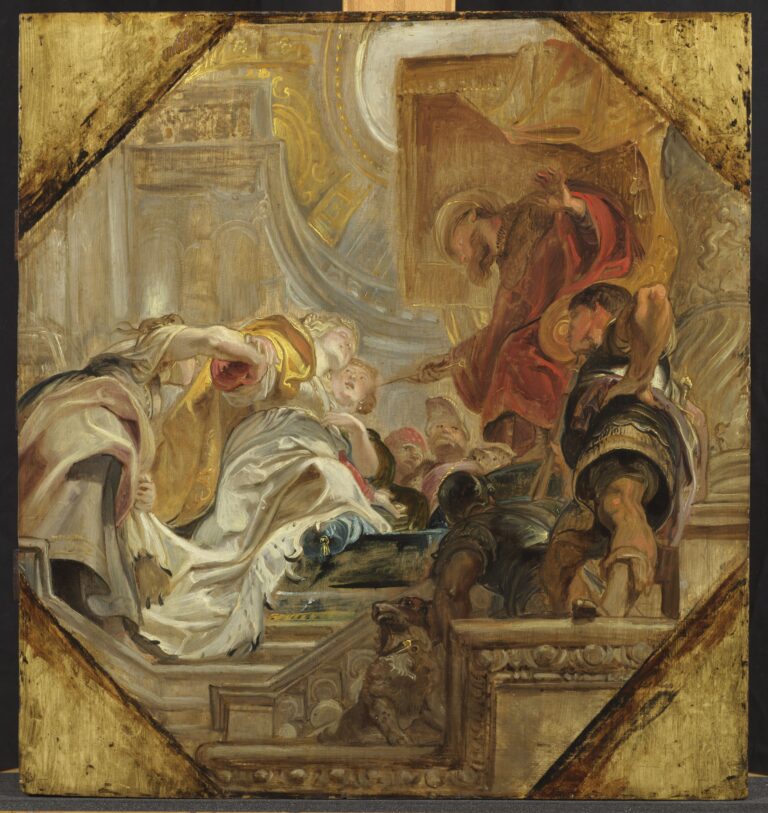
Jan Harmensz van Bijlert, a notable Dutch painter, created “Le Festin des Dieux” around 1635. This work, currently housed in the Musée Magnin in Dijon, France, showcases Bijlert’s ability to blend classical mythology with the stylistic influences of his time. This essay explores the painting’s context, composition, stylistic elements, and its impact on art history, supported by a thorough examination of relevant literature and exhibitions.

Historical and Cultural Context
“Le Festin des Dieux” represents a banquet on Mount Olympus, celebrating the marriage of Thetis and Peleus, a popular subject in Netherlandish art of the time. The 17th century was a period of religious and cultural transformation in the Netherlands, influencing artists to explore mythological and secular themes over religious ones due to the Protestant Reformation. Bijlert’s painting is a response to this shift, using mythological allegory to explore deeper themes of human behavior and divine interaction.
Composition and Iconography
The painting features a multitude of gods and goddesses from Greco-Roman mythology. At the center, Apollo, identifiable by his lyre and crown, presides over the banquet. To the left are Minerva, Diana, Mars, and Venus, accompanied by Cupid. Behind them stands Flora, the goddess of spring. The right side of the composition includes Hercules with his club, Neptune with his trident, and Eris, holding the golden apple of discord. The painting’s left part was cut off, leading to the absence of some gods, hinted at by the presence of Juno’s peacock without Juno herself.
Stylistic Influences
Bijlert was significantly influenced by Caravaggio during his time in Rome, evident in the naturalism and dramatic use of light in “Le Festin des Dieux.” The satyr and Bacchus in the foreground display Caravaggisti characteristics with their realistic, close-up depiction and unorthodox poses. However, by the time Bijlert created this painting, he had shifted towards Classicism, reflected in the frieze-like composition and the use of daylight to enhance the painting’s luminosity.
Artistic and Historical Significance
“Le Festin des Dieux” is an exemplary piece reflecting the transition from the Baroque style’s dynamic realism to the more restrained and balanced Classicism. It holds a significant place in Dutch art history for its intricate portrayal of mythological subjects and its connection to broader European artistic trends. The painting gained contemporary attention during the 2024 Summer Olympics opening ceremony, where a performance inspired by Bijlert’s work sparked discussions about its cultural references.
Exhibitions and References
The painting has been featured in various exhibitions, highlighting its artistic and historical value. The Musée Magnin regularly includes it in its guided tours and educational programs, emphasizing its importance in their collection. Additionally, it has been referenced in numerous scholarly articles and books focusing on Dutch Golden Age painting and mythological subjects in art.
Jan Harmensz van Bijlert’s “Le Festin des Dieux” is a masterpiece that encapsulates the rich interplay between mythology, artistic influence, and cultural context in 17th-century Dutch painting. Its detailed composition and stylistic nuances make it a valuable study for art historians and enthusiasts alike.
Further Reading and References
- Wikipedia: Le Festin des Dieux
- Musée Magnin: Le Festin des Dieux
- Wikipedia: Jan van Bijlert
- The Feast of the Gods – Wikipedia
- Feast of the Gods | Musée Magnin
- Le Festin des dieux (Bijlert) — Wikipédia
- Feast of the Gods (art) – Wikipedia
These references provide comprehensive insights and detailed explorations of Bijlert’s work and its place in art history.