Hugo Van der Goes

Between Pain and Bliss, Gemäldegalerie

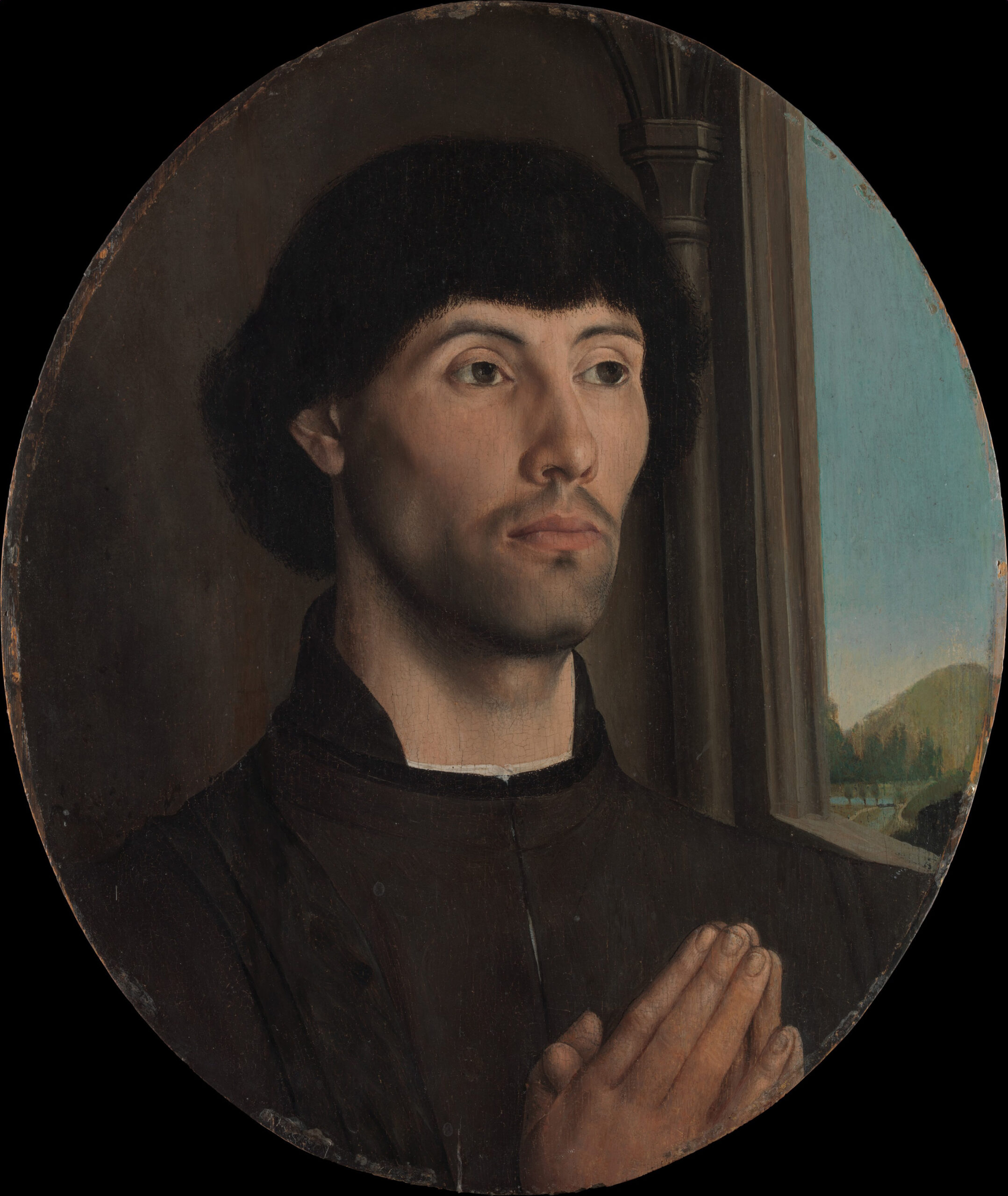
Hugo van der Goes oder Umkreis, Bildnis eines Mannes, um 1475/80, New York, The Metropolitan Museum of Art, The Metropolitan Museum of Art, New York

The Gemäldegalerie in Berlin is home to some of the most extraordinary works of art from different periods and styles. One of the masterpieces that attract visitors from all over the world is the famous painting by Hugo Van der Goes, a Flemish painter who lived in the fifteenth century. His painting, known as the “Portinari Triptych,” is considered one of the most significant works of art of the Flemish Renaissance.

The Portinari Triptych is a three-panel altarpiece that was painted for the church of Santa Maria Nuova in Florence, Italy, in the 1470s. It depicts the Adoration of the Shepherds, a religious scene that portrays the birth of Jesus Christ. The central panel shows the Virgin Mary and the infant Jesus, who are surrounded by angels and the shepherds who have come to adore the newborn baby. The left panel depicts the donor, Tommaso Portinari, who is shown kneeling in prayer with his family, and the right panel shows St. Joseph.

What makes this painting so remarkable is its exquisite detail and the emotional intensity that is conveyed through the figures’ expressions and gestures. The use of light and shadow creates a sense of depth and atmosphere that draws the viewer into the scene. The figures are depicted with such realism and naturalism that they seem to come to life before our eyes.

Hugo Van der Goes was a master of color and composition, and his use of vibrant hues and bold contrasts adds to the painting’s dramatic impact. The intricate details of the clothing, textiles, and objects in the painting are also noteworthy, as they demonstrate the artist’s exceptional skill and attention to detail.

The Portinari Triptych was acquired by the Gemäldegalerie in Berlin in 1829, where it has been on display ever since. The painting has undergone several restorations over the years, which have revealed new details and enhanced its beauty.

In conclusion, the Gemäldegalerie in Berlin is a must-visit destination for art lovers, and the Portinari Triptych by Hugo Van der Goes is a masterpiece that should not be missed. Its exceptional beauty, realism, and emotional power make it one of the greatest paintings of the Renaissance and a testament to the enduring power of art to move and inspire us.

Website: Hugo van der Goes

Between Pain and Bliss

Gemäldegalerie

31.03.2023 to 16.07.2023

Publicaciones Similares

  • |

    Up, Up and Away with Yayoi Kusama: You, Me and the Balloons at Factory International

    As summer unfolds, Factory International in Manchester prepares to welcome one of the most beloved artists of our era. Celebrated Japanese artist, Yayoi Kusama, is set to unveil her most expansive immersive environment to date. Aptly titled “Yayoi Kusama – You, Me and the Balloons”, this exhibition is not just a display of Kusama’s signature…

  • Impressionism

    Impressionism emerged in late 19th-century France as a radical departure from academic painting, prioritizing the capture of light and color over meticulous detail. Key figures like Claude Monet, Pierre-Auguste Renoir, and Edgar Degas pioneered techniques such as loose brushwork and plein air painting, focusing on everyday life and modern experiences. Initially criticized, Impressionism significantly influenced subsequent art movements and remains celebrated today, impacting not only the art world but also popular culture through its emphasis on natural beauty and spontaneity.

  • | | |

    Albion Waves

    An Acoustic Journey Through Britain’s History Bloomberg SPACE – London 9 Feb 2023 – 15 Jul 2023 Oliver Beer’s latest installation, Albion Waves, offers a unique and immersive exploration of Britain’s material history and its ever-evolving position across the globe. The innovative installation draws inspiration from the 14,000 Roman artifacts discovered at the Bloomberg site…

  • |

    The Evolution of Music

    Este contenido traza la evolución de la música desde la época clásica hasta los tiempos modernos, destacando géneros clave y artistas influyentes. Discute cómo el período clásico, caracterizado por compositores como Mozart y Beethoven, sentó las bases estructurales en la música. La aparición del jazz en Nueva Orleans, liderada por íconos como Louis Armstrong, mostró la improvisación y la fusión cultural. El rock ‘n’ roll, encabezado por figuras como Elvis Presley, transformó la cultura juvenil en la década de 1950. La Invasión Británica innovó aún más la música, allanando el camino para la música disco, el funk, el soul y las posteriores transformaciones digitales en las décadas de 2000 y 2010.

  • Le Festin des Dieux by Jan Harmensz van Bijlert

    (circa 1635) Introduction Jan Harmensz van Bijlert, a notable Dutch painter, created “Le Festin des Dieux” around 1635. This work, currently housed in the Musée Magnin in Dijon, France, showcases Bijlert’s ability to blend classical mythology with the stylistic influences of his time. This essay explores the painting’s context, composition, stylistic elements, and its impact…

Deja una respuesta

Tu dirección de correo electrónico no será publicada. Los campos obligatorios están marcados con *