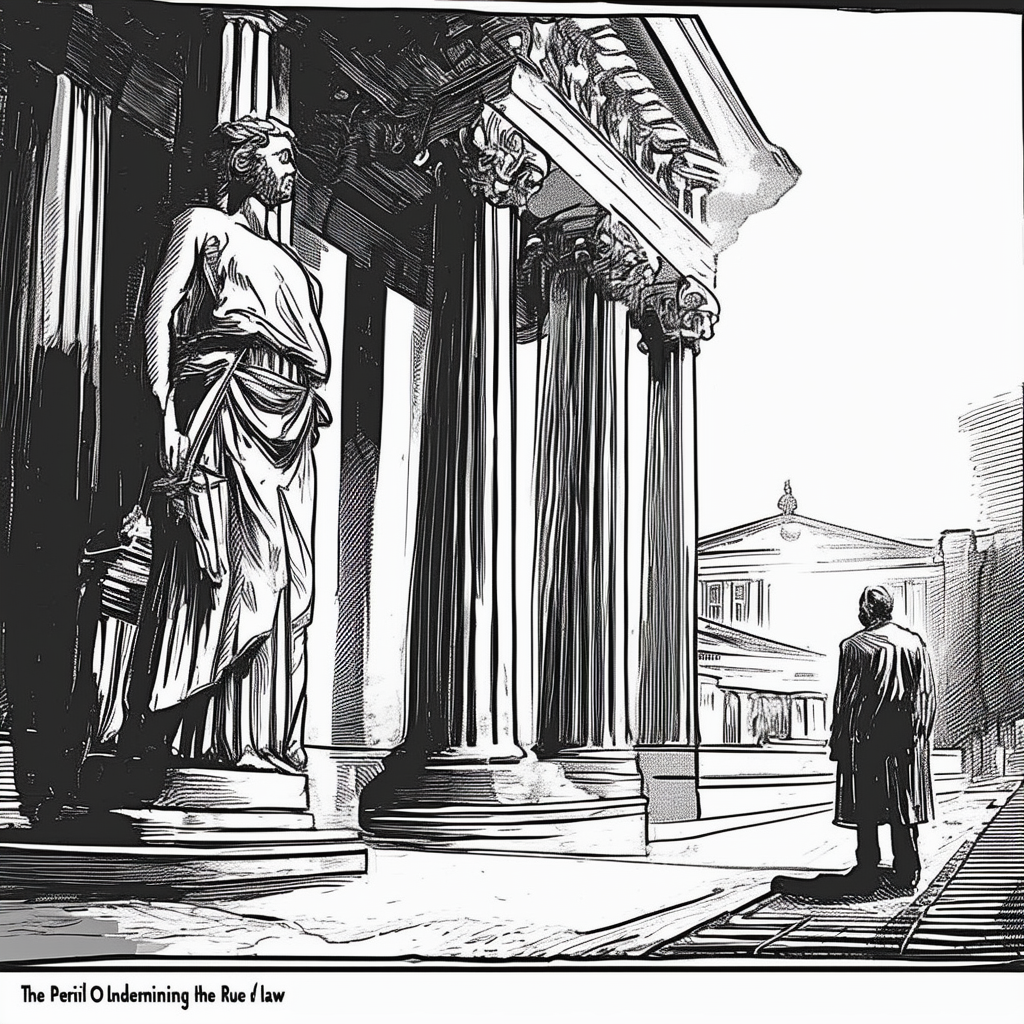
A Threat to Property Rights

In every society, the rule of law stands as the bedrock of order, justice, and predictability. It ensures that all individuals and institutions are subject to and accountable under the law, which is essential for protecting fundamental rights, including property rights. However, when a group of people begins to undermine the rule of law, discredit judges, and express distrust in the legal system, the stability and enforceability of property rights come into serious question.
The Importance of the Rule of Law in Protecting Property Rights
Property rights, such as the ownership of your house, are a cornerstone of personal security and economic stability. These rights enable individuals to own, use, and transfer property freely, under the protection of a legal system that guarantees these rights against arbitrary seizure and encroachment.
The rule of law ensures that property rights are clearly defined, universally respected, and impartially enforced. Courts play a crucial role in adjudicating disputes, upholding contracts, and protecting property owners from unlawful actions. When the legal system is respected and trusted, property owners can be confident that their rights are secure.
The Consequences of Undermining the Rule of Law
When a group actively works to undermine the rule of law, several negative outcomes emerge, all of which threaten the security of property rights:
Erosion of Legal Certainty:
The rule of law provides predictability. If laws are not applied consistently, individuals and businesses cannot rely on legal protections, making property rights tenuous.
Discrediting Judges:
Judges must be perceived as impartial and fair. When a group discredits judges, it undermines their authority and the legitimacy of their rulings. This leads to a perception that judicial decisions are arbitrary or influenced by external pressures.
Loss of Public Trust:
The legal system relies on public trust. When people no longer believe in the fairness and integrity of the legal system, they may take matters into their own hands, leading to increased lawlessness and insecurity.
Rise of Corruption:
In the absence of a strong rule of law, corruption often flourishes. Powerful individuals can exploit legal loopholes or bribe officials to seize property unlawfully, knowing there will be little to no legal recourse for the rightful owners.
The Impact on Property Rights
For property owners, the implications of a weakened rule of law are profound and alarming:
Insecurity of Ownership:
Without a reliable legal system, the ownership of property can be easily contested or revoked. The assurance that your home or land is legally yours becomes uncertain.
Difficulty in Enforcing Contracts:
Property transactions, leases, and mortgages depend on enforceable contracts. In a compromised legal system, these contracts may not be upheld, leading to widespread instability in the property market.
Devaluation of Property:
Legal uncertainty can cause property values to plummet. Potential buyers and investors will be reluctant to engage in the market, fearing that their investments are not secure.
Disincentive for Investment:
Economic growth is closely tied to secure property rights. When these rights are in doubt, both domestic and international investors are likely to steer clear, stifling economic development.

Upholding the Rule of Law is Imperative
The rule of law is not just a legal principle; it is a pillar that supports the entire structure of society. When any group seeks to undermine this foundation, the consequences are far-reaching and dire. The security and enforceability of property rights are among the first casualties, leading to widespread uncertainty, economic decline, and social instability.
For property rights to remain valid and enforceable, it is crucial to maintain a strong, independent judiciary and a robust legal framework. Judges must be respected, the legal system trusted, and the rule of law upheld at all costs. Only then can individuals and businesses confidently invest in property, knowing their rights are protected by a fair and impartial legal system.
In essence, the rule of law is indispensable for ensuring that property rights are more than just theoretical—they must be practical, enforceable, and secure. The stability and prosperity of any society depend on this fundamental principle.
–







Leave a Reply